

What We Set Up on Site or in the Workshop
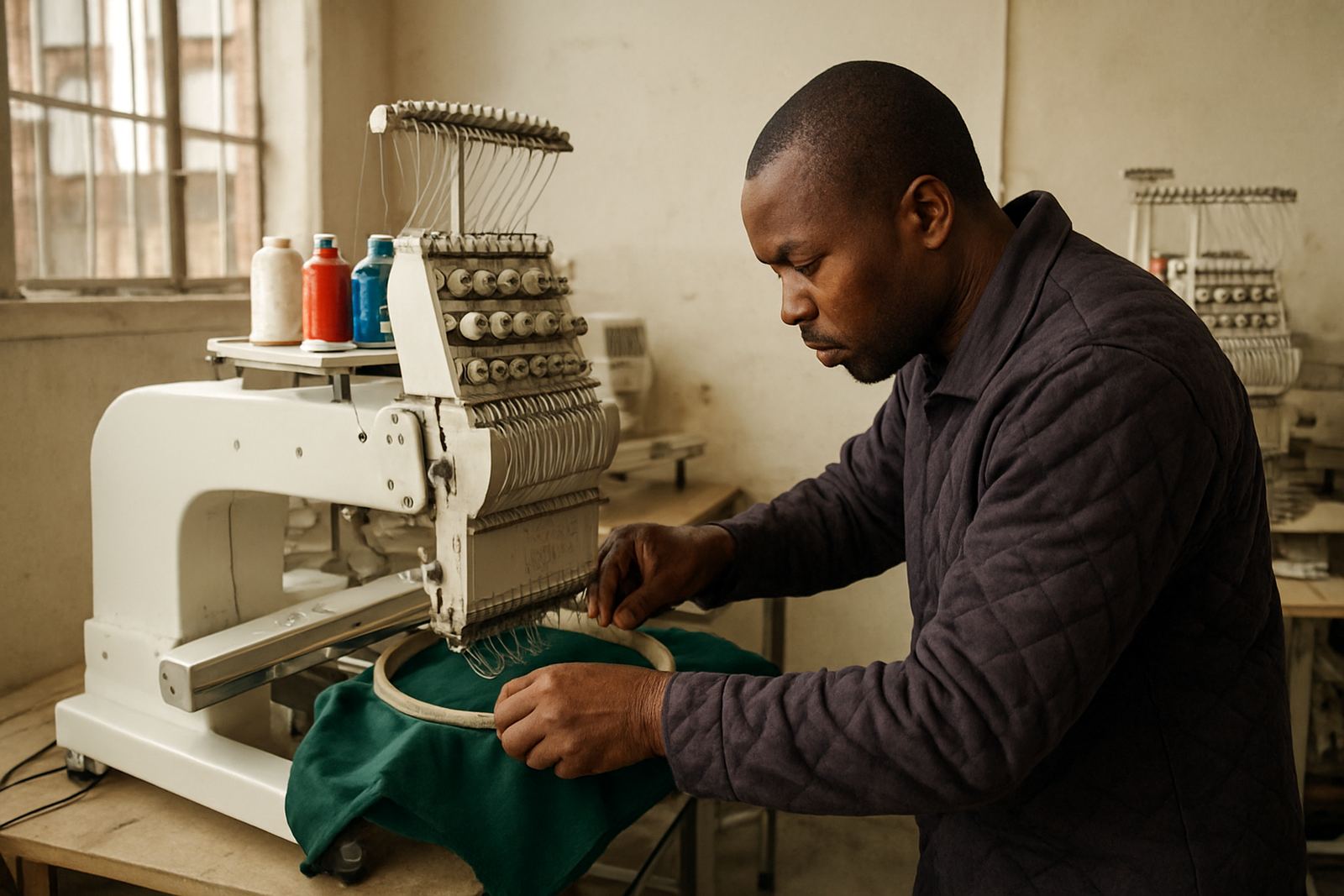
Embroidery setup is more than plugging in a machine and pressing start. We position the unit, check power supply, confirm hoop and frame compatibility, test stitch quality and make sure the first runs match the garment, cap or panel you plan to produce. For shops in Johannesburg CBD, Fordsburg, Mayfair and Soweto, we often work in rooms where space is tight and power can be uneven, so the setup has to suit the real work area, not an ideal one.
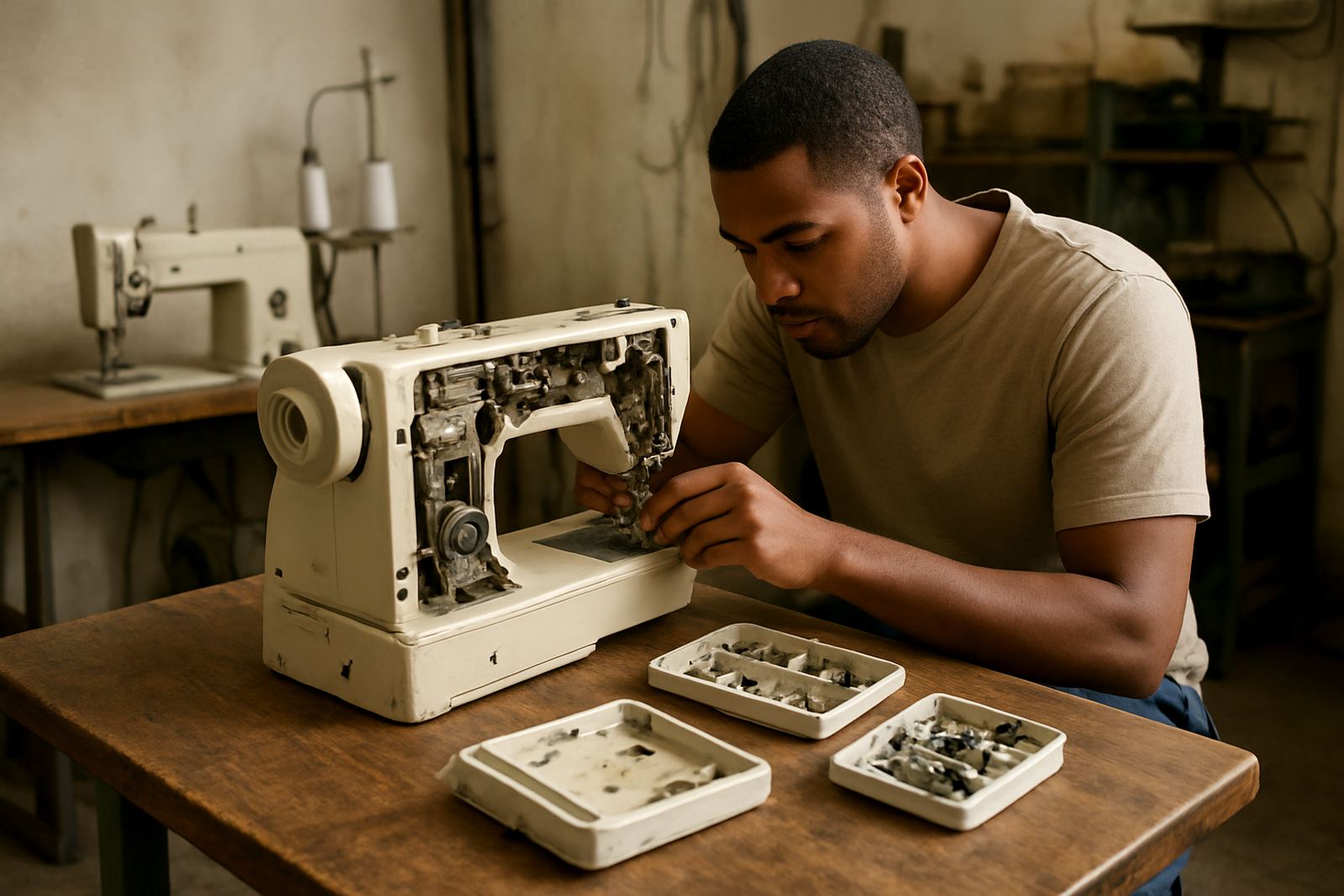
We handle new installations, changeovers and reset work after transport or storage. If your machine arrived with loose fittings, bent frame arms or incorrect tension settings, we sort that out before production begins. We also check the table or stand height, thread path, needle condition and take-up points so the machine runs properly from the first piece.
- Machine positioning and levelling
- Frame, hoop and clamp compatibility checks
- Needle, thread path and tension inspection
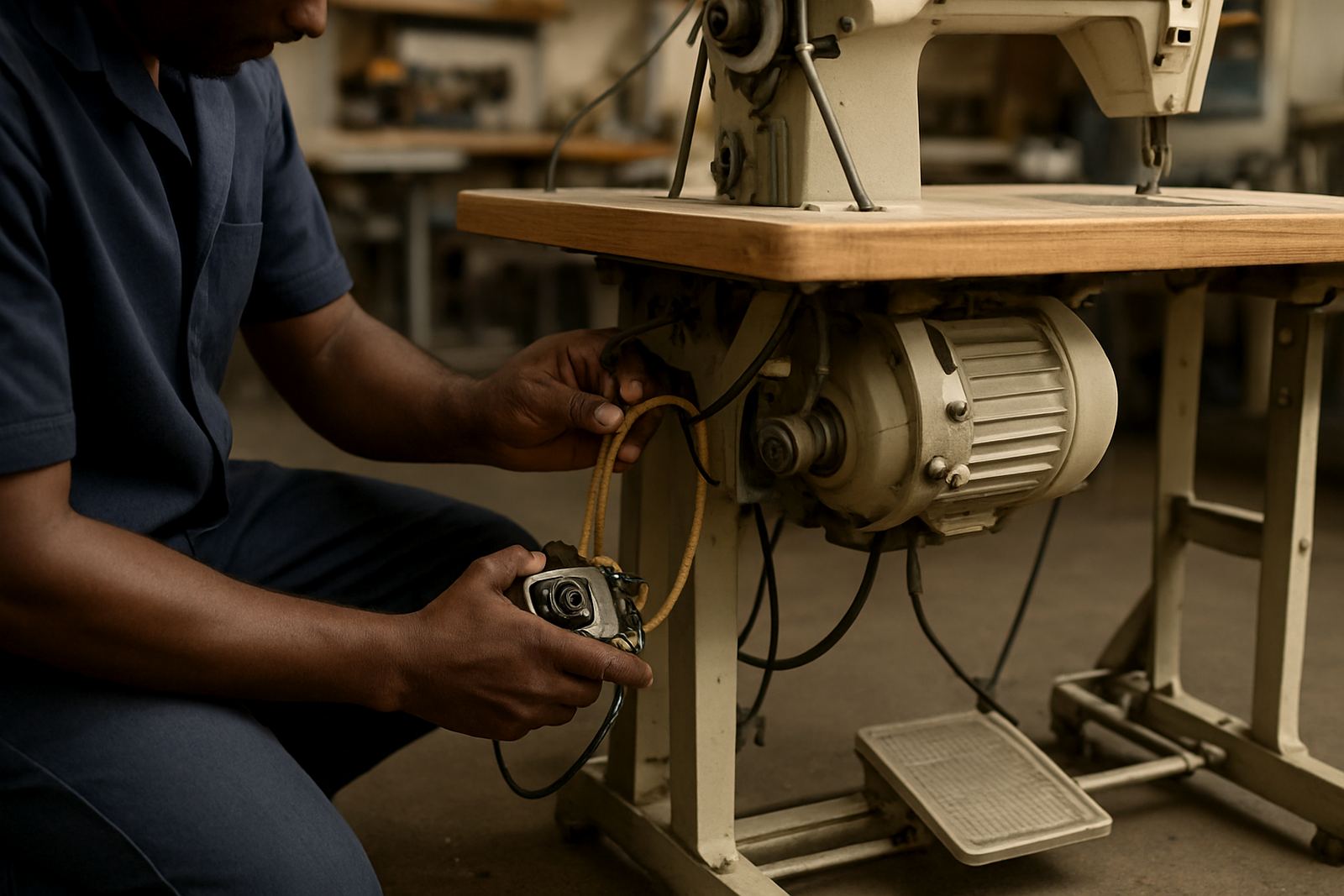
- Power and motor checks for steady operation
- First run testing on sample fabric or garment panels
Commissioning for Clean Stitches and Accurate Registration
Good embroidery depends on precise setup. We test the machine at different speeds, confirm that each head or needle is aligning correctly and check that the design centres where you want it. If the stitch is pulling, looping or breaking thread, we trace the cause before production starts. That can be a tension issue, a damaged needle, a frame that is not holding the fabric flat, or a fabric stabiliser that is too light for the job.
We also work through the common variables that affect output in Gauteng workrooms. In dry winter months static can build up and affect thread flow, while in dusty CBD spaces lint can gather quickly around moving parts. If your business works through load-shedding, we discuss how to restart safely after power interruptions so the machine does not lose its settings or damage the job.
- Stitch balance and tension testing
- Design registration and placement checks
- Speed control and restart practice
- Thread, needle and stabiliser matching
- Fault spotting before the first full production run
The Setup Process from Booking to First Production Run
We keep the process practical and clear. First, we ask what type of work you want to produce, such as school badges, caps, workwear, monograms or panel embroidery. Then we confirm the machine model, number of heads or needles, frame sizes and the power arrangement in your premises. After that, we schedule the setup in a workshop or on site depending on what is needed.
Once the machine is in place, our technician checks the mechanical condition, loads test designs and runs a sample set. If the work needs digitised files or design changes, we will point out what must be corrected before full production. We then train the operator on basic loading, thread changes, backing selection and daily checks. That way the team understands the machine rather than relying on guesswork.
- Job assessment and machine confirmation
- Workshop or on site setup planning
- Mechanical and electrical checks
- Sample embroidery and correction stage
- Operator handover and practical training
Turnaround Times for Johannesburg and Surrounding Areas
Turnaround depends on the machine condition and how much testing is needed. A straightforward embroidery setup with a ready machine and suitable power can often be completed the same day or within 1 to 2 working days. If the unit needs parts, timing corrections or frame repairs, we will give a longer estimate before work begins. For clients in Germiston, Pretoria, Alberton and Randburg, field service scheduling depends on route planning and workshop workload.
If there is a tight launch date, tell us early. Schools preparing for term openings, tailors taking on seasonal orders and factories starting a new line often need the machine ready before the first order lands. We try to keep downtime low, but we will not rush a setup that still needs proper calibration. A rushed start usually means wasted fabric and repeated rework later.
- Simple commissioning: often same day to 2 days
- Setups needing repairs: allow extra time
- Custom or multi-head jobs: scheduled by arrangement
- Urgent work: handled based on technician availability
Pricing Approach and What Affects the Cost
We price embroidery setup according to the actual work involved, not a flat guess. The cost depends on whether the machine is being installed from new, recommissioned after storage, adjusted after a fault or matched to new frames and accessories. On site work may also include transport time, parts sourcing and operator training. If a unit needs additional repairs we quote that separately so you can decide what to do first.
Clients usually want to know where the money goes. The main cost drivers are machine type, number of heads or needles, whether the setup is on site or in workshop, and whether spares are needed. We are upfront about this, so there are no surprises when the machine is already on the floor and needs extra work. For bigger orders, such as a factory adding several embroidery stations, we can stage the setup to fit the budget and production schedule.
- Machine condition and model type
- Workshop or on site work
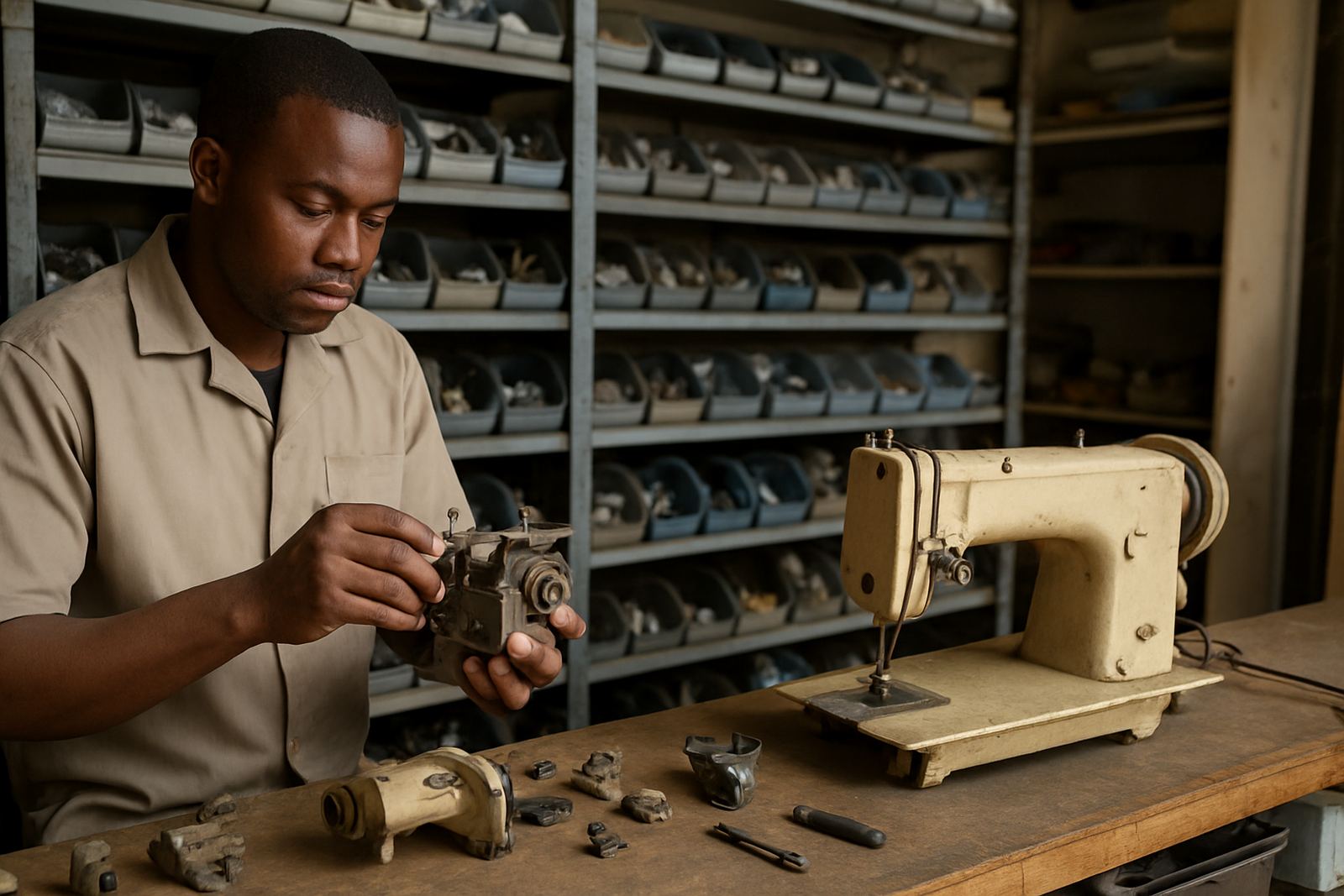
- Need for frames, clamps or spare parts
- Training, testing and commissioning time
- Urgency and travel requirements
Maintenance Intervals to Keep Production Steady
Once the machine is running, regular maintenance keeps the stitches consistent and helps prevent breakdowns. We normally advise a light service after the first few weeks of production, then routine checks every 3 to 6 months depending on use. Busy factories and schools with repeated embroidery work may need more frequent attention, especially if they run long shifts or process dusty garments.
Daily care matters too. Operators should clean lint, check needle wear, inspect thread paths and watch for changes in noise or vibration. If the machine starts skipping stitches, tightening fabric too much or breaking thread often, it is time to stop and check the setup. That small pause can prevent a larger repair later. We can also plan scheduled servicing around your production cycle so the machine is not taken down when you need it most.
- First follow-up service after initial production run
- Routine service every 3 to 6 months
- More frequent checks for high-volume work
- Daily cleaning and needle inspection by operators
- Immediate attention if stitch quality changes
Key facts
| Machine types | Single head and multi-head embroidery units, household and industrial formats |
|---|---|
| Frame sizes | Small badge frames through larger garment and panel frames |
| Typical setup checks | Levelling, timing, tension, needle alignment, power and test stitching |
| Power considerations | Stable supply recommended, with restart checks after load-shedding |
| Work materials | Cotton, poly-cotton, knitwear, denim, schoolwear and workwear |
| Service areas | Johannesburg CBD, Fordsburg, Mayfair, Soweto, Germiston, Pretoria, Alberton, Randburg |