What our on site repair call includes
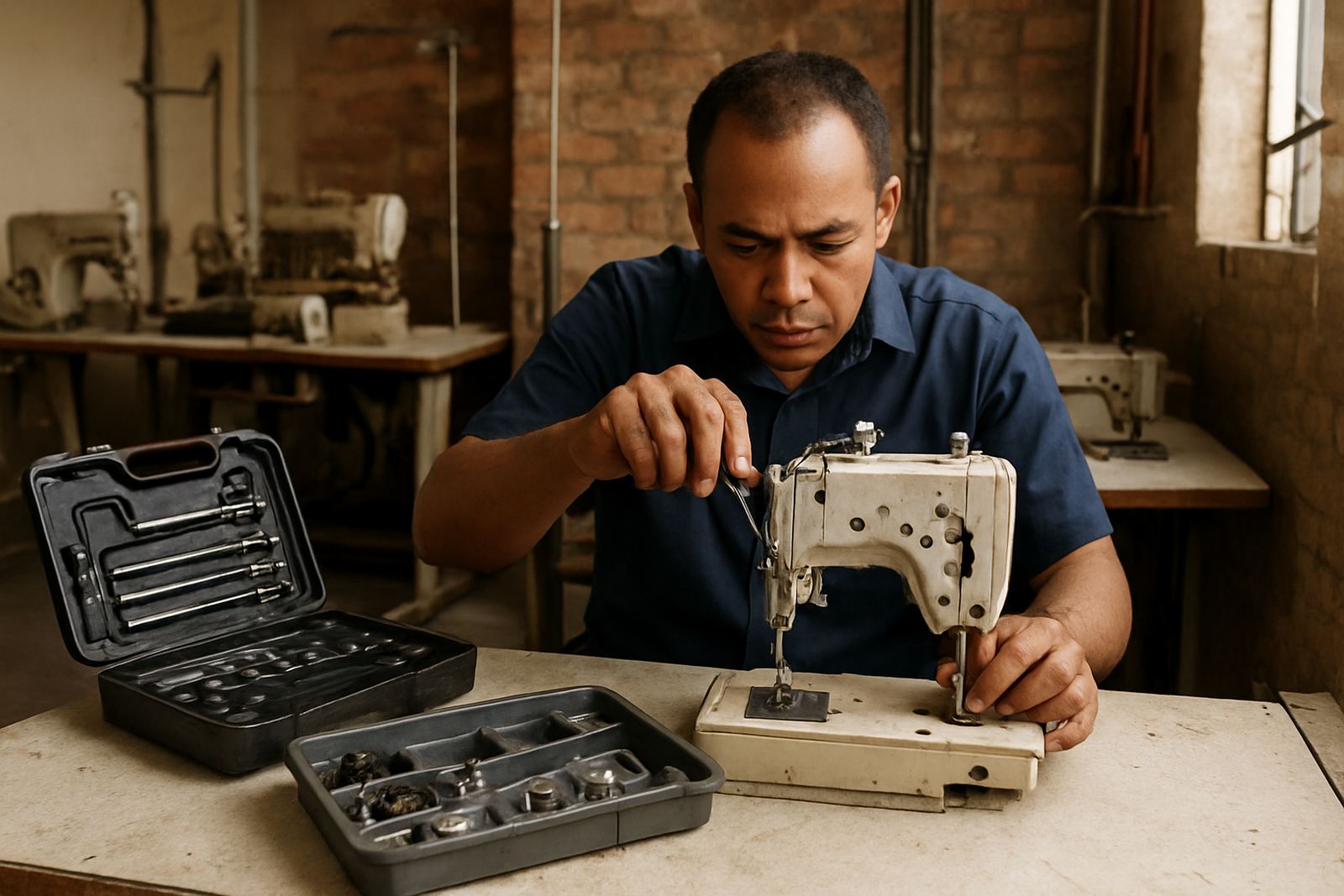
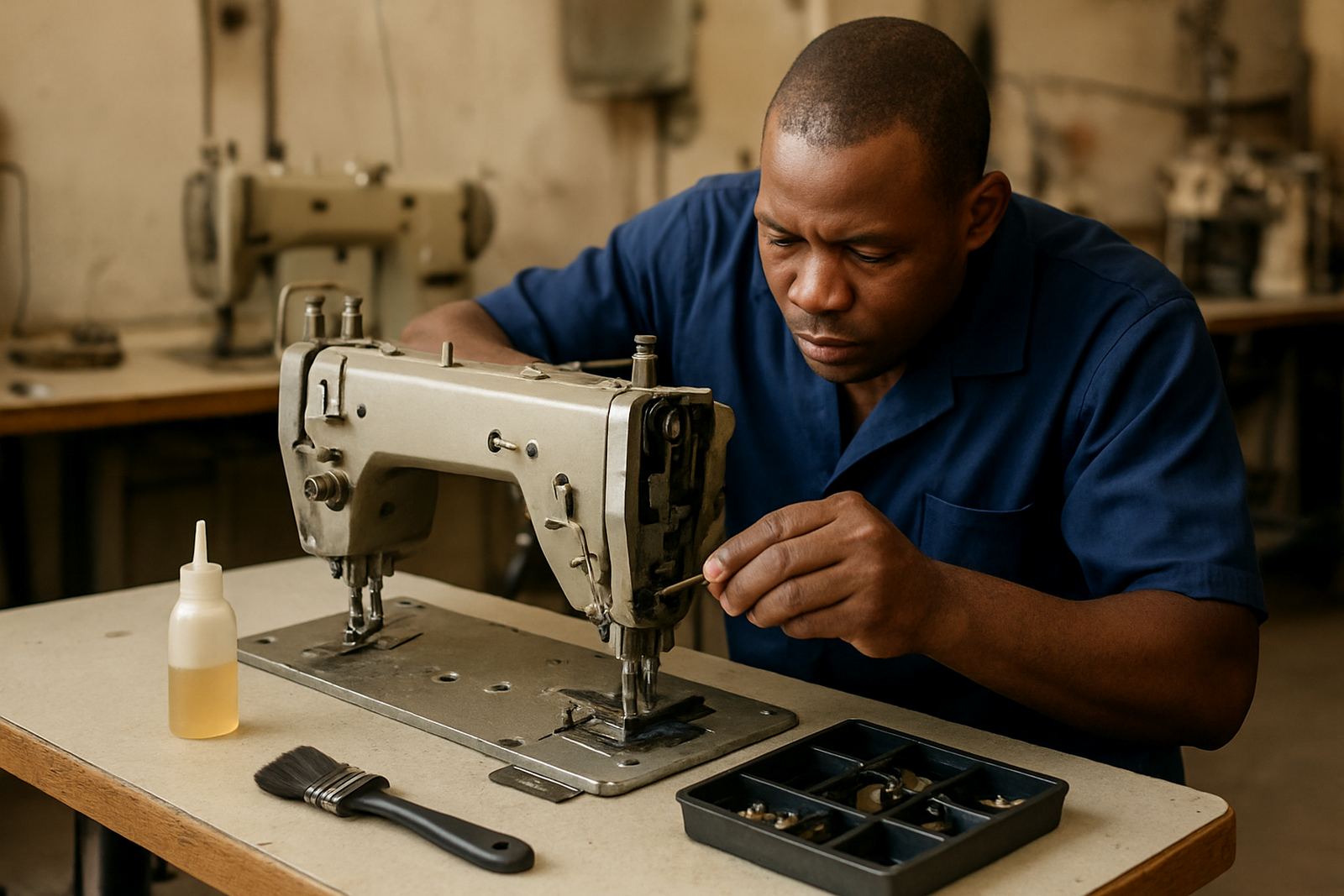
We send a field technician to your premises to inspect the machine, trace the fault and carry out repairs where possible on site. This service suits industrial straight stitch machines, overlockers, coverstitch units, household zig-zag machines, embroidery machines and fusing presses. For many common problems, a same-day repair is possible if the machine only needs adjustments, part replacements or cleaning.
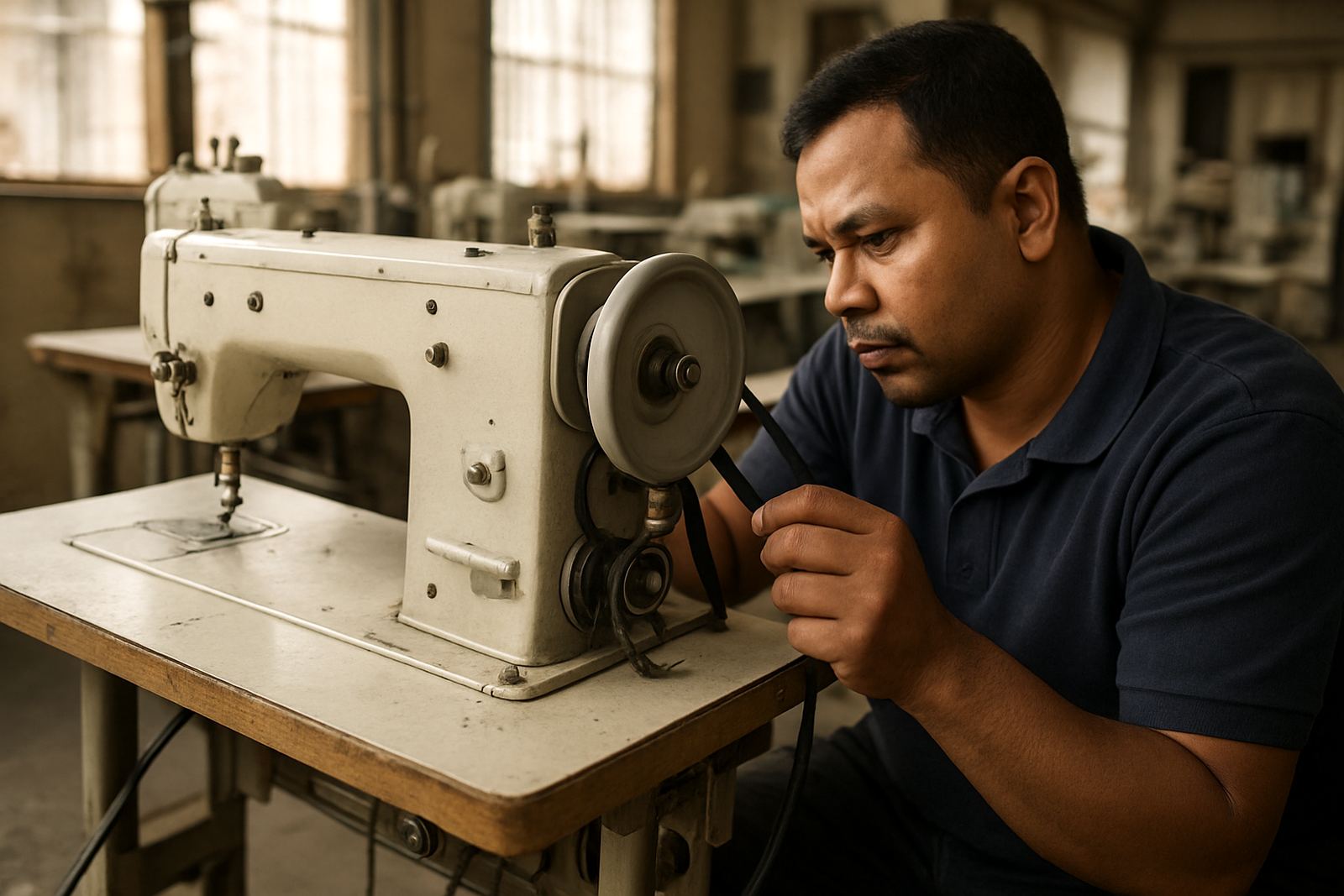
Every call starts with a practical check of the full setup, not just the symptom. We look at the needle system, thread path, tension discs, hook timing, feed dogs, motor drive, belts, presser foot pressure and electrical safety. On embroidery machines we also check hoop movement, thread break sensors, pantograph movement and basic alignment. On fusing presses we inspect heating elements, pressure, platen level and thermostat behaviour.
- Fault diagnosis and machine testing on site
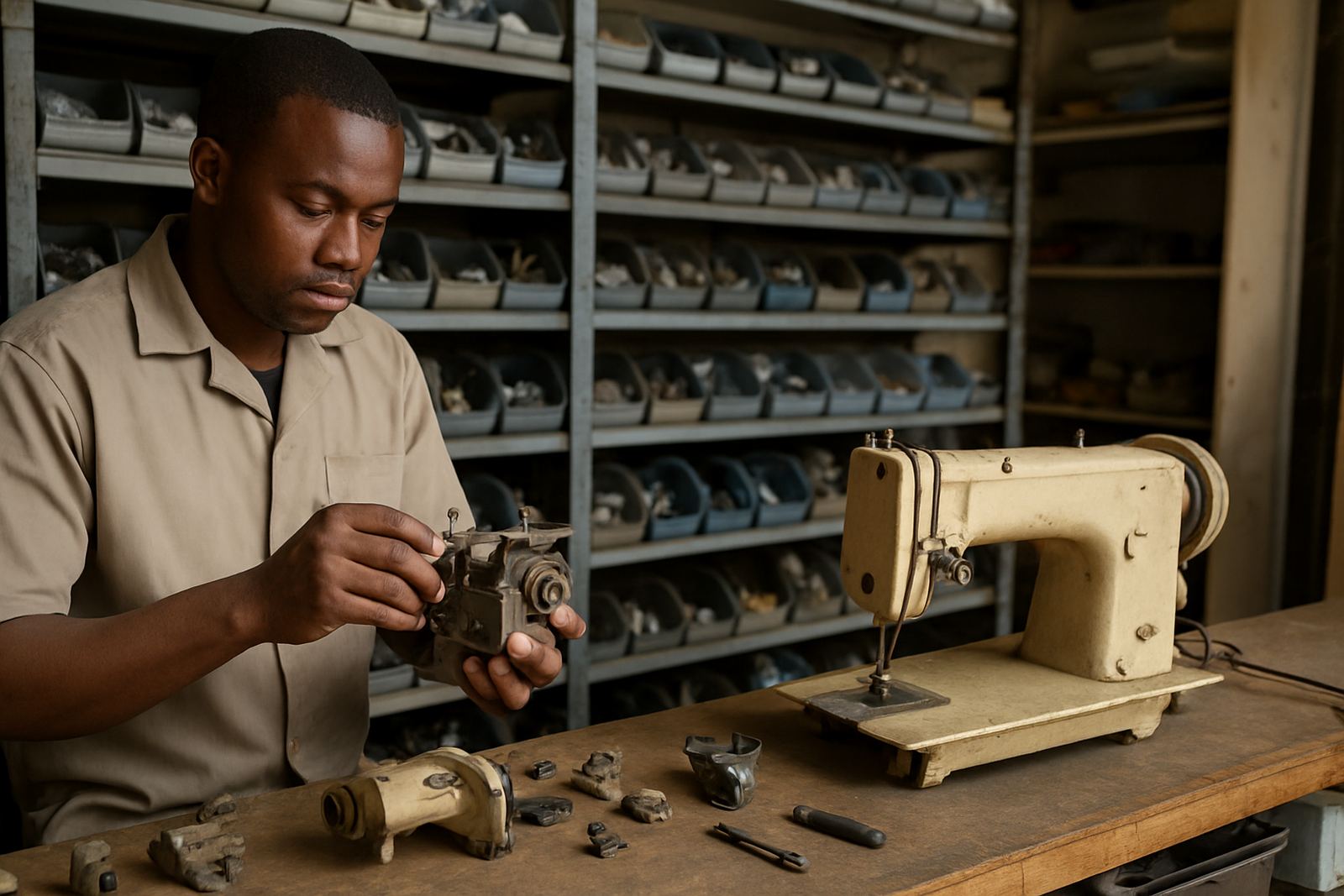
- Minor repairs, adjustments and replacements where practical
- Timing checks on needle and hook movement
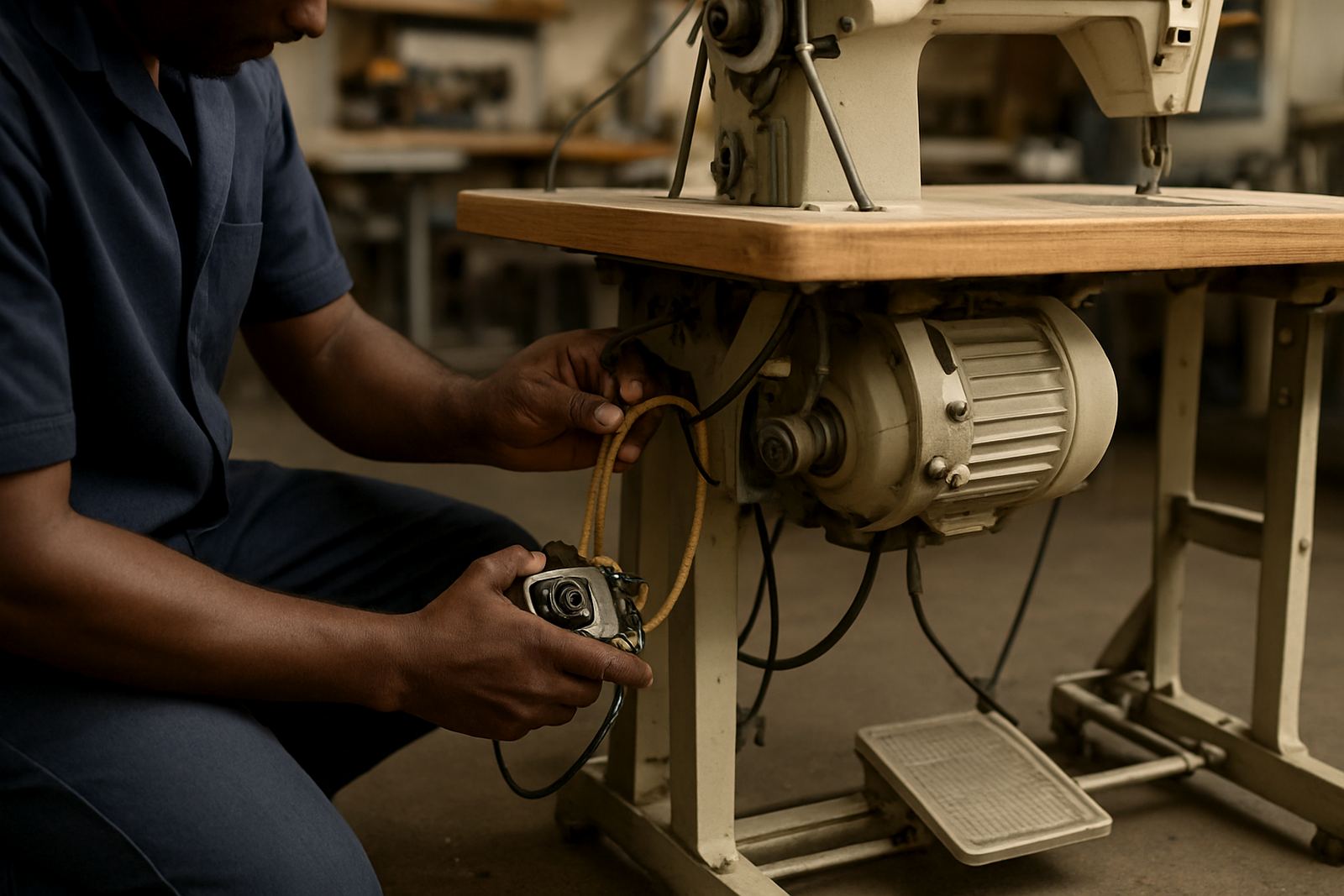
- Motor, belt and pedal inspection
- Basic electrical and safety checks
- Operator guidance after the repair is done
Typical faults we sort out on site
Many breakdowns happen because of wear, poor threading, incorrect needle choice, dust build-up or stretched belts. In busy factories and school workrooms, machines often run for long hours and get pushed hard. In home settings, problems can come from infrequent use, old oil and thread damage. We handle the faults that usually interrupt work without needing a full shop strip-down.
Examples include skipped stitches, looping underneath, broken needles, noisy running, jammed hooks, poor tension, motors that cut out, slow start-up, burning smells, loose drive belts and uneven feeding. For embroidery equipment, we also assist with registration problems, thread nesting and set-up issues after a change of design or hoop size.
- Skipped stitches and poor stitch formation
- Thread breakage and tension trouble
- Needle strikes, hook damage and timing drift
- Motor faults, pedal issues and belt wear
- Embroidery setup faults and thread path problems
- Fusing press heat or pressure inconsistencies
How the repair process works
First, you send an enquiry through the contact form with the machine type, make, model if known and the fault you are seeing. That helps us bring the right tools, test equipment and common spare parts. If the machine is large or the fault sounds electrical, we may ask a few more questions before scheduling the visit.
On arrival, our technician carries out a short assessment, explains the likely cause and confirms the best repair path. If the fault is simple, we repair it there and then. If a part must be sourced or workshop equipment is needed, we will advise the next step clearly. We do not guess at timing or set-up, because a rushed fix usually means the machine comes down again later.
- Send an enquiry with the machine details and fault description
- We confirm the visit, parts likely needed and access requirements
- Technician attends site and carries out inspection
- Repair, adjustment or cleaning is done on the spot where possible
- You get practical aftercare notes and maintenance advice
Turnaround across Gauteng
On site work is arranged according to location, machine type and the urgency of the breakdown. For Johannesburg CBD, Fordsburg, Mayfair, Soweto, Germiston, Alberton and Randburg we can often arrange quicker visits because the travel time is shorter. Pretoria jobs are also handled regularly, although timing depends on the route and the number of machines at the site.
Many visits are completed in one callout, especially when the issue is mechanical or adjustment based. If the machine needs a rare part, workshop machining or extended testing, we will take it in or schedule a return visit. For factories that cannot stop work, we can plan repairs around shift changes or quieter periods so production is affected as little as possible.
- Short notice visits for urgent stoppages, subject to route and workload
- Same day completion where faults are minor
- Return visits arranged for parts waiting or extended testing
- Shift-friendly scheduling for production lines and training rooms
Pricing and what affects the cost
Our pricing is based on the type of machine, the work required, the distance travelled and whether a part is needed. A simple site adjustment is priced differently from a major timing correction or a motor conversion. Before the visit, we aim to give a clear idea of the callout and labour structure so you know what to expect. If a machine needs a full strip, bench testing or special parts, we will say so before any extra work is done.
Because repairs vary, it is better to think in terms of a service estimate than a flat price. That said, we keep the process practical and transparent. If a cheaper fix is possible, we will tell you. If a repair is not worth doing on an older machine, we will also say that honestly instead of stretching costs for no reason.
- Callout fee based on area and access
- Labour charged according to fault complexity
- Parts billed separately if replacement is required
- Work approved before major repair steps are taken
- Discounted planning available for multiple machines at one site
Keeping breakdowns away with regular intervals
On site repairs solve the immediate problem, but regular care reduces repeat faults. For busy workrooms we usually recommend servicing every 3 to 6 months, depending on hours run, dust levels and the fabric being sewn. Schools and training centres often benefit from term-based checks, while home users may only need a once-a-year inspection if the machine is used lightly.
In Gauteng, dust and load-shedding both affect machine condition. Power dips can stress motors and electronic controls, while dust gets into tension areas and moving parts. Coastal humidity is not the main issue here, but indoor moisture from poor storage can still cause rust on needles, plates and hooks. A proper cleaning and oiling schedule keeps the machine steadier and helps the repairs last longer.
- Factory machines: every 3 months to 6 months
- School and training machines: every term or every 6 months
- Home machines: once a year, or sooner if used heavily
- Embroidery and fusing equipment: regular checks before busy seasons
Machines we service on site
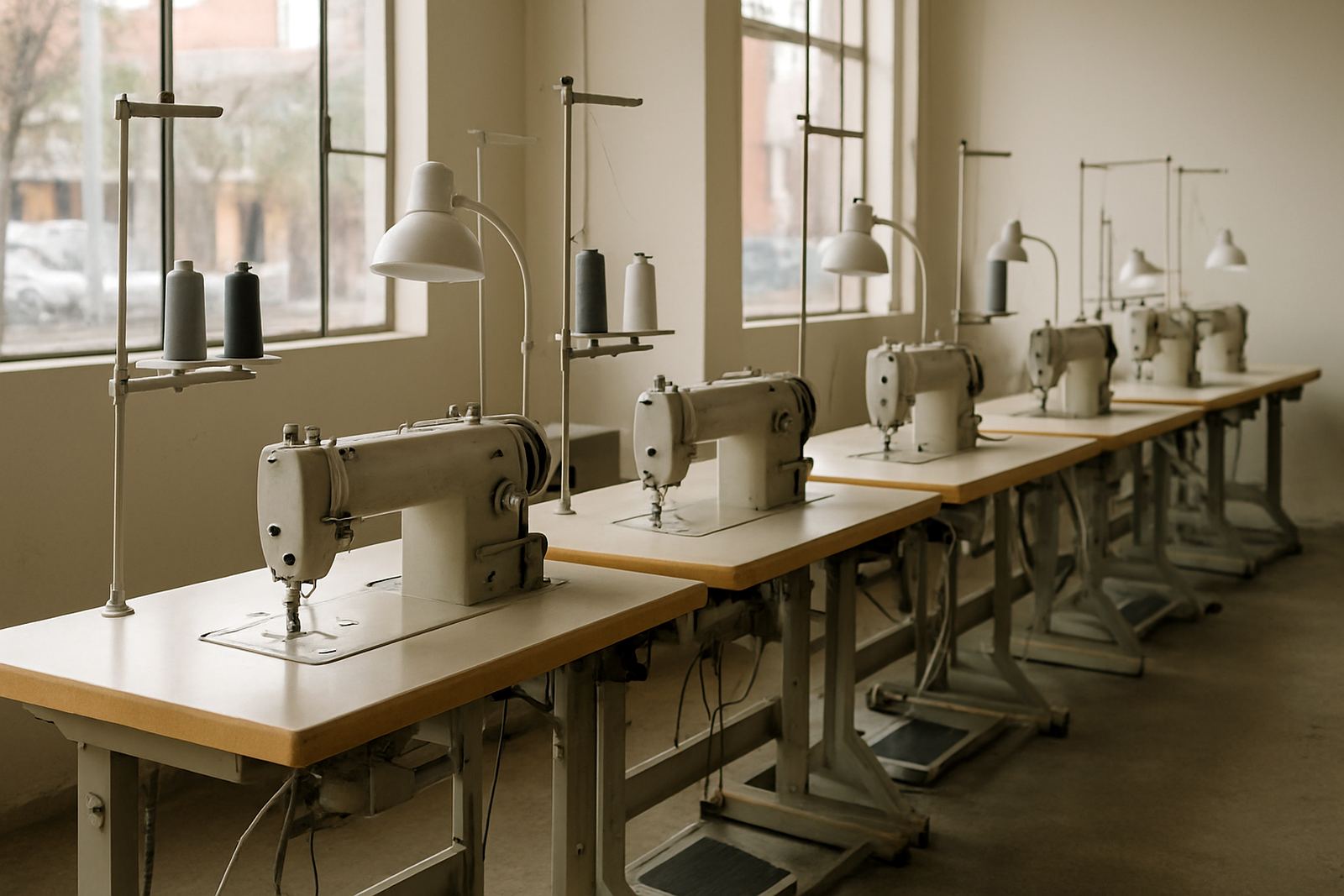
We work on a wide range of sewing and pressing equipment used in local production rooms, alteration shops and homes. Some machines are simple mechanical models, while others have control boards, step motors or programme functions. Our field service covers both, with the right approach for each setup. If the unit cannot be repaired safely on site, we will recommend workshop repair instead of forcing a quick fix that may fail again.
- Industrial straight stitch, overlock and coverstitch machines
- Household sewing machines and basic quilting models
- Computerised embroidery machines and related set-up issues
- Fusing presses and pressing stations
- Small workshop motors, foot controls and drive systems
For sites in Johannesburg CBD and nearby areas, on site repair is often the fastest way to get production moving again. If you need fault finding, alignment or a replacement part fitted properly, our team in the CBD can plan the visit and advise the next step without wasting your time.
Key facts
| Service area | Johannesburg CBD, Fordsburg, Mayfair, Soweto, Germiston, Pretoria, Alberton and Randburg |
|---|---|
| Machine types | Industrial, household, embroidery and fusing equipment |
| Common repairs | Timing, tension, motors, belts, feed issues and electrical faults |
| Typical visit outcome | Same-day repair where the fault is minor and parts are available |
| Recommended servicing interval | Every 3 to 6 months for busy machines, once a year for light home use |
| Booking method | Enquiry form on the contact page |