



Home / Projects / Benoni Curtain Workroom

Projects

Benoni Curtain Workroom

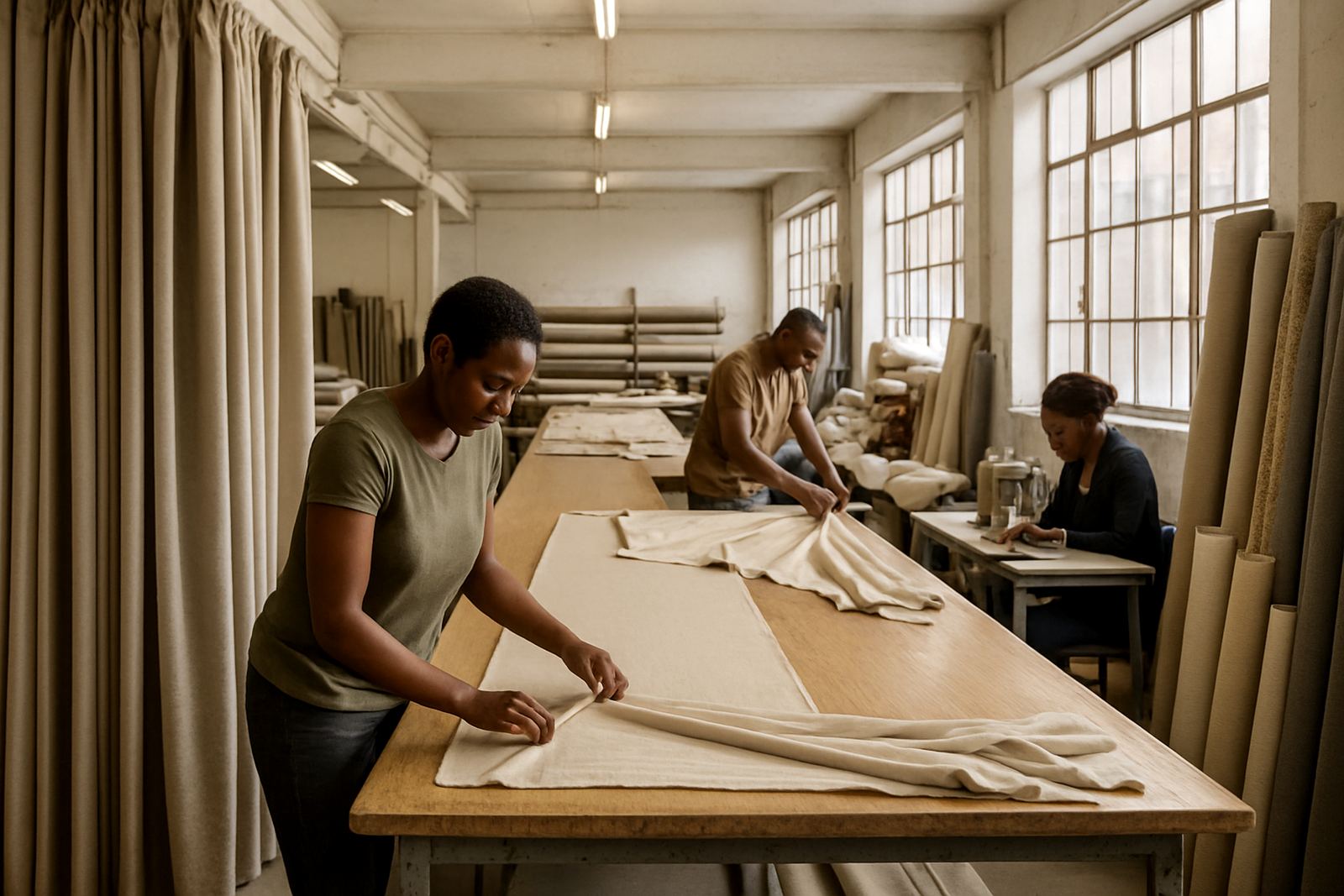
A Benoni curtain workroom needed a practical layout for long fabric handling, accurate hemming and a clean pressing flow. We set up the space so panels move in one direction, with less handling, fewer creases and better output per shift.

Benoni Curtain Workroom

The brief from a Benoni curtain workroom

The client was a small to medium curtain workroom in Benoni handling made-to-measure window dressing for homes, schools and offices. Their team was spending too much time moving panels back and forth between cutting, stitching and pressing. Long lengths were getting marked on the floor, finished hems were not always square, and the pressing table was too close to the sewing line.

The brief was straightforward: create a workroom layout that suits long fabric, supports neat hemming, and gives a proper finishing area without wasting floor space. They also wanted a setup that could cope with busy periods, load-shedding interruptions and the dust that comes with an industrial area near busy roads.

  • Long-panel handling for curtains and pelmets
  • Clear separation between sewing, pressing and packing
  • Space for both light domestic work and heavier production jobs
  • Simple operator movement with fewer cross-overs

Constraints we had to work around

The room was long but not wide, so the main challenge was flow rather than square metres. Windows let in direct sun at certain times of day, which can affect fabric colour matching and make the room warmer in summer. The floor was also slightly uneven in one corner, so longer tables had to be positioned carefully to avoid rocking during hemming and pressing.

We also had to think about power supply. The client wanted equipment that would restart cleanly after load-shedding and would not trip the line when the press and sewing machines were used together. In addition, curtain work creates lint, thread offcuts and packaging waste, so the layout needed easy cleaning and enough access around machines for routine servicing.

  • Limited width, so tables had to run along the wall line
  • Uneven floor section corrected with adjustable feet and packing
  • Power points arranged to reduce extension leads across walkways
  • Cleaning access kept open around the pressing zone

What we supplied and set up

We supplied and positioned industrial sewing machines suitable for straight seams, blind hemming and general curtain assembly, together with a household machine for lighter sample work and alterations. We also supplied a fusing press, a pressing station for finished panels, attachments for guided hems, spare parts, threads and basic haberdashery for day-to-day use.

Our team handled machine installation, timing adjustments, motor conversions where needed, and the setup of the embroidery corner for labels and sample branding. Lerato Mokoena handled the sales coordination, Yusuf Patel oversaw the workshop side, Naledi Khumalo checked embroidery setup and finish quality, while Willem van Wyk attended site installation and final testing.

  • Industrial sewing machines for long seams and panel joining
  • One household unit for light work and samples
  • Fusing press for interlining and heading tape work
  • Pressing station for final crease setting and hanging
  • Attachments, needles, threads and spare parts on hand

The new work flow in the room

We arranged the room so fabric enters at one end, moves through measuring and marking, then into sewing, pressing and packing without doubling back. The longest table was reserved for cutting and panel laying, with enough overhang for curtain drops up to 3,2 metres. The pressing point sits close to the sewing line but not in the way, so an operator can finish a seam and move the panel straight to pressing.

Workroom planning also included a clearer path for operator training. New staff can now learn one process at a time, instead of trying to manage all steps in one corner. That matters in a curtain room because good work depends on the fabric staying clean, flat and correctly supported from the first cut to final pack. The result is less handling, fewer creases, and better consistency across repeated orders.

  • One-way movement from cut to sew to press
  • Long fabric support with no dragging on the floor
  • Clear packing area for labelled finished panels
  • Safer walkways with fewer loose cables

Timeline and commissioning in Benoni

The project ran over three weeks from first site visit to final handover. Week one was measurement, layout planning and equipment confirmation. Week two covered delivery, installation and basic floor positioning. Week three was for testing, operator training and fine adjustments to stitch quality, press temperature and table height. That schedule kept downtime low and let the client keep taking smaller jobs during the changeover.

During commissioning we checked stitch length, thread tension, foot pressure, press timing and motor response after power interruptions. We also confirmed that the room could be cleaned quickly at the end of the day. For a Benoni workroom that handles repeated panel orders, this sort of practical setup matters more than a fancy finish. It must work on Monday morning and still work after a busy week.

Results, measurements and what we would repeat

After setup, the workroom had a clearer production line and better control over finished panel quality. The client reported fewer marking errors, faster movement between stations and less rework at the pressing stage. Panel edges now line up more consistently, and the team can handle longer drops without laying fabric across several unrelated surfaces.

If we were doing the same job again, we would keep the same basic approach: measure the room properly, separate pressing from sewing, and make sure the longest handling area is in place before the first machine is switched on. For curtain work, that order saves time and prevents problems later. It is a practical layout built for real production, not just a showroom look.

  • Better panel alignment and neater hems
  • Less backtracking between stations
  • Faster changeover between orders
  • Easy to maintain with routine servicing and spare parts

Key facts

Project typeCurtain workroom layout and equipment setup
TownBenoni
Timeline3 weeks from site visit to handover
Floor space focusLong narrow room with one-way fabric flow
Main processesCutting, hemming, pressing, packing
Supplied equipmentIndustrial and household sewing machines, fusing press, pressing station, attachments, threads and spares

What our Sewing Machine customers say

Verified Google reviews

Questions we get asked

What kind of workroom was this set up for?

A curtain workroom handling long fabric panels, hemming, pressing and packing for domestic and light commercial orders.

How did you deal with load-shedding in the setup?

We planned the machine layout around clean restart points, safer cabling and practical power use so the team could resume work quickly after an outage.

Can this type of layout work in other Gauteng towns?

Yes. The same planning approach works well in Johannesburg, Germiston, Pretoria, Soweto and other areas where floor space and workflow need to be used carefully.

Planning something? Send the team a message.

Contact form