

Client Brief for a Busy Germiston Workroom
The client was a small garment and branding workshop in Germiston taking on embroidered names, badges and logo runs for schools, local companies and family workwear. Their work had grown from occasional pieces into steady weekly orders, so the room needed to handle both short runs and repeat batches without slowing down. The main request was simple: get the embroidery side organised so two operators could work properly, with less thread waste and fewer stoppages.
They also wanted the room to cope with Gauteng load-shedding and the usual workshop pressures that come with mixed sewing and embroidery work. That meant planning for clean power points, a sensible machine position near the cutting and finishing tables, and a service plan that would not leave them waiting for parts. The team did not want a fancy setup, just one that could keep running and make it easier to take on more schoolwear orders during the year.
What the Germiston Room Needed to Handle
The space was limited and had to fit into an existing workroom, so we worked around the room size rather than asking for a full rebuild. The client needed a setup that could manage caps, badges, shirt fronts and school crest placements, plus a pressing area for final finishing. Because they also handled some alterations and small sewing jobs, the embroidery corner had to sit neatly beside the rest of the production line without blocking movement.
- Room size: approx. 6 m by 4.5 m
- Power: 220 V supply with backup allowance for outages
- Typical orders: 10 to 200 garments per run
- Materials: polycotton shirts, schoolwear, track tops and caps
- Placement work: left chest logos, back text, badge panels and names
Humidity and dust were also part of the brief, especially because the room opens and closes often during loading and dispatch. We made sure the chosen positions kept the machines away from direct draughts and reduced lint build-up around the thread path. That small detail saves a lot of downtime over a few months.
Machines, Presses and Workshop Support Supplied
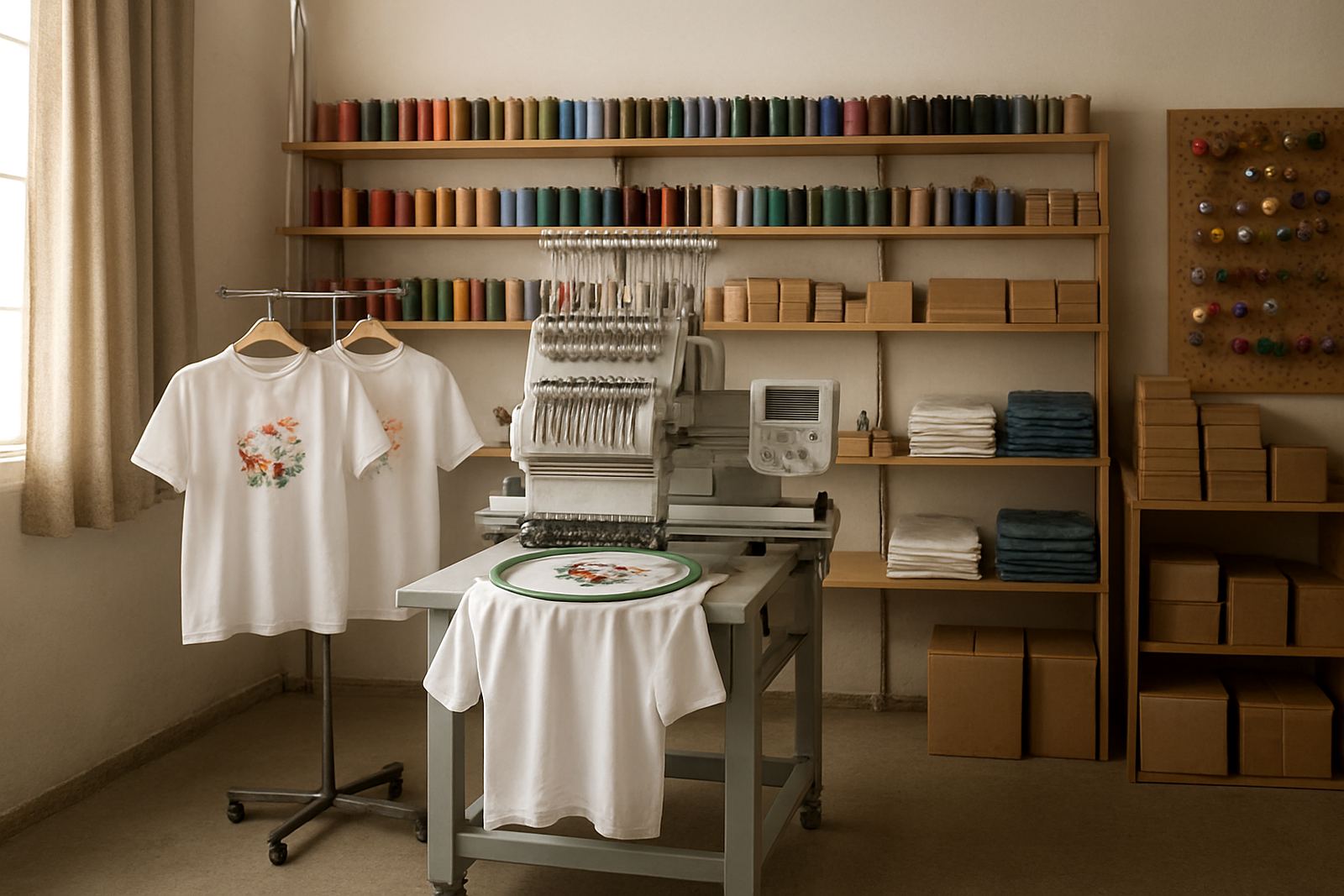
We supplied and installed embroidery equipment suited to regular branded work, together with supporting items for setup and finishing. The room received a computerised embroidery machine with a multi-needle head for colour changes, a stable press for pre-pressing and final setting, and a small set of attachments to improve handling of different garment sizes. We also supplied spare needles, bobbins, thread cones, backing material and common consumables so the client could start production immediately.
Alongside the equipment, we sorted the practical parts that are often overlooked. The team received guidance on hoop sizes, stitch order, thread tension checks and routine cleaning. We also supplied spare parts for the likely wear items and set up a basic parts list for future reordering, which helps when school order season gets busy and nobody wants to stop production to look for a missing bobbin case or broken needle plate.
- Computerised embroidery machine for logo and name work
- Press for garment preparation and final finishing
- Hoops, frames and standard attachments
- Threads, backing, needles and workshop consumables
- Common spares kept on site for faster turnaround
Installation, Setup and Operator Training
The job took two weeks from first site visit to handover. In week one, we assessed the room, checked the power points and marked out the machine positions. We then installed the equipment, aligned the work flow and tested thread paths and tension on a few sample garments. Week two was used for embroidery setup, test runs, pressing checks and training the operators on everyday use and basic fault spotting.
Training focused on the tasks that matter most in a small room. The operators were shown how to load designs, change threads, set backing correctly and clean the machine after a run. We also went through timing checks, needle changes and what to do when a garment starts to pucker or the stitch becomes uneven. A short service routine was written down on site so the team could follow it without guessing.
- Week 1: room assessment, layout marking and installation
- Week 2: embroidery setup, test runs and operator training
- Handover: sample approval and daily maintenance notes
Results for Schoolwear and Workwear Orders
Once the room was running, the client had a better handle on order flow and could split the work between preparation, embroidery and finishing more cleanly. Turnaround times improved because the operators were no longer moving between cluttered stations and the machine sat where it could be monitored properly. That made it easier to keep quality consistent across repeat school badges and short workwear runs.
The client also noticed less thread wastage and fewer stoppages from simple setup issues. With the right attachments and a clearer routine, they could handle mixed orders more confidently, from one-off names to larger school batches. The room now supports weekday production and can take extra orders during peak seasons without the same pressure on the team.
- Cleaner production flow between prep, embroidery and finishing
- Fewer stoppages from avoidable setup errors
- More consistent stitch quality on repeat orders
- Better use of space in a small Germiston workshop
What We Would Do Again on a Similar Job
If we were doing the same type of setup again in Germiston or nearby areas like Alberton, we would keep the same practical approach. First, we would map the room before moving anything, because a good embroidery area is usually decided by where the operator stands, where garments are staged and how quickly finished work can move out. Second, we would keep a small starter stock of spares on site so a minor issue does not become a lost production day.
We would also repeat the operator training early in the process, not after the room is already busy. That small step makes a difference, especially where one person may cover both embroidery and pressing when orders are tight. For workrooms handling schoolwear and personalised garments across Germiston and the wider Gauteng area, a measured setup like this gives the client room to grow without overcomplicating the floor plan.
Key facts
| Project type | Embroidery room setup for personalised workwear and schoolwear branding |
|---|---|
| Town | Germiston, Gauteng |
| Timeline | 2 weeks from site visit to handover |
| Core equipment | Computerised embroidery machine, pressing unit, hoops, frames and attachments |
| Support supplied | Threads, backing, needles, common spares and operator training |
| Main outcome | Better workflow, fewer stoppages and more consistent repeat-order production |