

What our pressing station service covers
A pressing station has a few parts that all need to work together. If the boiler is weak, the iron spits water, or the vacuum table loses suction, you get shiny marks, damp seams and slower output. Our service is aimed at keeping the full station in order, not just one part at a time.
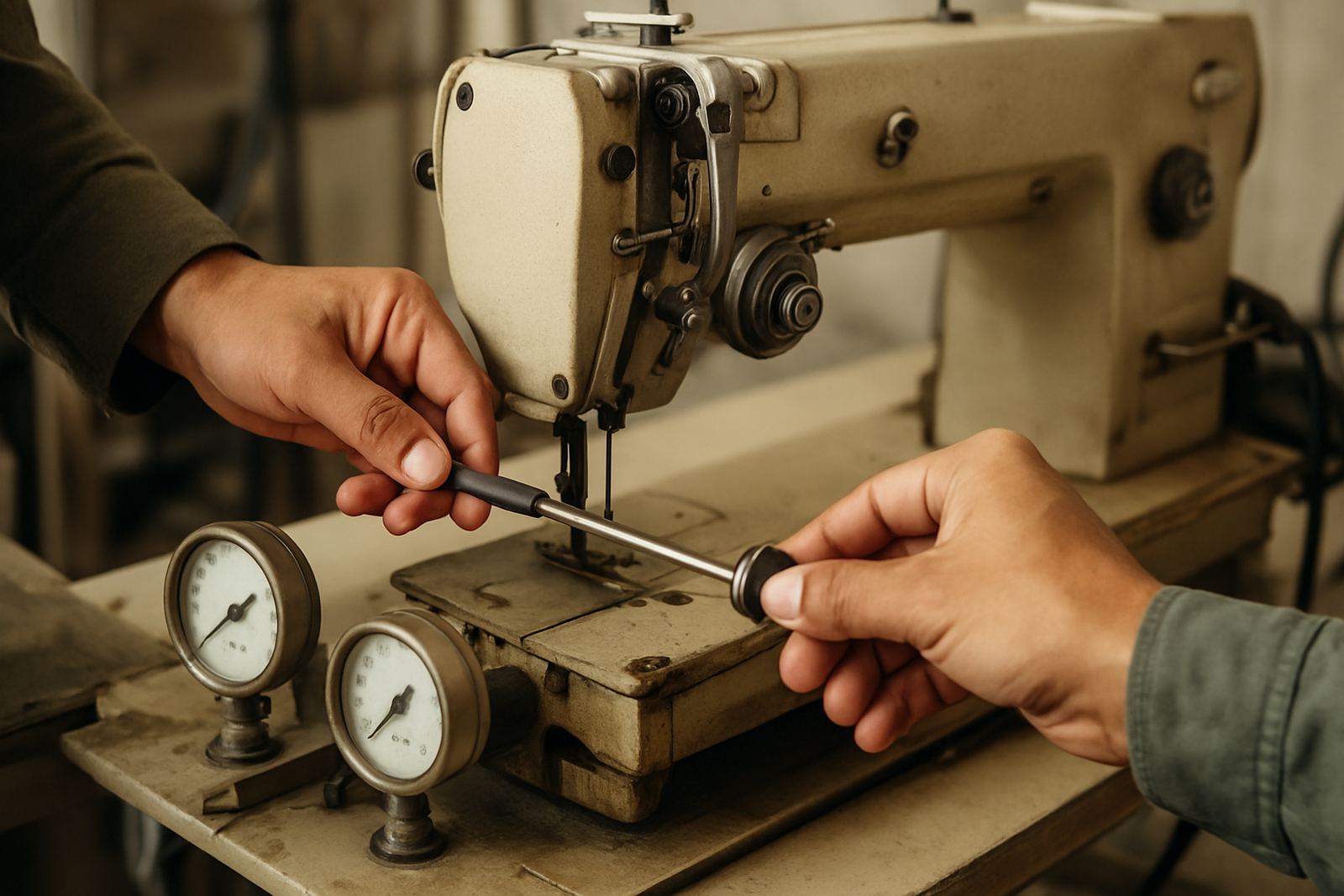
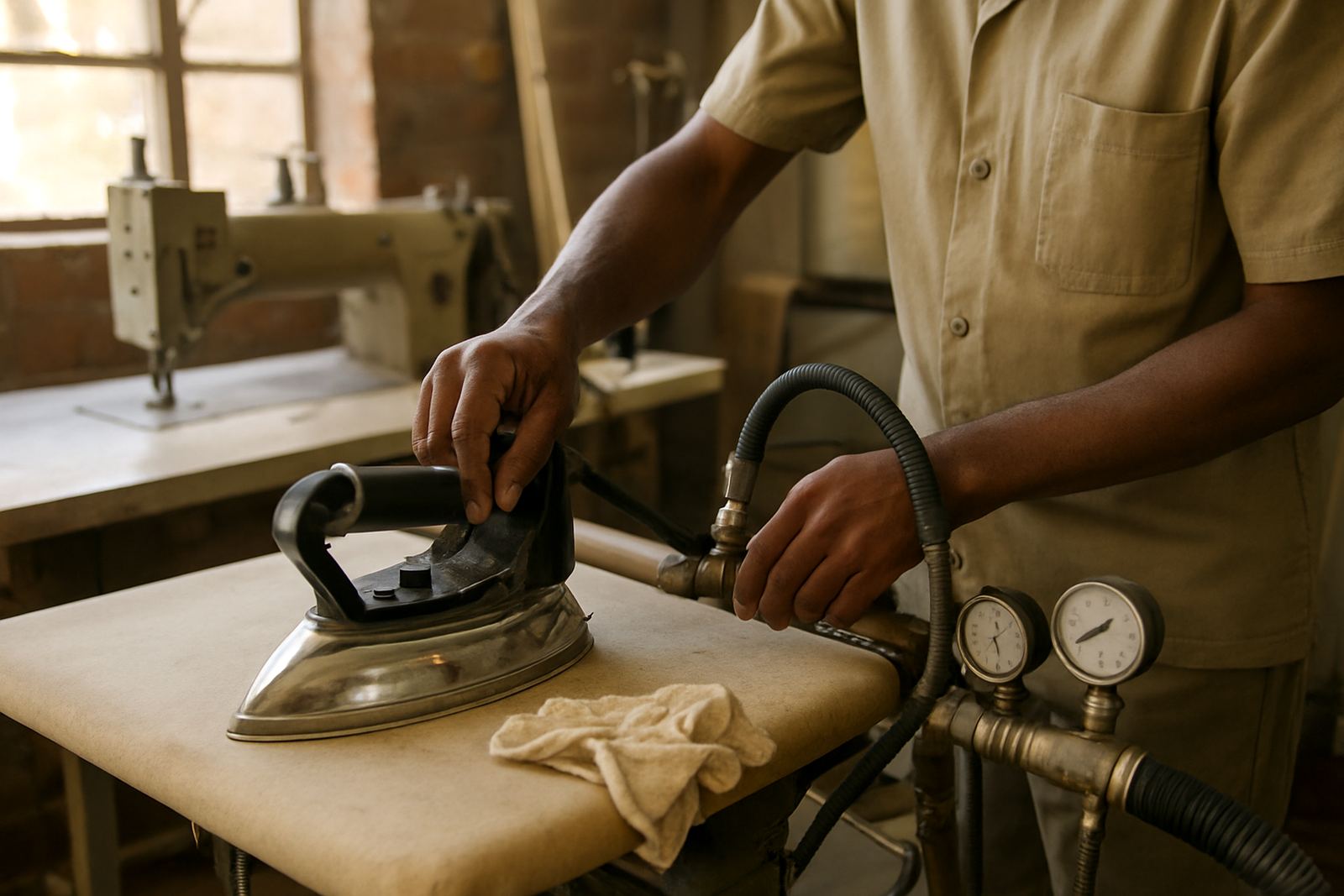
We service compact workroom units and larger production stations, including steam boilers, electric irons, vacuum tables, foot pedals, hoses, pressure controls, water feed systems and wiring connections. We also check for scale build-up, worn seals, blocked steam lines and loose fittings that can show up after long use, load-shedding or hard water topping-ups.
- Boiler cleaning, descaling and leak checks
- Iron soleplate cleaning, thermostat testing and cable inspection
- Vacuum table suction testing, fan checks and table surface inspection
- Steam hose, valve and connector replacement where needed
- Safety checks on pressure controls, indicators and electrical points
How we service boilers, irons and vacuum tables
Boilers are checked for pressure build-up, water level stability and signs of corrosion. We test the safety valve, drain points and internal heating elements, then flush out sludge or scale that can shorten element life. If the station has been standing through a holiday shut-down or inconsistent power supply, we also look at startup behaviour and pressure recovery.
Irons are checked for heat consistency across the soleplate, steam delivery and cord condition. A plate that runs too hot can damage fabric and one that runs cold will leave moisture in the garment. Vacuum tables are checked for suction across the full surface, not only in the middle, because weak edges can cause marking on larger panels and school uniforms.
- Typical boiler pressure range: 2.5 to 5 bar, depending on the unit
- Common iron wattage range: 800 W to 1800 W
- Vacuum table suction is measured for even pull across the working area
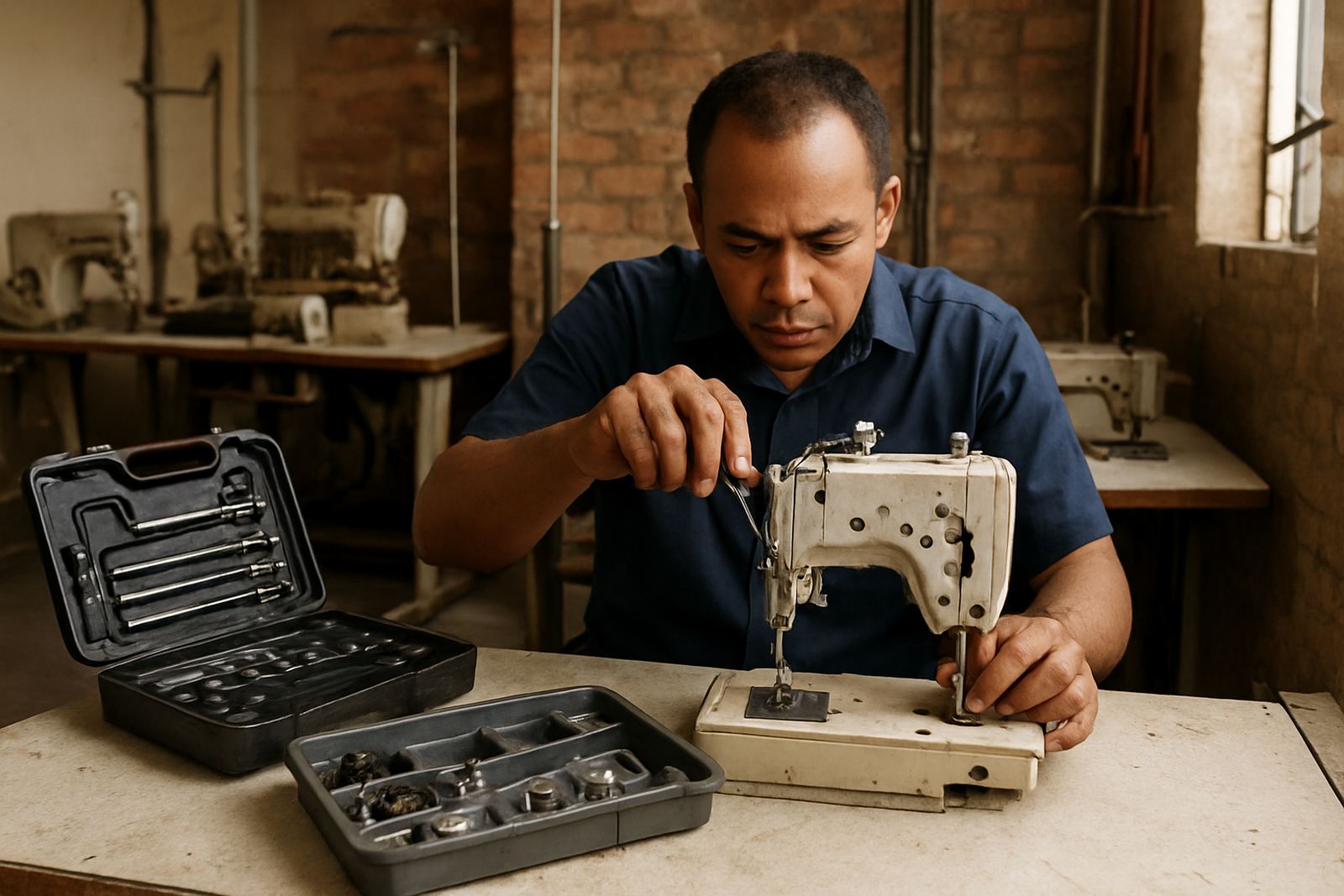
- We can replace worn gaskets, heating elements, pumps and switches where stock allows
Service process from inspection to handover
We start with a quick assessment of the station, the age of the equipment and the faults you are seeing on the floor. If the unit is in the Johannesburg CBD, Fordsburg, Mayfair, Soweto, Germiston, Pretoria, Alberton or Randburg, we can discuss workshop drop-off or on-site attendance depending on the issue and the size of the station.
After inspection, we confirm the work required and advise whether it can be done on site or should come into the workshop. Simple faults such as blocked steam lines or a faulty switch can often be handled faster. More involved work like boiler rewiring, element replacement or vacuum motor repair may need bench testing.
- Step 1: inspection and fault report
- Step 2: isolate power, drain or open the unit as needed
- Step 3: clean, repair and replace worn parts
- Step 4: test pressure, heat and suction under working conditions
- Step 5: handover with usage notes and maintenance advice
Turnaround times and repair planning
Turnaround depends on the fault, the availability of parts and whether the station needs workshop testing. Smaller jobs can sometimes be completed on the same day or within 24 to 48 hours. If a boiler element, pump or control part must be sourced, allow a little longer. We will be plain about timing so your finishing team can plan around it.
For production rooms, we often suggest keeping one unit on service at a time rather than stopping the whole pressing area. That way your cutters and machinists can keep moving while we work on the equipment. In busy garment rooms, good planning matters as much as the repair itself and it helps avoid rushed fixes later.
If the station has not been serviced for a long time, expect a fuller inspection first. This can reveal worn hoses, water damage under the table or a weak vacuum fan that was being masked by daily use. Catching those issues early usually costs less than waiting for a breakdown during peak production.
Pricing approach for workshops and garment rooms
Our pricing is based on the type of machine, the fault found, the time needed and any parts required. We do not guess at a quote before checking the equipment because pressing stations vary a lot, from a single iron and vacuum table to a boiler feeding several work points. You only pay for the work agreed after inspection.
For repeat customers and multi-unit workrooms, we can break the job into stages so that urgent faults are handled first. That is often better for factories and schools working to a timetable. If the station only needs routine maintenance, the cost is usually lower than a callout for a failed heater or pump, so regular care is worth it.
- Inspection and diagnosis charged separately or as part of approved repair work
- Parts quoted only after the fault is confirmed
- Workshop and on-site work priced differently
- Repeat servicing can be scheduled to reduce downtime and emergency callouts
Routine maintenance intervals that keep finishing steady
The right service interval depends on how often the pressing station is used and the quality of your water. In many Gauteng workrooms, we suggest a light check every 3 months and a fuller service every 6 months. High-use stations in factories may need attention more often, especially where steam output runs for most of the day.
Hard water is a common issue and it can leave scale in boilers and narrow steam passages. Regular draining, descaling and checking the water feed helps protect heating elements and valves. If your area has unstable power or frequent interruptions, it is also sensible to inspect controls and connections after power returns, rather than waiting for a failure.
- Weekly: drain checks, visual hose inspection and steam leak watch
- Monthly: iron soleplate cleaning, suction check and cable review
- 3 monthly: boiler flush, pressure test and vacuum table inspection
- 6 monthly: full service with electrical, mechanical and safety checks
Key facts
| Equipment covered | Boilers, hand irons, vacuum tables, hoses, valves, switches and controls |
|---|---|
| Work area | Johannesburg CBD and surrounding Gauteng areas including Fordsburg, Mayfair, Soweto, Germiston and Pretoria |
| Typical pressure range | 2.5 to 5 bar depending on boiler type |
| Common iron output | 800 W to 1800 W depending on the station setup |
| Service options | On site repairs, workshop repairs and routine servicing |
| Maintenance interval | 3 monthly checks and 6 monthly full servicing for busy stations |