

When timing has gone out, the signs are usually plain
Timing issues show up in ways that are easy to miss at first, then hard to ignore. You may see skipped stitches, loose loops underneath, broken needles, uneven feeding, thread shredding or a machine that sounds different when it runs. In many cases the cause is not one single fault, but a small shift in needle timing, hook timing or feed timing after a jam, a blunt needle, loose screws or a hard knock in transit.
We handle timing adjustments for industrial straight stitch machines, overlockers, coverstitch machines, zigzag units, household machines and embroidery heads used in workrooms across Johannesburg CBD, Fordsburg, Mayfair, Soweto, Germiston, Pretoria, Alberton and Randburg. For factories, schools and alteration shops, getting the timing back to spec saves thread, fabric and operator time. It also reduces call-backs that come from chasing the same stitch fault over and over.
What our timing adjustment service includes
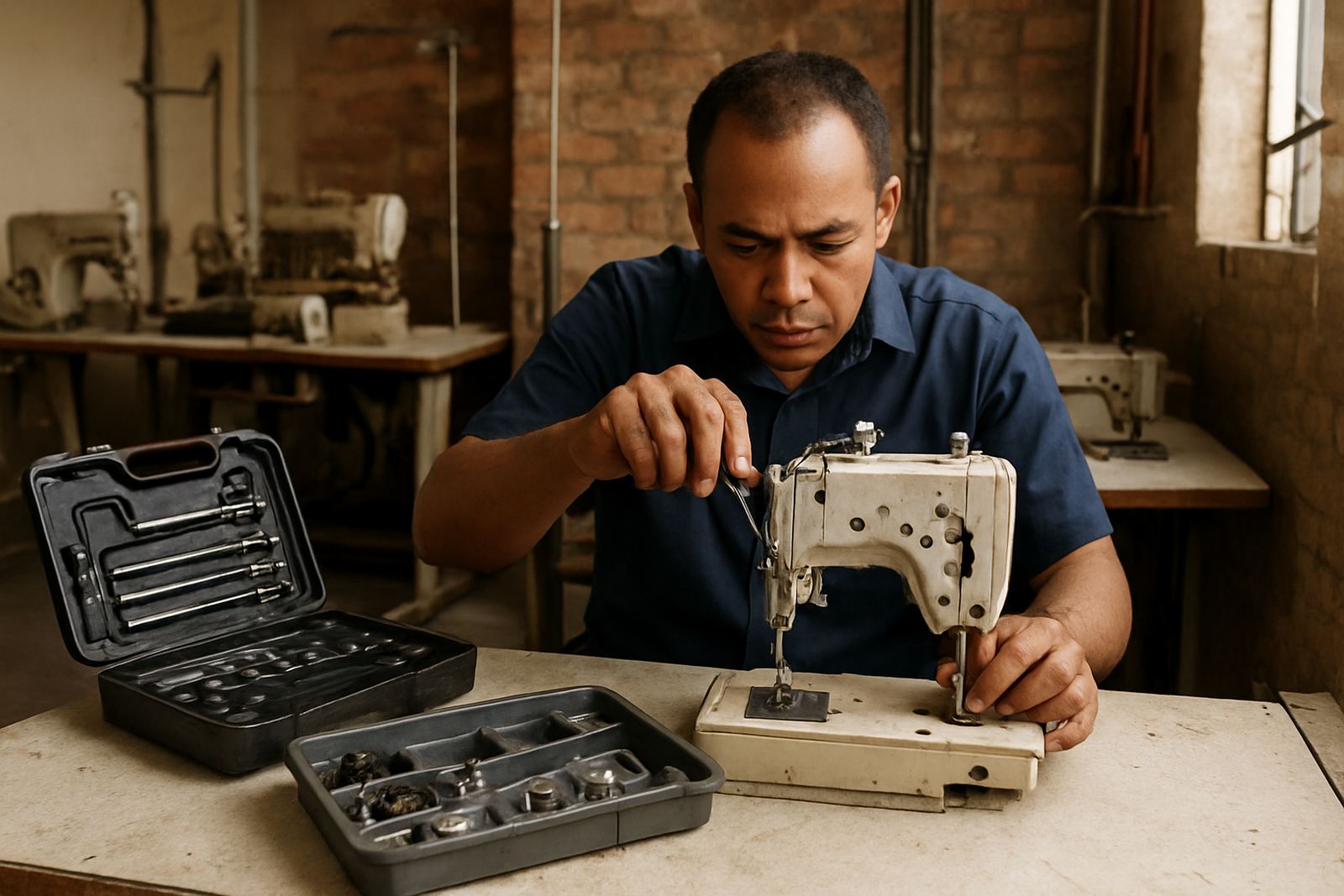
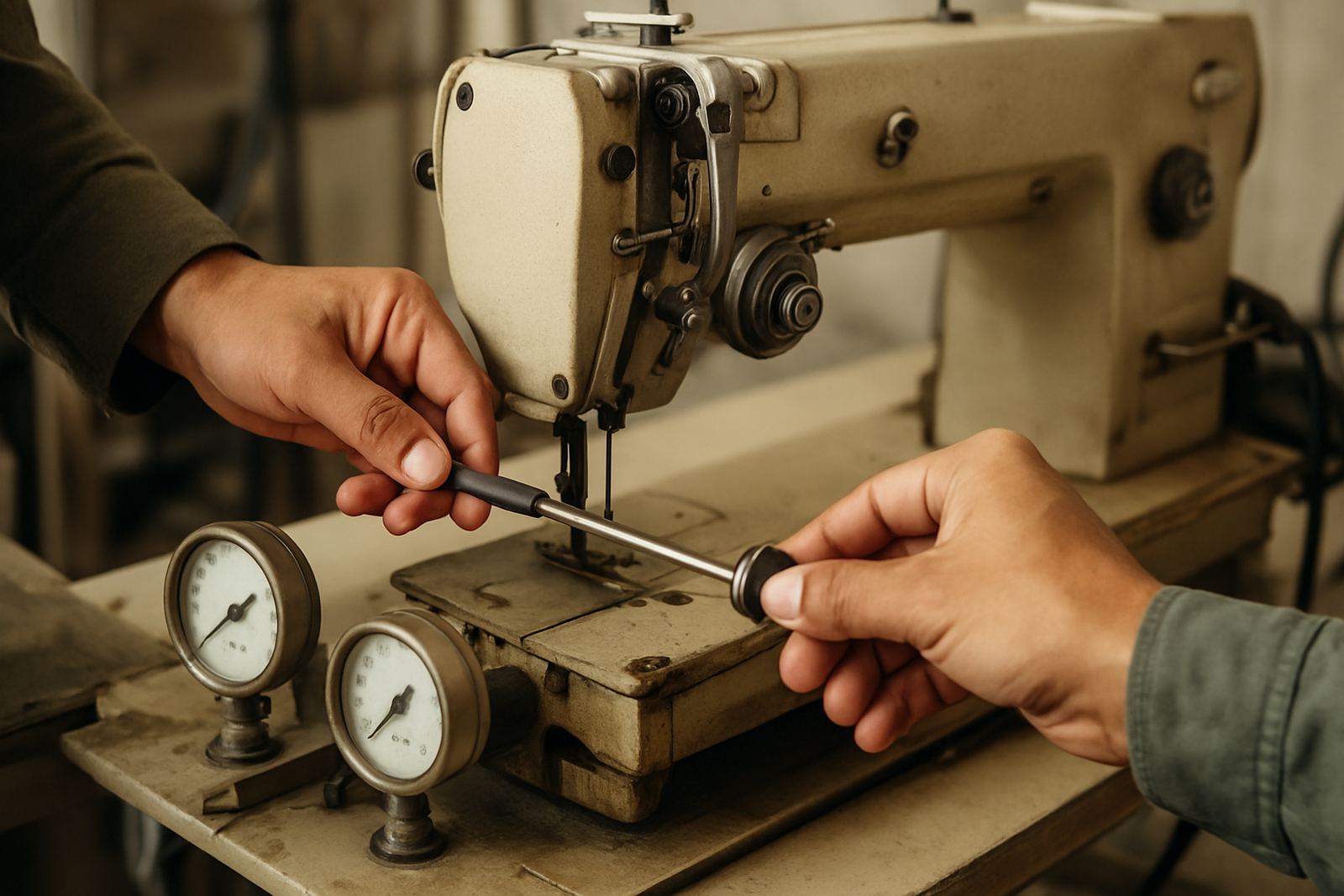
We do more than turn a screw and test a few stitches. A proper timing adjustment checks the needle bar, hook point, looper path, feed dog rise, presser pressure and motor drive where needed. We look for worn belts, loose pulleys, bent needles, damaged hook points and signs that the machine has been running out of time for a while.
- Needle to hook clearance set to correct pick-up point
- Feed dog rise and drop checked for fabric control
- Needle bar height and needle depth adjusted
- Looper or rotary hook position reset where applicable
- Thread path checked for snagging and tension imbalance
- Test stitching on light, medium and heavy material where suitable
If we find a part that is worn past adjustment, we will advise on replacement rather than forcing a temporary fix. That approach keeps the machine stable after it leaves the workshop or after an on site visit.
Our process from inspection to final stitch test
We start with a fault check and a short run test so we can see exactly how the machine is behaving. After that, the technician isolates the timing fault, resets the moving parts in sequence and checks the machine under load. This matters because a machine can look correct by hand but still miss stitches once it is sewing at speed.
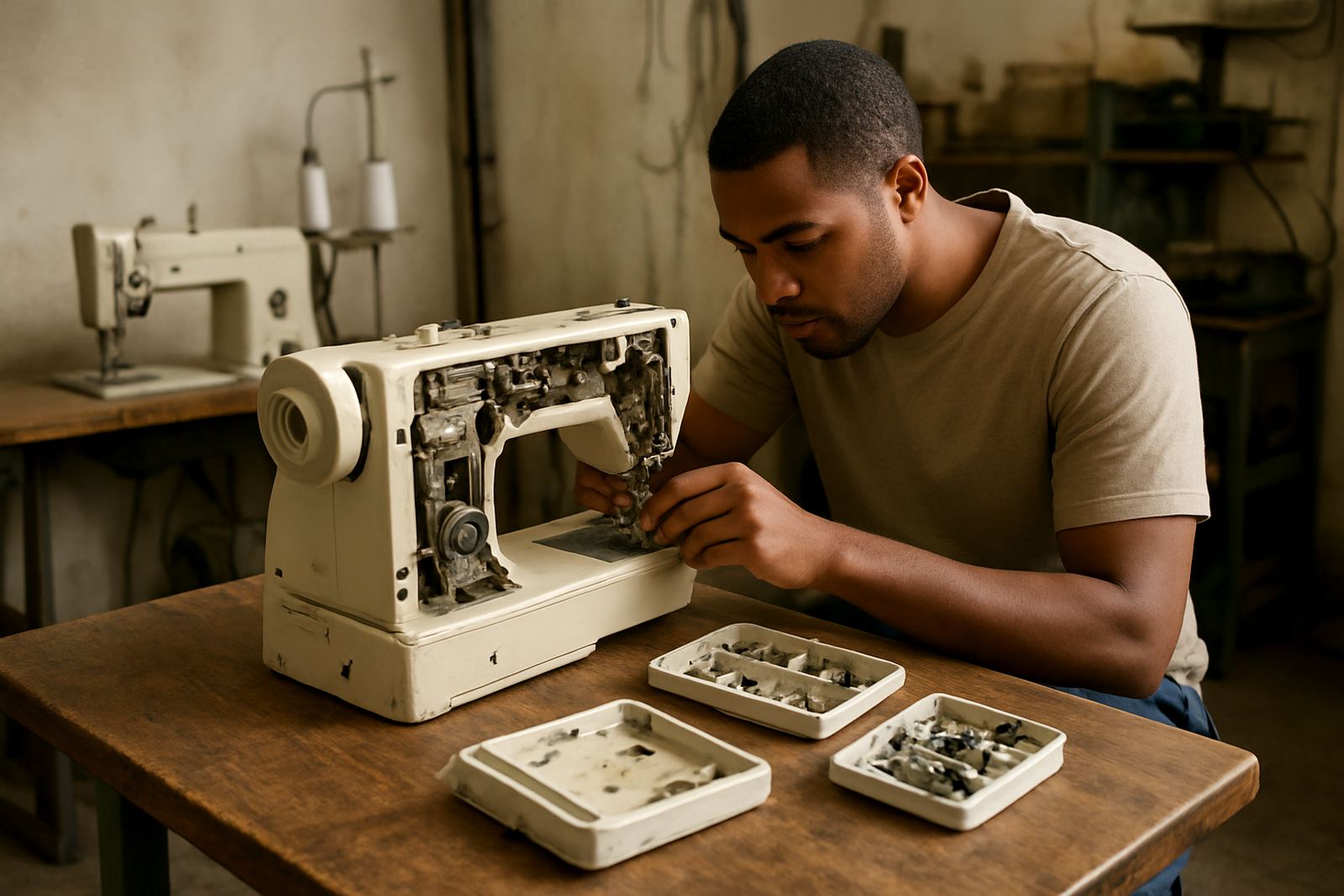
For workshop work, we usually run through a full clean, basic lubrication and tension check before setting timing. For on site repairs, we bring the tools needed to measure needle position, hook point engagement and feed movement without disturbing the whole workroom. If the issue is linked to motor speed, clutch response or poor installation, we address that as part of the job so the correction holds.
- Initial inspection and symptom confirmation
- Timing fault isolation and mechanical reset
- Lubrication, cleaning and wear check
- Stitch test and fine adjustment under working speed
- Operator handover with care notes
Turnaround times for workshop and on site work
Minor timing corrections can often be completed on the same day if the machine is brought into our Johannesburg CBD base early enough and no major part replacement is needed. More involved jobs, such as machines with damaged hook assemblies, bent shafts or repeated impact damage, may take longer because we need to source the correct parts and retest the setup carefully.
For businesses in Gauteng, we plan turnaround around production pressure. Tailors, schools and small factories often need the machine back before the next class or shift, so we prioritise clear fault finding and practical time estimates. If the machine is not worth repairing economically, we will say so straight away rather than leaving you waiting on a machine that is unlikely to hold timing for long.
We also offer servicing alongside the adjustment where needed, especially if the machine has been neglected or has been running through dust, lint or load-shedding related stop-start cycles that can loosen settings over time.
Pricing is based on the fault, not a guess
Timing adjustment pricing depends on the machine type, the extent of the misalignment and whether any worn parts must be replaced. A simple correction on a household machine will cost less than a full industrial reset on a multi-needle embroidery unit or an overlocker with damaged components. We quote after inspection so you only pay for the work that is actually needed.
Our pricing approach is practical and transparent. If the problem is only a timing reset and stitch test, we keep it focused. If the job needs a new hook, looper, feed component or motor alignment, we separate labour and parts clearly. That helps factories and schools budget properly and avoids surprise extras once the machine is already open.
- Inspection before pricing
- Labour and parts separated where applicable
- Repair options explained before proceeding
- Priority given to cost-effective restoration
How often timing should be checked
There is no single interval that suits every machine, but regular checks make a clear difference. Heavy-use industrial machines in factories or busy alteration rooms should have timing checked during routine servicing, usually every 6 to 12 months depending on hours run. Household machines used for home sewing may only need a timing check after an impact, a jam, or when skipped stitches become persistent.
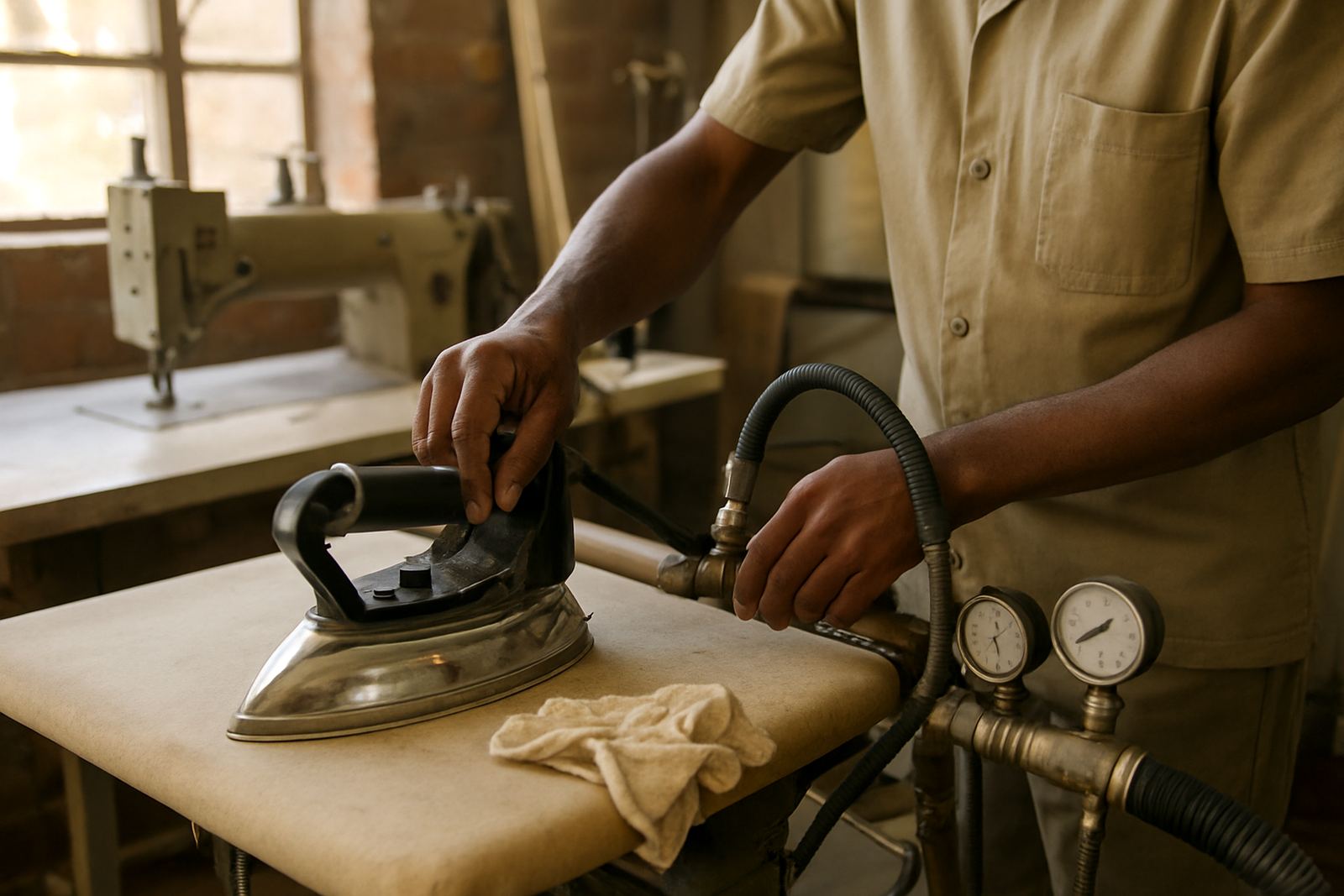
Embroidery machines and fusing or pressing related equipment should be checked whenever thread breaks become frequent, fabric stops feeding evenly or the machine starts sounding harsh at speed. Coastal humidity, dust and lint can also change machine behaviour over time, even if the machine seems fine in the morning and off by the afternoon.
Good operator habits help. Use the correct needle size, replace blunt needles early, avoid forcing fabric through by hand and stop the machine if it begins to knock or jam. Small faults are much cheaper to correct before they turn into bent parts or broken housings.
Why Gauteng workshops call us for timing work
Our Johannesburg CBD base supports clients who need practical, local service across Gauteng, from Fordsburg and Mayfair to Soweto, Germiston and Pretoria. We work with factories, schools, tailors and home sewers who need machines that stitch properly and stay that way. Under the direction of Mandla Ndlovu, our team combines sales, workshop and field support so the job is handled by people who know the machines and the work they do.
Whether the fault is on a single household machine or a line of industrial units in a production room, we aim for the same result: correct timing, clean stitch formation and a machine that is ready for daily use. If you need parts, training or a full service at the same time, we can bundle the work and reduce repeat downtime.
Key facts
| Machine types | Industrial straight stitch, overlocker, coverstitch, zigzag, household and embroidery machines |
|---|---|
| Core settings | Needle bar height, hook timing, looper timing, feed timing, presser pressure |
| Typical needle clearance | Set to manufacturer pattern by machine type, usually in the sub-millimetre range |
| Service format | Workshop repair or on site adjustment across Johannesburg and Gauteng |
| Common symptoms | Skipped stitches, thread breakage, loose loops, uneven feed, noisy operation |
| Maintenance interval | Check at routine service, or every 6 to 12 months for heavy-use machines |