What an air compressor does in a sewing room
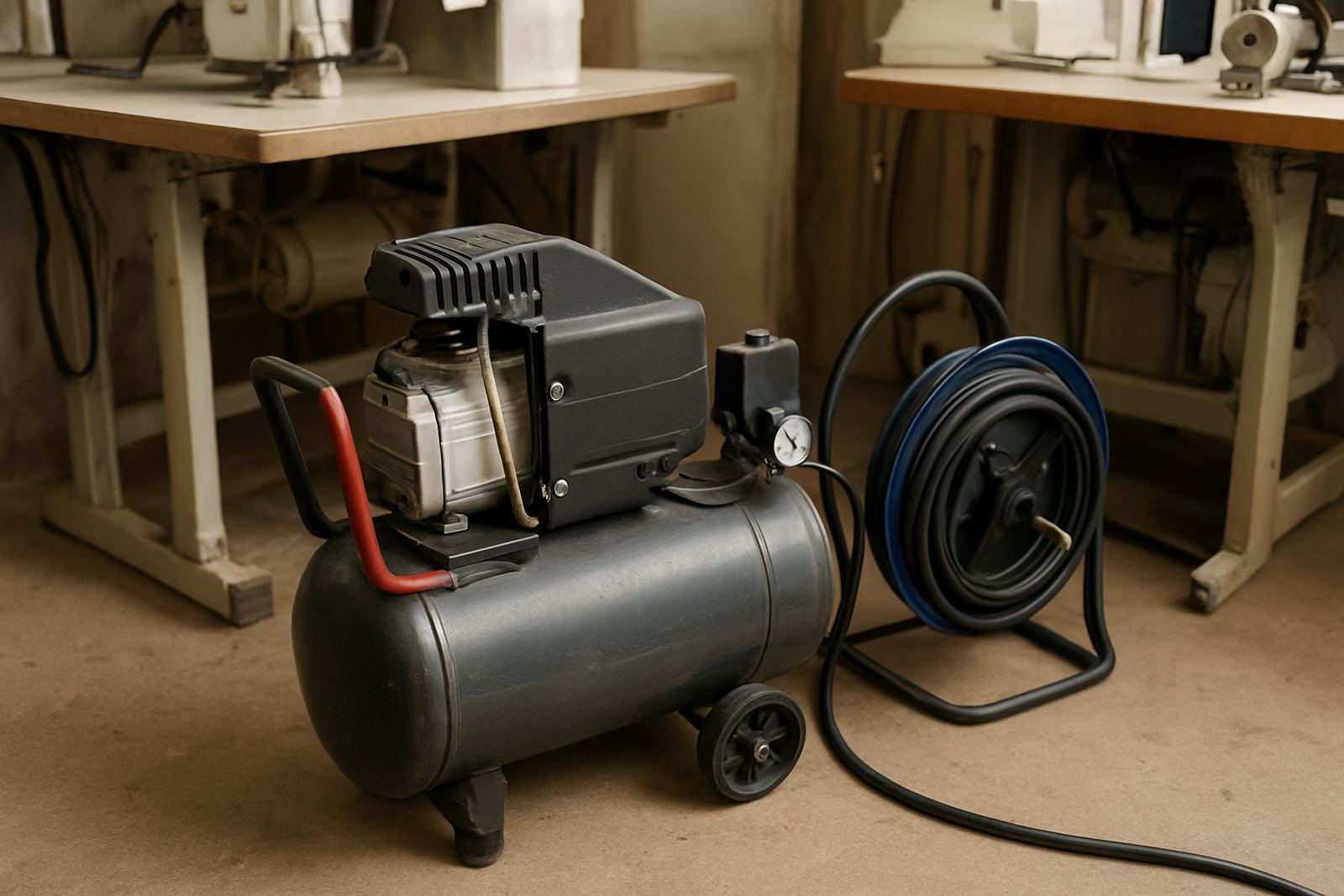
An air compressor stores air under pressure and releases it when a machine or attachment needs it. In a sewing room, that can mean pneumatic presser feet, automatic cutters, cleaning guns, small pressing attachments and other equipment that works better with a controlled air supply. For many workrooms it also helps with quick dust removal around motors and tables, which matters when lint builds up fast.
The right unit must match the duty cycle of the equipment it supports. A small home setup may only need light intermittent air, while a factory floor running several stations needs a stronger tank, a more consistent delivery rate and proper filtration. If the compressor is too small it will cycle constantly and wear out faster. If it is oversized, you spend more on power and noise than you need.
We supply compressors for sewing work, pressing areas and auxiliary attachments, and we check whether the machine count, operator flow and room layout suit the unit you want to install.
Common sizes and options we supply
Air compressors are usually selected by tank size, pressure rating and delivery volume. For sewing room use, the choice often comes down to how many points need air at once and whether the unit will sit in the work area or in a separate service space. A larger tank gives a steadier supply, while a higher delivery rate helps when several attachments trigger together.
- Small portable units: useful for one or two stations, light pneumatic attachments and occasional workshop use.
- Mid-size workshop units: suited to tailors, schools and small factories with several air-driven accessories.
- Heavy-duty floor units: better for multi-station production, pressing rooms and regular daily use.
- Single-phase or three-phase options: chosen according to the supply already available at the premises.
- Oil-lubricated or low-maintenance styles: selected based on duty, noise tolerance and servicing preference.
For most sewing rooms, we look at pressure, recovery time and the amount of air the equipment actually uses. A unit with the wrong rating will either struggle to keep up or run longer than it should, which is hard on the motor and the rest of the setup.
Where an air compressor suits best
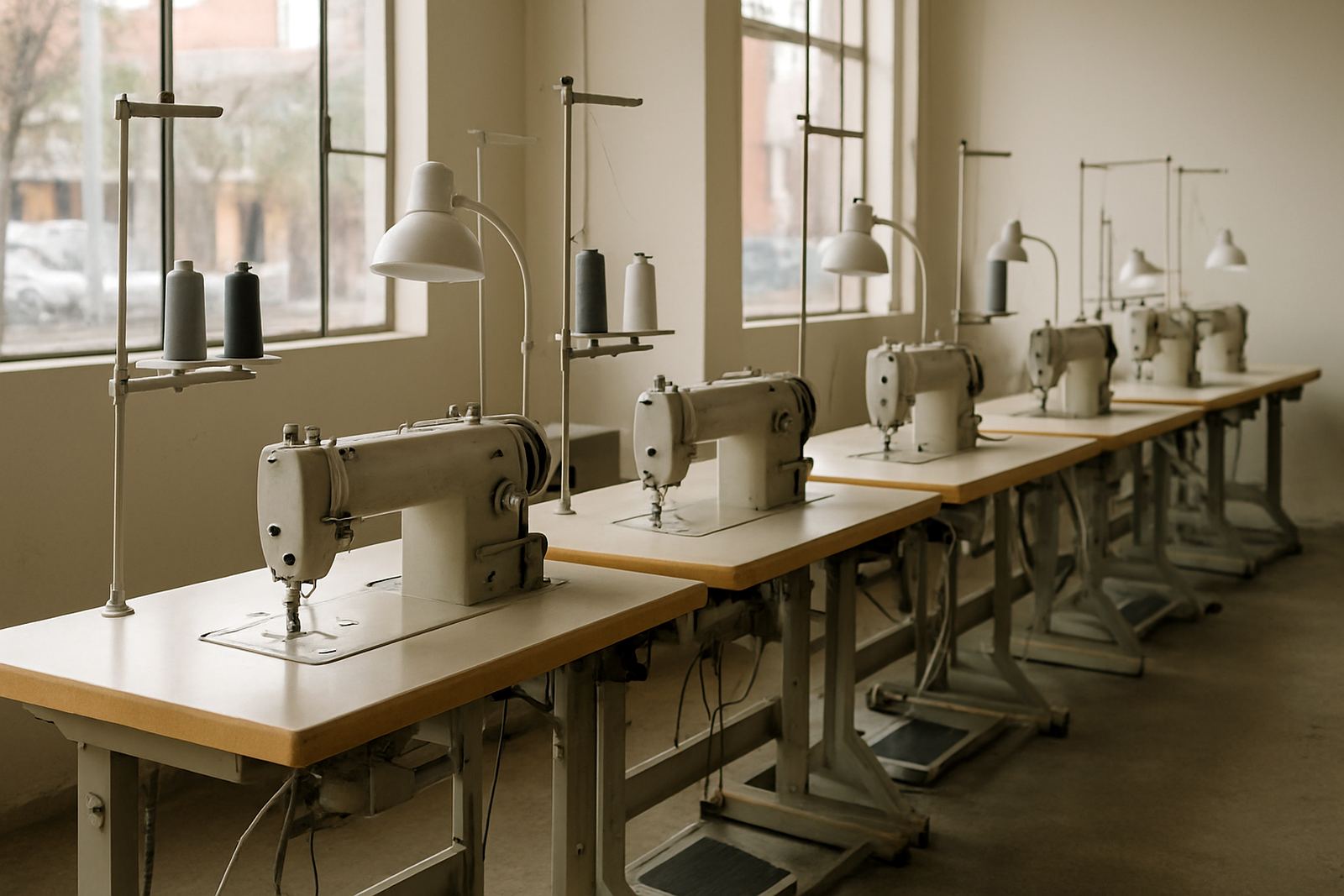
Air compressors are used in industrial sewing rooms, embroidery areas, pressing stations and some household workrooms where extra accessories are fitted. They are especially helpful in Johannesburg CBD workspaces where floor area is tight and operators need compact equipment that still performs properly. In Fordsburg and Mayfair we often see mixed-use rooms with sewing, trimming and pressing in one area, so the compressor must be placed carefully for access and ventilation.
They also suit schools training learners on industrial machines, because a stable air supply helps keep demonstrations consistent. In Germiston, Soweto, Pretoria and Alberton, we often set up units for workshop use where dust, heat and long operating hours are part of the day. If the room is close to a busy road or has many machines running at once, noise control and pipe routing become important as well.
Where coastal humidity is not a concern in Gauteng, the bigger issue is dust and load-shedding. A compressor may be fine on paper, but if the workshop voltage is weak or power cuts are common, the installation must take that into account.
Installation, wiring and room setup
Correct installation matters as much as the compressor itself. The unit should stand on a level surface with enough airflow around the motor and tank. We check the route for the air line, the location of pressure regulators, and whether the room has enough space to service the drain valve, filter and belt guards. A cramped corner with poor ventilation is not a good place for a compressor.
Power needs depend on the size of the machine. Smaller units may run on standard single-phase supply, while larger workshop compressors often need three-phase power. We also consider start-up current, breaker size and whether the room’s electrical board can handle the load together with sewing machines, irons and presses. If the building is affected by load-shedding, we can advise on what can and cannot run together when power returns.
- Check the available voltage before ordering.
- Allow space for cooling and access for servicing.
- Keep the intake away from lint-heavy areas.
- Use properly sized piping and fittings.
- Plan for safe draining of condensate.
For multi-station rooms, we can also advise on line layout so pressure loss stays low across the work area.
Care, servicing and common faults
Like any workshop machine, a compressor needs routine care. The most common issues are water build-up in the tank, dirty intake filters, loose belts, pressure switch problems and worn seals. If the unit runs hotter than usual or takes too long to build pressure, it may need attention before it fails during a busy shift.
We recommend regular tank draining, filter cleaning and checking all fittings for leaks. In a sewing room, lint and dust can affect the intake if the unit is not placed correctly, so it is worth keeping the surrounding area clean. Oil levels on lubricated units should be checked on schedule, and any odd noise from the motor or pump should be looked at early rather than later.
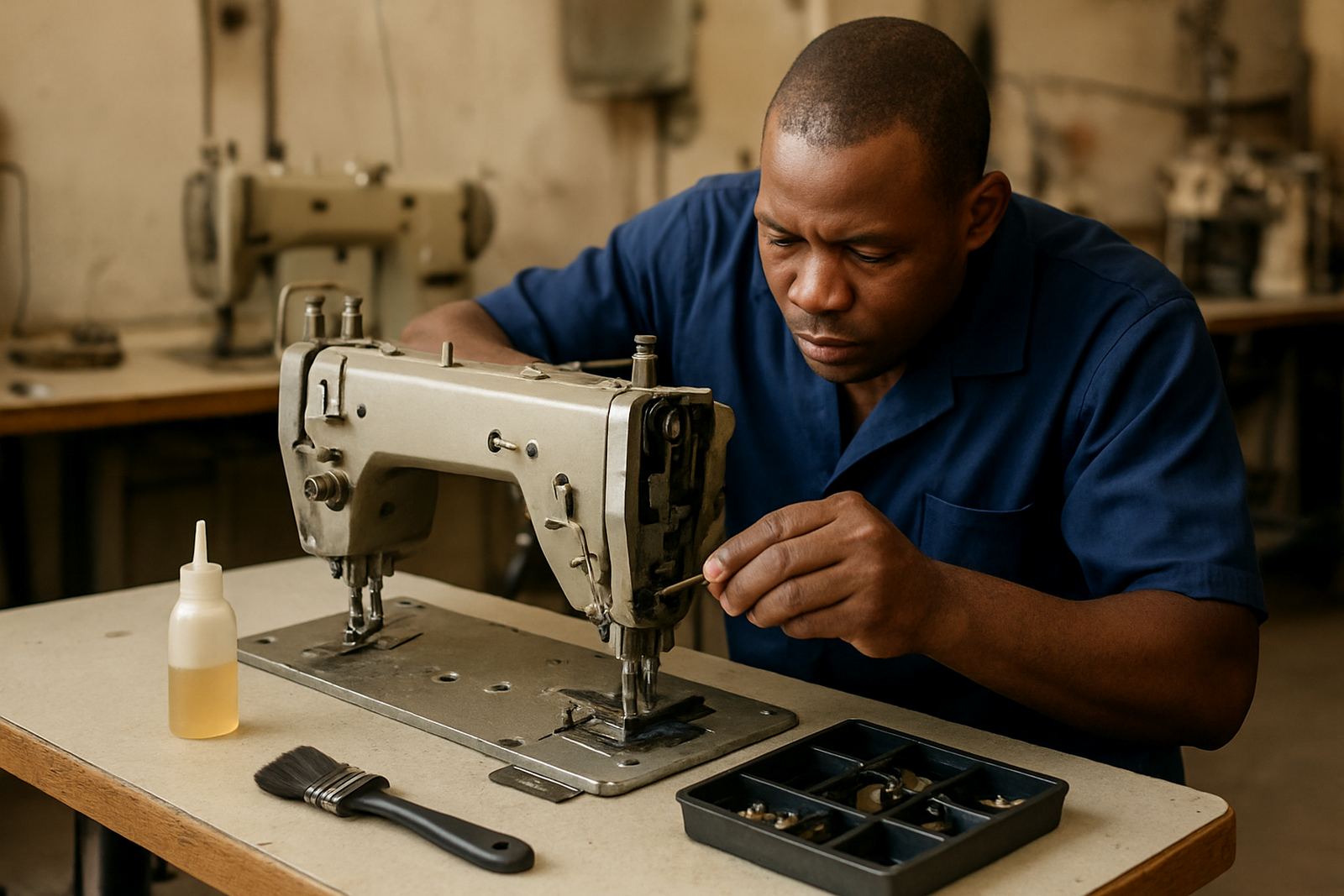
Our workshop handles repairs, routine servicing and parts sourcing for compressors used with sewing and pressing equipment. We also assist with field calls where the issue is with the installation, not only the machine itself.
What to check before placing an order
Before ordering an air compressor, it helps to match the unit to the actual work being done. A compressor chosen only by size can still be wrong if the pressure requirement or duty cycle is off. We look at the machine type, how many stations will run at once, and whether the room already has suitable electrics and ventilation.
- What equipment will use the air and how many points are active at once.
- Required pressure in bar or psi for the attachments being fitted.
- Tank size, motor size and delivery rate needed for the workload.
- Available power supply, single-phase or three-phase.
- Space for installation, noise tolerance and service access.
- Need for filters, regulators, drain points and piping.
If you are unsure, send through the details from your current machine or the room layout and we will advise on the most suitable option. That saves time, avoids costly mistakes and usually gives a better result on the first installation.
Key facts
| Type | Industrial and workshop air compressor for sewing room use |
|---|---|
| Supply | Single-phase or three-phase, depending on model |
| Pressure range | Commonly 6 to 10 bar, model dependent |
| Tank sizes | Approx. 24 L, 50 L, 100 L and larger options |
| Use cases | Pneumatic attachments, pressing stations, cleaning and auxiliary equipment |
| Servicing | Filter cleaning, belt checks, drain valve maintenance and leak inspection |