

What a steam ironing table does in a workroom
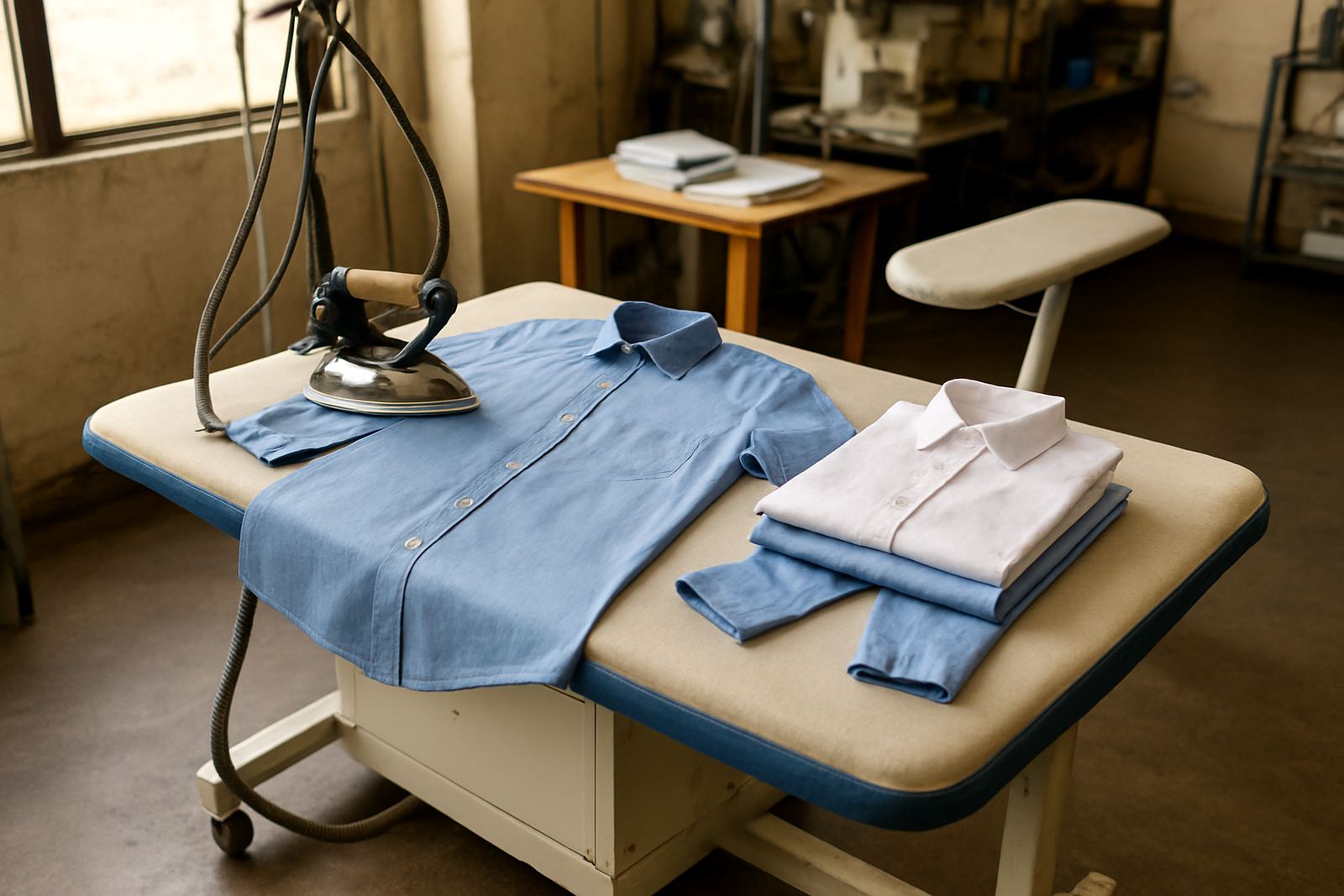
A steam ironing table is a purpose-built pressing station for garments that need a clean finish after sewing, alterations or production. It combines a shaped tabletop, a heat assisted surface and vacuum extraction so fabric sits flatter while the operator presses collars, seams, hems and panels with more control.
For garment rooms in Johannesburg CBD, Fordsburg, Soweto and Germiston, this matters because pressing quality affects the final look of every item. A good table helps remove moisture, reduces shine on delicate fabrics and keeps work moving when there is a queue of uniforms, school wear or small factory orders. It is also useful where the power supply is not always steady, because the right unit can be matched to the actual workload and the available electrical load.
These tables are used with a steam iron or steam generator, depending on the setup. The table itself does not replace the iron, it supports the pressing process so operators get better results with less rework.
Sizes, shapes and finish options to consider
Steam ironing tables come in different lengths and board shapes so they can suit a small tailoring room or a larger production line. Common widths are around 1200 mm to 1500 mm, with working heights usually adjustable for operator comfort. Some tables are compact for single-operator spaces, while others offer a larger surface for jackets, dresses and longer work pieces.
Options can include a left or right hand sleeve attachment, a narrow pointed end for shaping trousers and bodices, and a built-in vacuum fan under the board. Heated tops are common on better units because they help keep the surface dry and reduce condensation during long pressing sessions. In humid areas such as Pretoria or parts of Gauteng with damp mornings, the heated top helps keep the board ready for use through the day.
- Standard flat board for general garment pressing
- Shaped board for shaping shoulders, fronts and skirt panels
- Sleeve attachment for narrow items and seams
- Vacuum only model for dry hold-down and faster cooling
- Heated and vacuum model for higher output and cleaner finishing
Where it suits best in Gauteng workspaces
This product suits factories, alterations rooms, fashion schools, school uniform departments, dry cleaning workrooms and home sewers who do a fair amount of pressing. It is especially useful where garments need repeat finishing, not just a quick once-over with a household iron. A proper steam ironing table gives a steadier pressing posture and better repeat results across batches.
We often recommend it where the team is working with school uniforms, trousers, shirts, dresses, jackets and workwear that must look consistent before packing or delivery. It also helps when several operators share the same area because the vacuum feature speeds up cooling and keeps the board ready for the next item. In smaller spaces, a single compact table can still improve output without taking over the room.
If the workroom is in a building with load-shedding or limited circuits, it is worth planning the pressing point carefully. The table, steam source and any extra heater should be matched to the supply so the setup runs properly and does not trip unnecessarily.
Installation, power and steam requirements
Installation starts with placing the table on a level floor and checking the working space around it. The operator needs room to move fabric, reach the iron and remove pressed items without knocking into sewing machines or storage racks. In a busy shop, the table should sit close to the finishing area but away from damp walls or heavy foot traffic.
Most steam ironing tables use standard mains electricity for the vacuum fan and, where fitted, the heated top. The exact supply depends on the model and the combination of features. A simple unit may work from a normal 220V outlet, while a heated vacuum table with stronger extraction may need a dedicated circuit. Steam is supplied from a separate iron or boiler, so the steam source must also be checked before installation. If you are fitting the table into an older building in Johannesburg CBD or Fordsburg, it is wise to confirm that the plug point, breaker size and cable routing are suitable before the equipment is put into daily use.
- Check floor space, door width and access for delivery
- Confirm single-phase or other supply available on site
- Make sure the circuit can handle vacuum and heat draw
- Position the table near the steam source and ironing operator
- Allow ventilation so heat and moisture do not build up
Care and servicing for steady pressing quality
A steam ironing table needs regular care to keep the vacuum strong and the heating even. Dust, lint and fabric fibres can build up around the motor intake, board cover and ventilation points. If the table is used daily, these parts should be checked often so the airflow does not become weak.
The board cover and pad should be kept clean and dry. If the padding becomes compressed, the pressing result can suffer because marks may show through on lighter fabrics. The fan or motor may also need periodic checking, especially in workrooms where lint levels are high. In coastal humidity or damp storage areas, it helps to keep the unit covered when not in use and to switch on the heated top early enough for the board to warm through properly.
Our team handles routine servicing, workshop repairs and on site repairs where practical. We also assist with vacuum faults, heating issues, wiring checks and general pressing station upkeep so the table keeps its shape and function. For teams that use the table heavily, a service schedule is cheaper than waiting for the unit to fail mid shift.
What to check before you place an order
Before ordering, it helps to list the kind of garments you press most often, the space available and the power you can spare. A table for school uniforms may need a different shape from one used for jackets, bridal work or factory finishing. If the room is small, measure the route from the entrance to the working position so the table can be moved in without difficulty.
- Required board size and shape
- Whether you need vacuum only or vacuum plus heat
- Voltage and plug point availability on site
- Steam iron or boiler setup already in use
- Height adjustment range for the operator
- Need for a sleeve attachment or extra cover set
It is also worth checking whether the unit will be used by one person or several. In schools and factories, a stronger pressing station may be worth the extra cost because it stands up better to repeated daily use. If you are unsure, our Johannesburg CBD team can help match the table to your garment room, from small alterations counters to larger production floors across Gauteng.
Key facts
| Type | Steam ironing table with vacuum and heated top options |
|---|---|
| Working surface | Approx. 1200 mm to 1500 mm length, model dependent |
| Power supply | 220V single-phase on most models, confirm per unit |
| Functions | Vacuum hold-down, heated board, sleeve attachment option |
| Use | Garment rooms, tailoring shops, schools, factories and finishing stations |
| Maintenance | Cleaning, pad checks, fan servicing and heating element inspection |