

What a steam boiler unit does in the workroom
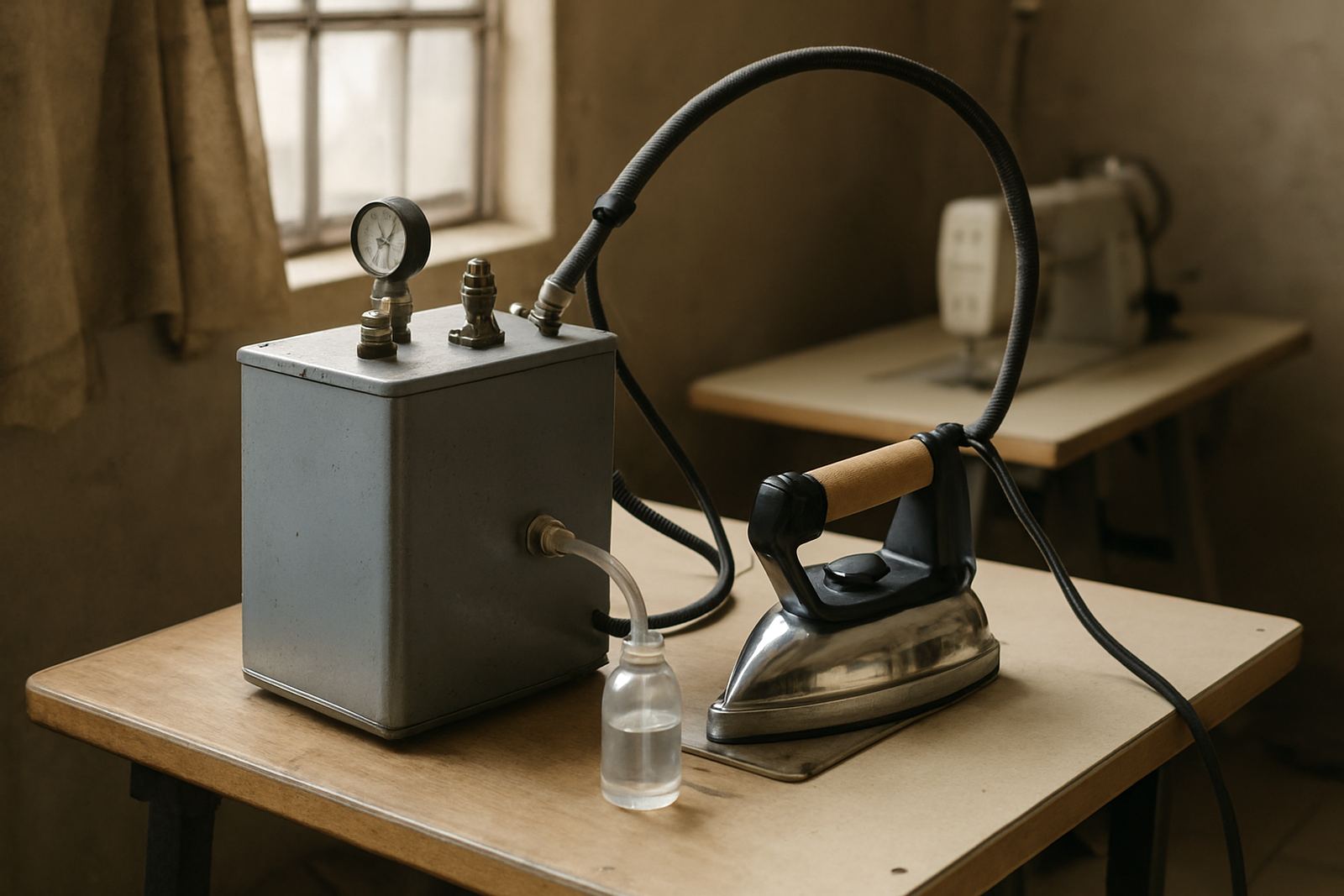
A steam boiler unit heats water and sends pressurised steam to one or more pressing irons or vacuum pressing stations. In daily use, that means quicker crease setting, cleaner finishing on jackets and trousers, and more consistent results on school uniforms, corporate wear and made-to-measure clothing.
For a busy tailoring room in Johannesburg CBD or a school uniform workshop in Soweto, the main benefit is control. Instead of relying on small tabletop steam sources that lose pressure fast, a boiler keeps steam flowing for longer periods. That matters when you are pressing collars, seams, hems and heavy fabrics like denim, suiting and lined garments.
These units are commonly used with a single press point or a small pressing line, and they can be matched to the size of the room and the number of operators. In smaller shops, one boiler may feed one or two pressing stations. In larger workrooms, a higher capacity unit can support more than one operator at a time.
Sizes and options for different workshop loads
Steam boiler units are selected by tank size, steam output and the number of stations they must feed. Small units suit home-based alterations, start-up tailoring rooms and sample rooms. Medium units suit steady day-to-day use in school wear, repairs and garment finishing. Larger units are better for factory floors and higher-output workshops where presses run for most of the day.
Common options include automatic water feed, pressure gauge, safety valve, low-water cut-out and drain valve. Some units are paired with a hand iron, while others support a full pressing station with a heated buck, vacuum table and finishing iron. If the workshop is in Germiston, Alberton or Pretoria, where power interruptions can affect planning, the right boiler size helps reduce downtime and gives you more room to manage your production schedule.
- Small capacity units for single-operator rooms
- Medium units for tailoring shops and alteration services
- Higher output units for multi-station garment workshops
- Options for steam irons, pressing tables and fusing support
- Manual or automatic water fill depending on the setup
Where steam boiler units work best
A steam boiler unit suits any workshop that needs regular steam pressing and a neat, repeatable finish. That includes tailoring rooms, alteration counters, uniform manufacturers, clothing repair shops, fashion schools and training centres. It is also useful in workrooms that do occasional bulk work for lodges, churches, private schools and corporate accounts.
In the Johannesburg CBD and Fordsburg, space is often limited, so a compact unit with a tidy footprint can help keep the floor area clear. In Mayfair and Randburg, where many operators work from mixed-use premises, the boiler should be placed where steam lines can run safely and where there is enough ventilation around the machine. For sites close to coastal humidity, storage and water quality need a bit more attention, but even inland workshops should avoid damp corners and clutter around the unit.
- Tailoring rooms and alteration shops
- School uniform and garment repair businesses
- Fashion training rooms and trade schools
- Small factories and production workrooms
- Pressing stations in mixed-use commercial spaces
Installation, space and utility requirements
Proper installation is important because a steam boiler unit works with heat, pressure and water. The unit should stand on a level surface with enough space for filling, servicing and safe operation. It should not be packed against walls or stored under low shelves. A technician should check the steam line routing, electrical connection and pressure setting before the unit goes into daily use.
Most workshop boilers need a stable mains electricity supply and a suitable socket or hard-wired connection, depending on the model. Some units are electric only, while others may be arranged to work with gas heating where the premises and compliance rules allow it. In all cases, good ventilation, access to clean water and a clear service area matter. If the workshop has frequent load-shedding, you may need to plan around power availability and batch your pressing work so the boiler is not left idle for long periods.
When we install or set up equipment in Pretoria, Soweto or Germiston, we look at the route from the boiler to the pressing point, the room layout and the operator’s working height. A short, well-routed steam line usually performs better than a long run with unnecessary bends.
Care, servicing and everyday operation
Like any pressurised heating unit, a steam boiler needs regular care. Water quality affects scale build-up, heating efficiency and valve performance. In areas with hard water, the tank should be drained and cleaned at sensible intervals. The pressure gauge, safety valve and cut-out should be checked so the boiler works within safe limits. If the machine starts taking longer to heat, or the steam output drops, it may need cleaning, descaling or a check on the heating element and controls.
Routine servicing also helps prevent small faults from turning into expensive downtime. We often see issues caused by neglected drains, blocked steam hoses, loose fittings or operators topping up water too late. A simple workshop routine goes a long way:
- Drain the boiler as part of the end-of-day or end-of-week routine
- Use clean water where possible to reduce scale
- Check hoses and fittings for leaks or wear
- Watch the pressure gauge during warm-up
- Keep lint and cloth scraps away from the unit
If the unit is used daily, arrange servicing before a busy season rather than after a breakdown. That saves time and keeps production moving.
What to check before you place an order
Before ordering a steam boiler unit, it helps to match the machine to your actual workload. A small room pressing uniforms for a nearby school does not need the same capacity as a garment factory that runs multiple operators. The right choice depends on how many pressing points you need, how many hours the unit will run each day and what type of garments you finish.
Please check the following details before ordering:
- How many steam outlets or pressing stations the boiler must support
- Whether you need an electric unit or a gas-based setup where permitted
- Available power supply and socket or wiring arrangements
- Room size, ventilation and safe placement space
- Water quality and whether you need a drain or filtration routine
- The type of pressing work, from light alterations to heavy suiting
If you are unsure, our Johannesburg CBD team can help you compare options for your room, output and budget. We also support installation, routine servicing, on site repairs and operator training, so the unit is set up for proper daily use from the start.
Key facts
| Product type | Steam boiler unit for workshop pressing stations |
|---|---|
| Typical use | Steam supply for pressing irons and finishing stations |
| Capacity options | Small, medium and higher output workshop models |
| Power requirement | Mains electric supply, model dependent |
| Utility needs | Clean water, drain access and ventilation |
| Common features | Pressure gauge, safety valve, low-water cut-out and drain valve |