What a Button Sew Machine Does in a Busy Workroom
A button sew machine is built to attach buttons quickly and with repeatable tension, stitch formation and button placement. For fashion houses, schoolwear producers and uniform makers, it cuts down labour time and helps keep every garment looking the same from the first piece to the last.
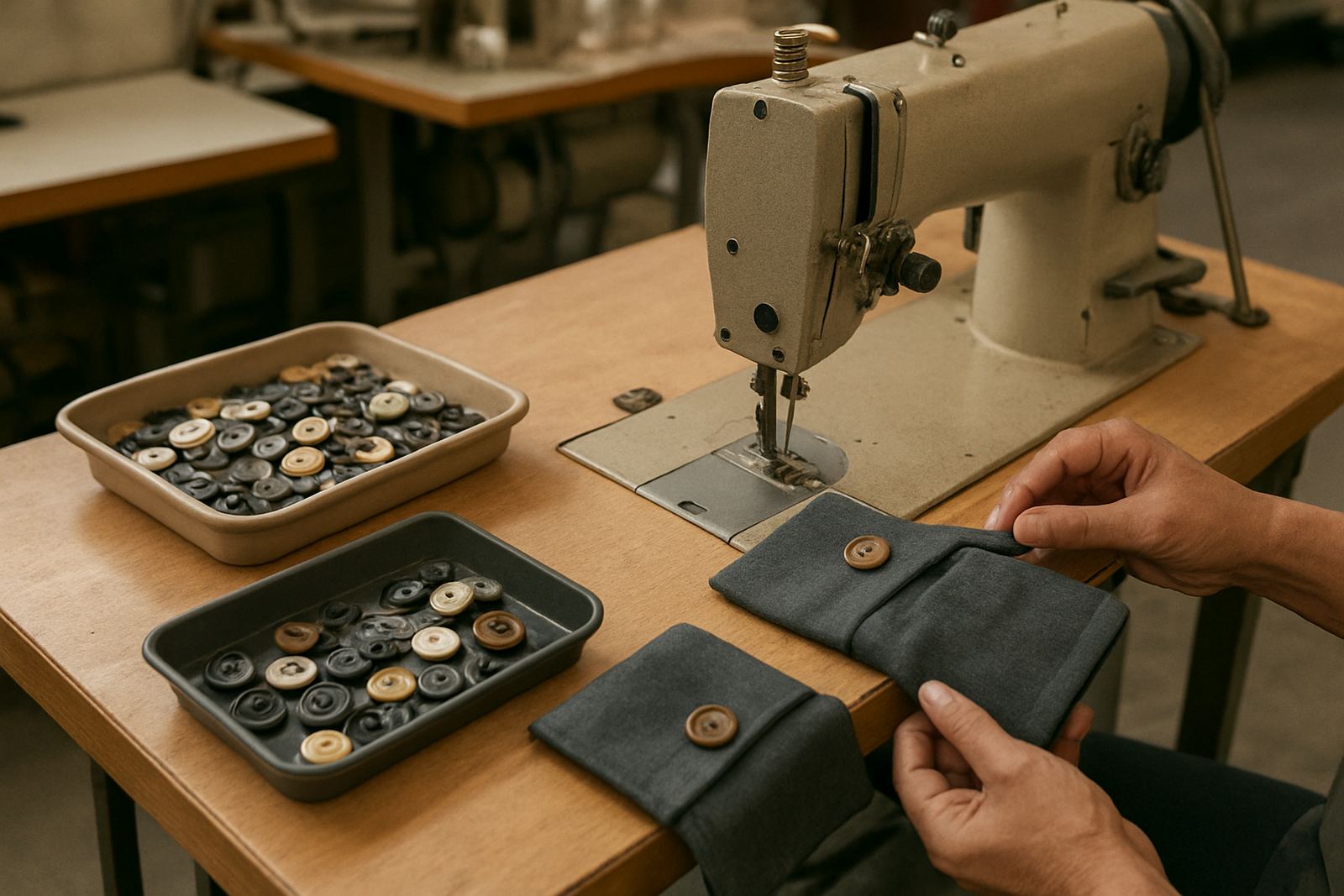
Unlike hand sewing, the machine holds the button in position and forms the fastening stitch cycle in a controlled way. That matters when you are working on batches of shirts, tunics, blazers, lab coats or PE tops, especially when orders must move fast and the finish must still be neat. In Johannesburg CBD workrooms, as well as Fordsburg, Mayfair and Soweto, this is often the machine that keeps a production line moving after cutting and overlocking are already done.
Button sew machines are available in different configurations for flat buttons, shank buttons and selected garment styles. Some models are better for light fabric, while others handle heavier schoolwear fabric and workwear better. The right choice depends on the button size, fabric weight and how often the machine will run through the day.
Typical Sizes, Stitch Patterns and Button Types
The main thing to check is whether the machine matches the button style you are using and the hole spacing required. Most workrooms use a standard button attaching setting for shirt buttons, but many also need a wider setup for thicker buttons on jackets or uniforms. If you sew for schools in Germiston or Pretoria, you may need one setting for shirts and another for heavier winter garments.
- Button diameter support: commonly 10 mm to 32 mm, with some machines handling larger sizes
- Stitch pattern: 2-hole, 4-hole and shank style attaching options, depending on the machine head
- Attachment speed: typically fast cycle operation for batch production
- Thread use: suited to standard garment thread and heavier topstitch thread where required
- Fabric range: light fashion fabrics through to medium weight uniform fabric
- Needle and clamp setup: selected to suit the button and fabric thickness
For factories and tailors, the important point is not only speed but consistency. A loose button or a crooked stitch can lead to returns, rework and complaints from customers. A proper button sew machine helps keep the line tidy and reduces that risk.
Where It Fits Best: Fashion, Schoolwear and Uniform Production
This machine is a good fit anywhere button attaching happens in volume. It suits smaller tailoring shops as well as larger workrooms that supply retailers, schools, security companies or corporate clients. If your team is producing the same garment in batches, the machine saves time on every piece.
It is particularly useful for:
- School shirts, tunics and dresses
- Uniform shirts, medical wear and hospitality garments
- Fashion blouses, tops and light jackets
- Workwear and service wear with repeated button placement
- Repair departments that need fast replacement of missing buttons
In Johannesburg and the surrounding areas, load-shedding can interrupt production at the worst time. That is why many customers ask how a button sew machine will behave with their available power setup and whether they should pair it with standby power, a generator or inverter support. We help assess the setup before installation so the machine is not underpowered or fitted into the wrong space.
Installation, Power and Workshop Setup
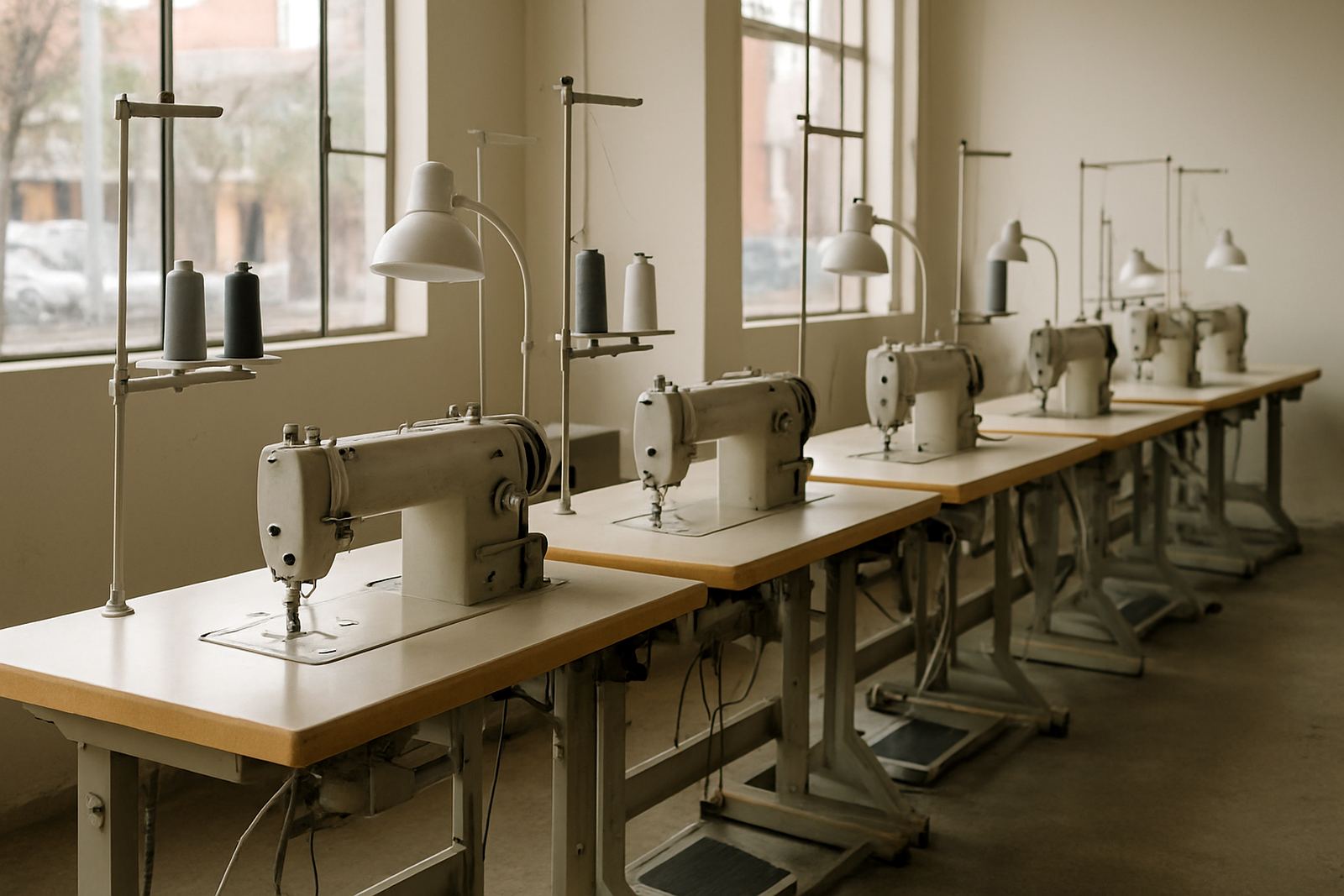
Button sew machines are normally installed on a stable table or work stand with enough room for garment handling and operator movement. The machine should sit on level flooring, with good lighting and enough space for incoming and outgoing bundles. In workrooms where humidity and dust are a problem, especially where doors stay open to the street, a regular cleaning routine is important to protect moving parts and electrical components.
Power needs depend on the motor and control system, but many units run on standard single-phase workshop electricity. Some setups are better matched to motor conversions or a different control arrangement, particularly where older equipment is being upgraded. If you are running a production floor in Fordsburg, Randburg or Alberton, we can look at the workroom layout, operator flow and electrical access before fitting the machine.
- Level, stable table or stand required
- Power point positioned close to the machine station
- Clear space for bundles, finished garments and operator reach
- Good lighting at the button point to keep placement accurate
- Where needed, standby power planning for load-shedding periods
For schools and training spaces, operator comfort matters too. The machine should be placed so learners or machinists can sit correctly and keep the garment flat while attaching buttons. That makes training easier and reduces mistakes.
Servicing, Needle Checks and Everyday Care
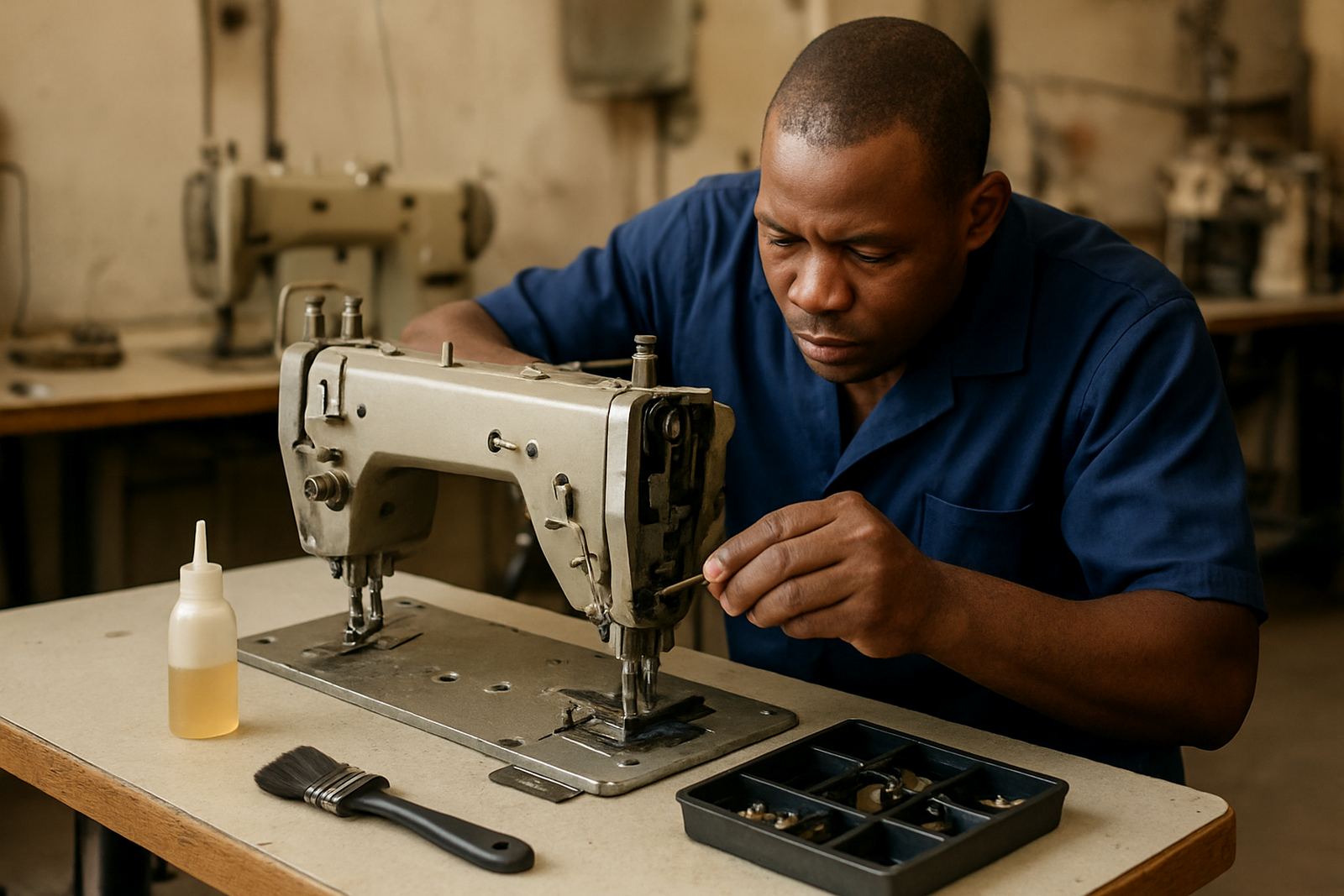
Like all workshop equipment, a button sew machine works best with routine care. Dust, thread fluff and worn parts can affect stitch quality and slow the cycle. If the machine is used daily, a planned service schedule is worth it rather than waiting for a breakdown.
Basic care includes checking the needle condition, keeping the attachment area clean and making sure the clamp or holder is aligned properly. Loose screws, poor timing or worn belts can lead to missed stitches or uneven fastening. If the machine starts making unusual noise, leaving loose buttons or refusing to cycle correctly, it should be checked before the issue becomes a bigger repair.
We handle workshop repairs, on site repairs, routine servicing and timing adjustments for customers across Gauteng. For busy factories in Soweto or Germiston, this can help reduce downtime and keep production moving without a lot of disruption.
What to Check Before You Order
Before ordering a button sew machine, it helps to be clear on what you sew, how many pieces you run, and what kind of buttons you use most often. That makes it easier to match the machine to the actual job instead of buying a unit that is too light or too specialised.
- Button type: flat, shank or mixed garment use
- Button size range: smallest to largest button used in your range
- Fabric weight: shirts, fashion fabric, schoolwear or heavier workwear
- Production volume: occasional repairs or daily batch work
- Operator experience: trained machinists or new staff needing support
- Space and power: table size, socket access and backup power needs
If you are not sure which model suits your workroom, send the details through the enquiry form on our contact page. Our team can help from the Johannesburg CBD base with sales, setup and parts support, and we also work with customers in Pretoria, Mayfair, Fordsburg, Randburg, Alberton and beyond.
Key facts
| Machine type | Industrial button attaching machine |
|---|---|
| Button size range | Commonly 10 mm to 32 mm, model dependent |
| Stitch patterns | 2-hole, 4-hole and selected shank button settings |
| Power | Single-phase workshop supply, model dependent |
| Use | Fashion, schoolwear, uniforms and repair work |
| Service support | Installation, servicing, repairs, parts and operator training |