

What a feed off arm does in day to day sewing
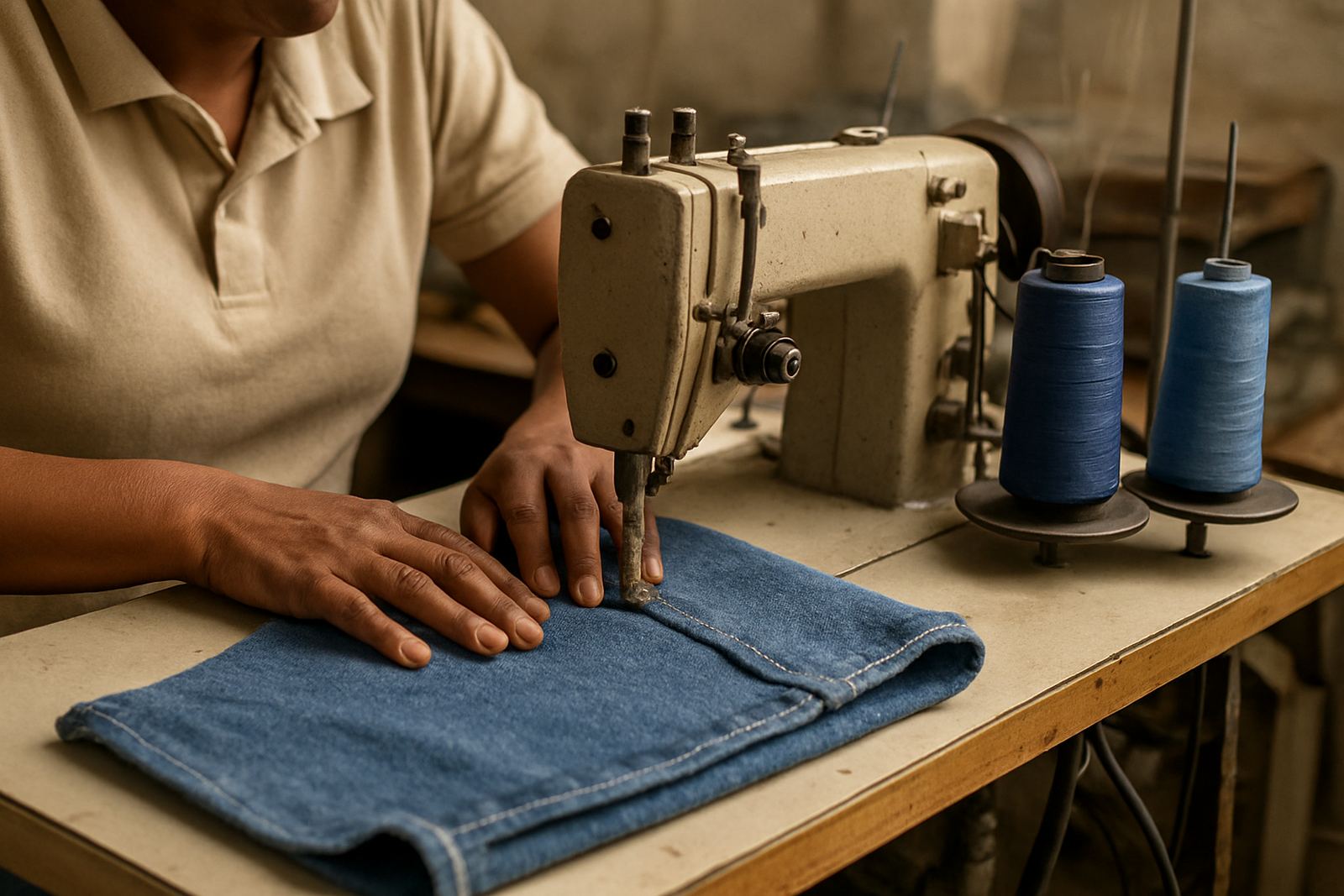
A feed off arm is built to sew closed, tubular work that is awkward on a flat machine bed. Instead of forcing a jeans leg, sleeve cuff or workwear panel to sit flat, the arm allows the fabric to travel around a narrow sewing bed. That gives you better control on seams that must stay straight, even and properly tensioned.
Most customers use feed off arm machines for denim, uniforms, light to medium canvas, workwear, promotional clothing and garment repairs. They are common in small workrooms and larger production lines where operators need to move quickly without fighting the shape of the garment. If you are sewing cuffs, side seams, sleeve inserts or closed legs, this machine saves time and reduces handling marks.
In practical terms, the feed system pulls the top and bottom layers through together so the seam feeds evenly. That helps on slippery polycotton, thicker denim and layered workwear pieces, especially when operators are working long shifts and need a machine that behaves consistently.
Sizes, bed styles and machine options we supply
Feed off arm machines are available in a few practical formats. The right choice depends on the size of the garment, the seam allowance you need and how heavy the fabric is. For most local workrooms, the choice comes down to bed length, arm shape, stitch capability and whether you need a plain sewer or a heavier specification for denim and industrial garments.
- Arm diameter: narrow tubular beds for sleeves and small leg openings, or slightly wider arms for bulkier workwear pieces
- Needle type: single needle or twin needle setups depending on the seam finish required
- Stitch options: straight stitch, topstitching and in some cases chain stitch applications
- Feed system: compound feed, walking style feed or standard alternating feed depending on fabric grip needed
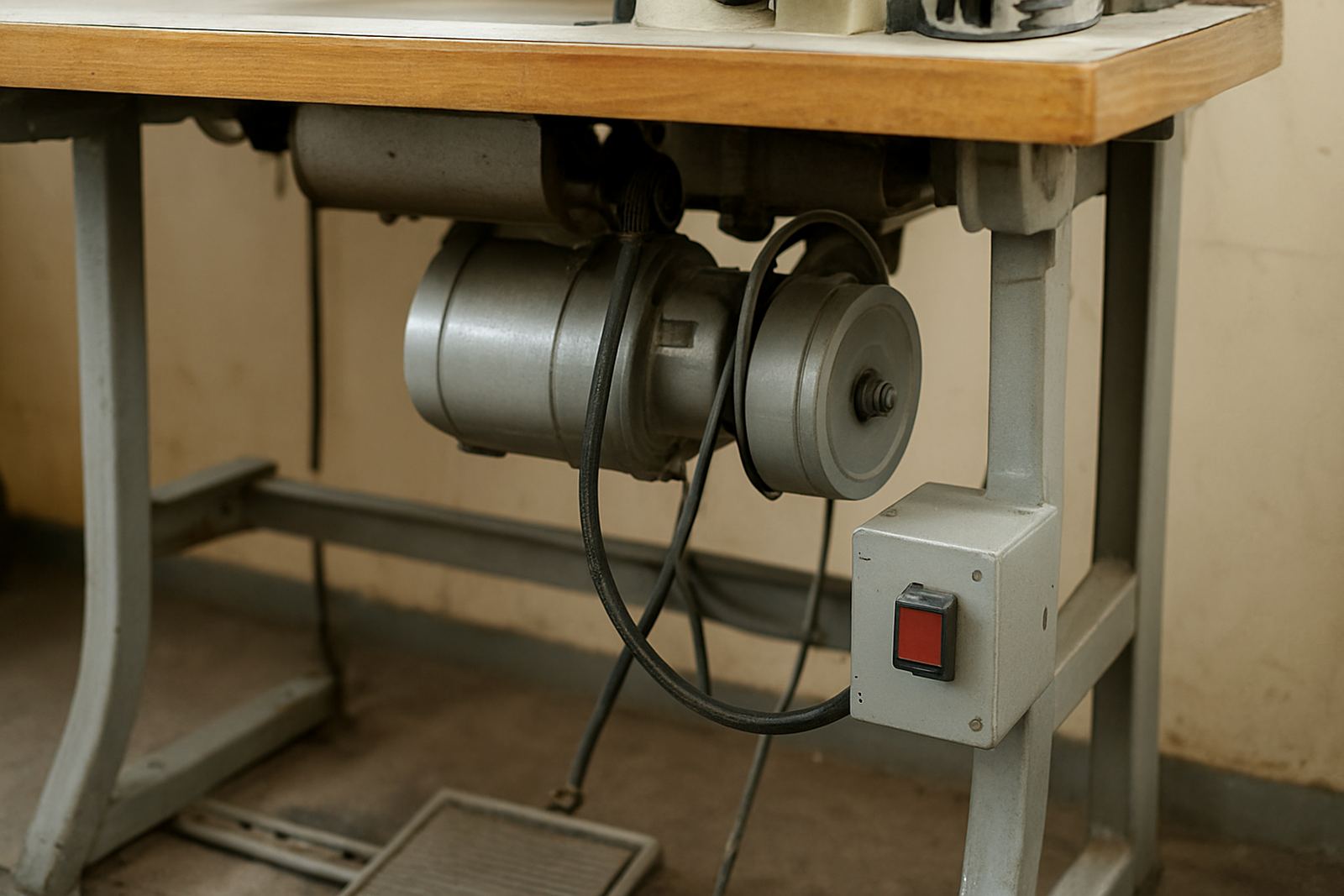
- Motor setup: direct drive motor, clutch motor or external motor conversion where older machines are being updated
- Table and stand: standard industrial table, adjustable operator height and under table motor mounting
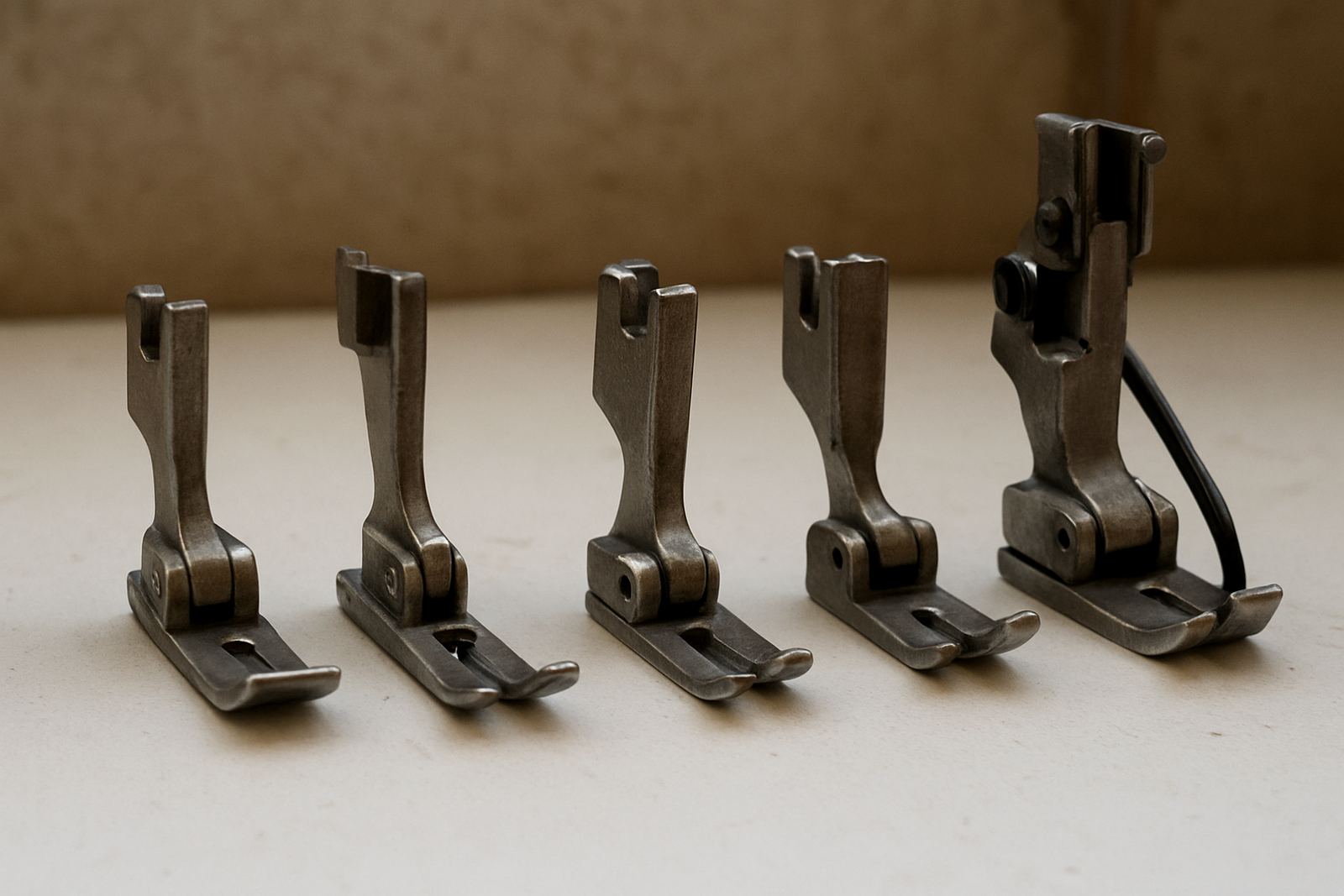
For small batches and alteration work, a lighter machine is often enough. For denim shops and factory use, a heavier frame with stronger feeding and better torque is usually the safer option. We can also supply attachments for hemming, edge guiding and workroom-specific sewing tasks.
Best use cases in Gauteng workrooms and factories
These machines suit garment shops, school uniform makers, repair counters, clothing factories and tailors who handle shaped items every day. In Johannesburg CBD and Fordsburg, many businesses use them for jeans repairs, trouser leg construction, sleeve closing and uniform production. In Soweto and Mayfair they are also common for schoolwear, tradewear and alterations where neat tubular seams matter.
They are equally useful in Germiston and Pretoria where factories often need dependable output for workwear and general apparel. If your team is sewing garments with repeated narrow sections, a feed off arm reduces strain on the operator and gives more predictable seam quality. It is especially helpful when one operator is handling different sizes through the same shift.
For home sewers, a smaller model can be useful when you regularly repair denim, shorten trousers or make custom clothing. If you sew only occasionally, it may be more machine than you need. But if you are doing regular alterations or small production runs, the extra control pays off quickly.
Installation, power and workshop setup requirements
Most feed off arm machines need a stable sewing table, correct motor alignment and a clean power supply. For standard industrial units, a normal 220V supply is usually enough, but the motor draw and plug arrangement should be checked before installation. In areas where load-shedding affects daily production, a direct drive motor or inverter backup may be worth planning for so your workroom does not stop mid order.
These machines do not need gas. They do need enough space for the operator to feed tubular work comfortably, plus room for thread cones, a knee lifter where fitted and a reliable light over the needle area. A level floor helps too, because uneven stands can affect stitch consistency and cause vibration. If your workroom is crowded, measure the footprint before ordering so the table does not block cutting or pressing areas.
- Check where the machine will stand and whether there is enough operator clearance
- Confirm power point position and whether the plug needs to be moved
- Allow for thread stand height and cone placement
- Keep a stable, dust free surface for the table and stand
- Plan for backup power if your output is time-sensitive
Care, servicing and what keeps the machine sewing properly
Like any industrial machine, a feed off arm performs best when it is cleaned, oiled and checked regularly. Thread fluff builds up around the hook, feed path and tension area, especially when sewing denim, brushed cotton or fabrics with a lot of lint. If the machine starts skipping stitches, pulling seams unevenly or making a knocking noise, it usually needs adjustment before the problem becomes bigger.
Routine servicing should include timing checks, needle bar inspection, feed alignment, tension balancing and motor inspection. If the machine is in daily use, a service schedule every few months is sensible. In a busy factory or school workroom, operators should also be trained to change needles correctly, thread the machine in the right order and avoid pulling the fabric through by hand too hard.
For coastal humidity or dusty workshop conditions, wipe down the machine after use and keep spares in dry storage. Rust on small parts and stale oil can affect stitch quality more than many people expect. A clean machine usually lasts longer and gives a better finish, even on heavy work.
What to check before you place an order
Ordering the right feed off arm starts with the fabric and the job it must do. Denim, schoolwear, uniforms and heavy workwear all behave differently. If you choose a machine only by price, you can end up with a bed size or feed system that is not suited to the garment shape. It is worth checking a few details before you place the order.
- Material type: light garment fabric, denim, canvas, polycotton or layered workwear
- Seam type: plain seam, topstitching, twin needle finishing or repair work
- Workpiece size: sleeves, trouser legs, cuffs, panels or mixed production
- Operator skill: trained machinist, learner operator or general workroom use
- Need for accessories: folders, guides, hemmers or edge attachments
- Space and power: table size, plug point, backup power and workflow layout
If you are not sure what spec suits your workroom, we can help you match the machine to the job rather than guessing. That matters in Johannesburg and across Gauteng where many businesses run mixed sewing work and need one machine to cover more than one task.
Key facts
| Machine type | Industrial feed off arm sewing machine for tubular garment work |
|---|---|
| Typical use | Jeans legs, sleeves, cuffs, workwear panels and alterations |
| Power requirement | 220V standard supply, motor type dependent |
| Thread system | Industrial sewing thread, size matched to fabric and needle |
| Installation | Table and stand mounting with setup, timing and test sew |
| Service support | Workshop repairs, on site repairs, routine servicing and operator training |