

What a multi head embroidery machine does on busy runs
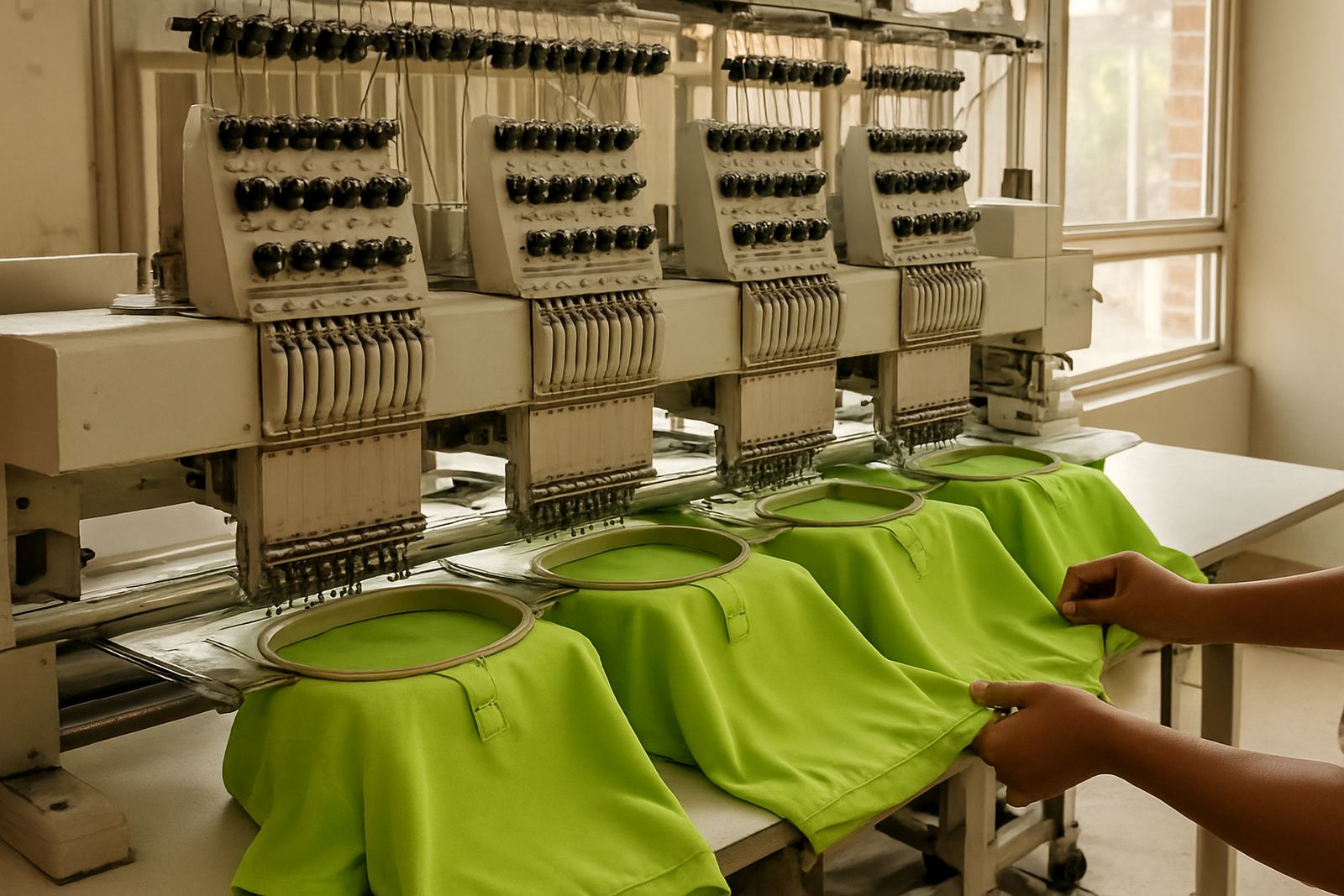
A multi head embroidery machine uses two or more heads working from one programme, so the same design can be stitched onto several garments at the same time. That makes it a practical choice for uniform orders, school wear, corporate branding and contract embroidery where you need steady output rather than one piece at a time.
In plain terms, one operator can load caps, shirts, jackets or bags across the heads, start the run and keep the machine moving through a batch. For businesses around Johannesburg CBD, Fordsburg, Mayfair and Germiston, that means less handling time and a better chance of keeping to delivery dates when orders come in thick and fast.
These machines are usually fitted with automatic colour change, thread break detection and memory for repeated designs. Many setups also include cap frames, flat hoops and tubular arms, which makes them flexible enough for left chest logos, back branding, school crests and workwear names.
Sizes, head counts and stitch area options
Multi head machines come in different head counts and sewing fields, depending on the work you want to carry out. A smaller unit may suit a growing embroidery room, while a larger machine is better for steady industrial work with repeated orders.
- 2 head units for smaller branding jobs and lower volume repeat work
- 4 head units for mid-size workshops handling regular garment batches
- 6, 8 or more heads for higher output production and contract embroidery
- 1 to 12 or 1 to 15 needle options, depending on colour range needed
- Flat sewing fields commonly around 360 x 500 mm, with larger frames available
- Cap embroidery support for front logos and curved surfaces
The right size depends on garment type, order pattern and floor space. A school uniform supplier in Pretoria may need a different setup from a workwear factory in Soweto that runs the same logo on hundreds of shirts each week. If the room is tight, we also look at table clearance, operator access and whether the machine will need to pass through narrow doors or stairs during installation.
Where multi head embroidery suits best
This type of machine suits any business that needs repeated branding with the same layout and stitch quality across every item. It is common in factories, promotional clothing rooms, school wear suppliers, tailoring shops with embroidery work, and home sewers who have moved into paid batch production.
It also helps when you handle different fabrics. Light cotton, polycotton, fleece, denim and some coated workwear can all be stitched, provided the needle, stabiliser and hooping are set correctly. For Johannesburg businesses dealing with winter fleece and summer cotton at the same time, that flexibility matters.
- Corporate and staff uniforms
- School badges, names and crests
- Sportswear and club wear
- Caps, jackets and bags
- Small contract embroidery for labels and branding
For higher humidity areas or dusty workshop spaces, good storage and regular cleaning make a difference. Thread fluff, lint and airborne dust build up quickly in shared workrooms, especially where cutting, pressing and sewing happen in the same room.
Installation, power supply and workshop planning
These machines need proper siting from the start. They are heavy, need level flooring and should be positioned where operators can load garments, change threads and remove finished work without crowding the aisle. In a busy CBD workshop, poor placement can slow the whole room down.
Power needs depend on the model and how many heads are running, but most embroidery machines need a stable single or three phase supply with protection against surges and poor municipal power quality. In Gauteng, load-shedding and voltage swings can affect the control board, motors and sensors, so a surge protector and the right backup plan are important. Some workshops choose battery backup for the control section and a separate solution for lighting and computers.
Air is usually not needed for the embroidery unit itself, but if you are running presses, cutters or a full finishing area nearby, your power planning should cover the whole room. We also check the route for the machine, doorway widths, floor strength and whether the operator station has enough room for hoops, thread cones and finished bundles.
How to keep stitch quality steady over time
Multi head machines give good results when they are serviced before faults start showing in the garment. A missed stitch or uneven tension on one head can waste material across a whole batch, so routine care is worth it.
- Clean lint from the hook area, trims and thread path daily
- Check needles for bends, burrs and blunt points
- Keep thread cones dry and covered in dusty rooms
- Oil where required, using the correct points and quantity
- Test tension after thread changes or needle replacement
- Book timing checks, drive belt inspections and thread break fault checks
Our workshop and on site service teams handle routine servicing, timing adjustments, embroidery setup and repairs when a head is skipping, pulling thread or misaligning on caps. Yusuf Patel leads workshop repairs, while Naledi Khumalo handles embroidery setup and stitch troubleshooting for different garment types. That support is useful for factories and schools that cannot afford long stoppages in the middle of a term or production run.
What to check before you place an order
Before choosing a machine, it helps to be clear on what you want to stitch and how often. The best machine for your workroom is the one that matches your order size, fabric mix and available space, not just the biggest model on the floor.
- How many garments you expect to run per day or week
- Whether you need flat work, caps or both
- The number of heads and needles required
- Your available floor space and doorway access
- Your electrical supply and backup options
- Whether you need operator training and staff handover
It also helps to check the hoop sizes you use most, the kind of thread you prefer and whether you need spare parts on hand for the first few months. Anele Dlamini manages parts and stores, so common items like needles, bobbins, thread guides and selected attachments can be sourced without delay. If your order is for a school, factory or small branding room, we can also look at workroom flow so the embroidery station fits properly with cutting, pressing and packing.
Support for Johannesburg, Pretoria and surrounding areas
We supply, set up and service multi head embroidery machines from our Johannesburg CBD base, with support across Fordsburg, Mayfair, Soweto, Germiston, Pretoria, Alberton and Randburg. That matters when a machine needs attention during a busy production week, because field service can often save a trip and cut downtime.
From sales through to installation and routine servicing, the process is handled by a team that works with industrial and household sewing equipment every day. Lerato Mokoena looks after sales, Willem van Wyk handles field service, and Farah Ismail coordinates customer support through the enquiry form on our contact page. If you are comparing options for a new embroidery room or replacing an older machine, we can help you look at the practical side first: output, space, power and maintenance, rather than guesswork.
For businesses that rely on uniform branding, a multi head machine is not just another purchase. It is part of the production line, and it needs to be set up right from day one.
Key facts
| Machine type | Multi head computerised embroidery machine |
|---|---|
| Head count options | 2 head, 4 head, 6 head and larger production setups |
| Needle options | Commonly 1 to 12 or 1 to 15 needles per head |
| Embroidery field | Flat work fields typically around 360 x 500 mm, with cap frames available |
| Power requirement | Stable single or three phase supply, model dependent |
| Common uses | Uniforms, caps, jackets, school crests and contract branding |