

What a round knife cutter does in the cutting room
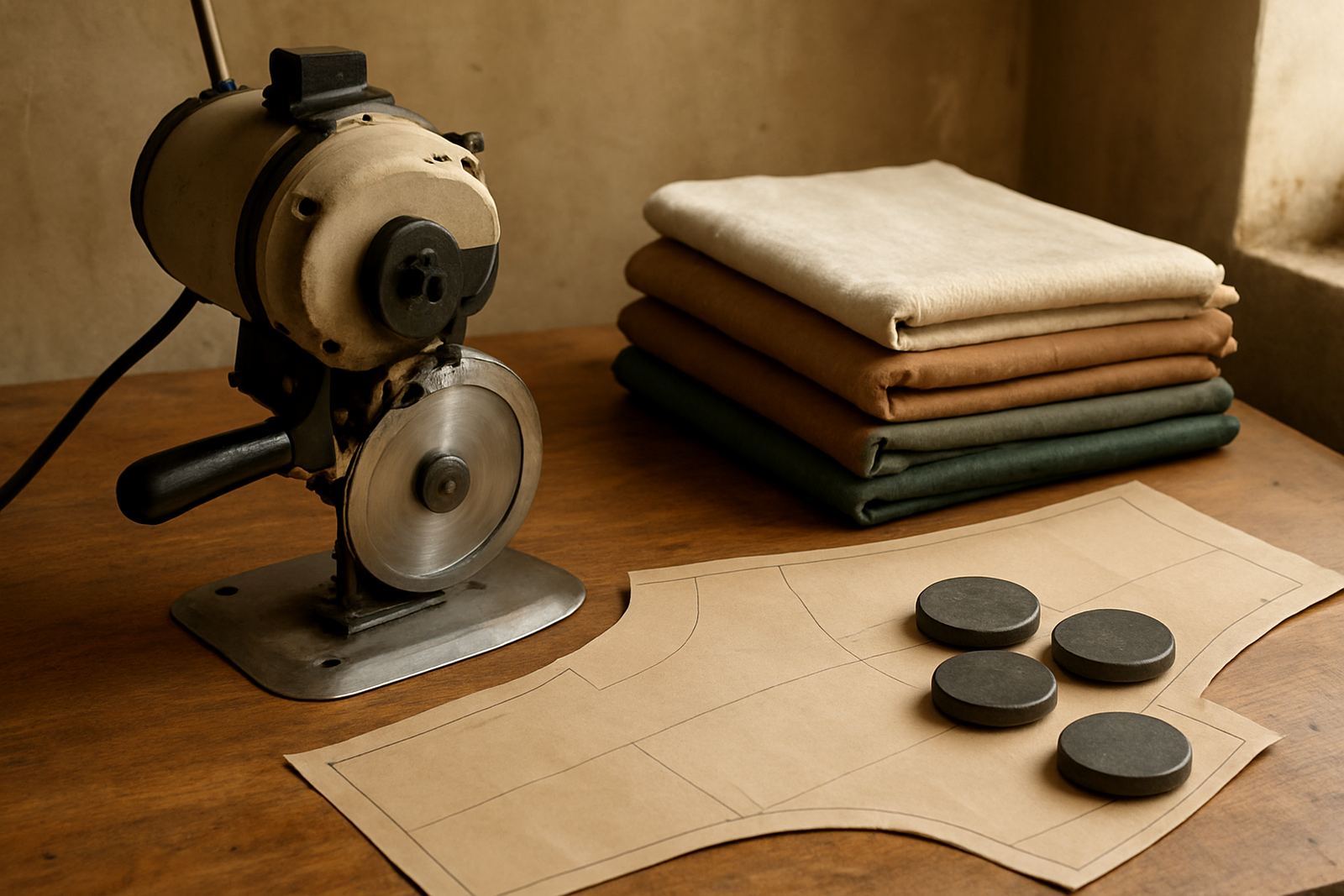
A round knife cutter is used to cut stacked fabric layers on a cutting table with speed and control. It is the type of hand held cutting tool many workrooms rely on when patterns must be moved through cutting fast, especially where plain cloth, lining, knitwear or light to medium weight woven fabric is handled every day.
The circular blade rotates as the operator guides it through the lay. That makes it suitable for both long straight runs and more detailed curves, which is useful when cutting garments, school wear, uniforms, curtains and soft furnishings. For many Johannesburg and Gauteng workrooms it is a practical choice where space is limited and production changes through the week.
It is not a replacement for proper marker making or careful spreading, but it is a good shop-floor cutter for controlled manual work. If your team cuts one layer at a time or several layers at once, the machine needs the right blade size, sharpness and weight for the job.
Sizes, blade types and the main options to consider
Round knife cutters are usually selected by blade diameter, motor size and the thickness of material they must handle. Smaller models are easier to control for light work and finer curves. Larger models carry more cutting power and are better for longer marker lengths, thicker bundles and regular daily use. If the cutter will be used for school uniforms or factory work, the blade size should match the fabric weight and the table height.
Most buyers will also choose between direct electric operation and models with different motor ratings. Some units are better for lighter workrooms, while others are built for full shift use. The handle shape, base plate, sharpening system and guard design also matter, because these affect comfort, accuracy and safety during long cutting runs.
- Blade sizes commonly suit light, medium or heavier fabric layers
- Motor power should match the fabric thickness and duty cycle
- Base plate size affects stability on the cutting table
- Built in sharpening helps keep the edge ready during the day
- Guarding and grip design matter for operator safety and control
When comparing options, ask what fabric you cut most often, how many hours a day the cutter will run, and whether the same unit must handle both straight and curved work. That answer usually points to the correct model more than any general spec sheet alone.
Where this cutter suits best in Gauteng workrooms
This type of cutter suits factories, tailors, sample rooms, alteration shops, school uniform makers and soft furnishing workrooms. It is common in places where fabric comes in mixed lengths and the team needs a cutter that can move quickly between jobs without complicated setup. In Johannesburg CBD, Fordsburg, Mayfair and Soweto, it is often used in busy production spaces where every square metre counts.
It also works well in smaller teams that do not want to depend only on scissor cutting. A round knife cutter can help with batch work, repeat orders and any job where the same shape must be cut accurately again and again. For businesses in Germiston, Pretoria, Alberton and Randburg, it is also a useful backup tool when larger cutting systems are not practical.
Where humidity is high, especially near coastal stock movements into Gauteng, blades and metal surfaces should be stored clean and dry to reduce rust. In dusty workrooms or areas with load-shedding, keep the cutter covered when idle and away from floor dust and loose thread.
Installation, power needs and table set up
A round knife cutter normally needs a stable cutting table with enough overhang for the blade to travel safely past the fabric edge. The table surface must be flat, firm and free from warping, because uneven tops affect the cut line and can make the operator push harder than necessary. A clean layout around the table also helps, since offcuts and loose patterns can catch the blade or slow the cutting pace.
Most models are electrically powered and need a suitable plug point near the cutting position. If the workshop already runs several machines, it is worth checking circuit capacity and the effect of load-shedding on production. A stable power supply reduces stoppages and protects the motor from repeated start and stop cycling. Where needed, we can advise on motor conversions or workshop planning so the cutter fits into the existing workflow.
- Use a level cutting table with enough working space around it
- Place the machine where the operator can move freely without twisting
- Keep power leads clear of foot traffic and offcut piles
- Check that the circuit can handle the machine and nearby equipment
- Plan for backup lighting and safe storage during load-shedding
If the unit will be used in a school or shared training room, make sure operators have enough space for safe handling, sharpening and blade changes. Good placement reduces accidents and gives a cleaner cut from the first day.
Care, sharpening and servicing that keep the cut clean
The main care task for a round knife cutter is blade sharpness. A blunt blade pulls on fabric, creates rough edges and forces the operator to cut twice. Regular sharpening keeps the tool working properly and reduces strain on the motor and on the person using it. The base plate should also be checked for wear, because a damaged plate can mark fabric or affect the way the cutter moves over the lay.
Routine servicing should include checking the motor, cable, bearings, blade guard, sharpening stone and fasteners. Dust and lint build up quickly in cutting rooms, and once that gets into moving parts the machine can start running hot or noisy. If the cutter is dropped or used on hard surfaces, the blade alignment should be checked before the next production run. That saves fabric and keeps the line moving.
For busy shops, a service routine every few months is a practical way to avoid stoppages. If the cutter is being used daily, more frequent checks may be needed. We also handle workshop repairs and on site repairs where access and production timing allow.
What to check before placing an order
Before ordering, confirm the fabric types, layer count and daily workload. A cutter that suits light tailoring work may not be right for heavier factory cutting. You should also check the width of the cutting table, the available power point, and whether the operator needs a lighter unit for longer shifts or a stronger model for regular production. That one decision can affect comfort and output for years.
It helps to know whether you need only the cutter or a full setup with spare blades, sharpening parts and operator training. If the machine is being added to a new workroom, think about the table layout, pressing flow and fabric movement from storage to cutting to sewing. Good planning prevents bottlenecks and wasted steps, which is important in smaller spaces.
- Fabric type and thickness
- Average layer height and cutting length
- Table size and workspace around it
- Power availability and backup plans for load-shedding
- Need for spare blades, sharpening parts or training
- Delivery area and whether installation is required
Asia Sewing Machines supplies, sets up and services industrial and household sewing equipment, embroidery machines and cutting room tools from our Johannesburg CBD base. If you need a round knife cutter for a factory, tailor shop, school or home production room, send your enquiry through our contact page and our team can assist with the right match.
Key facts
| Product type | Round knife fabric cutter for table cutting |
|---|---|
| Typical use | Straight and curved cutting of fabric layers |
| Best suited for | Garment workrooms, tailors, schools, factories and soft furnishings |
| Power | Electric motor driven |
| Setup needs | Stable cutting table, clear workspace and suitable power point |
| Maintenance | Blade sharpening, cleaning, alignment checks and routine servicing |