What presser feet do on the machine
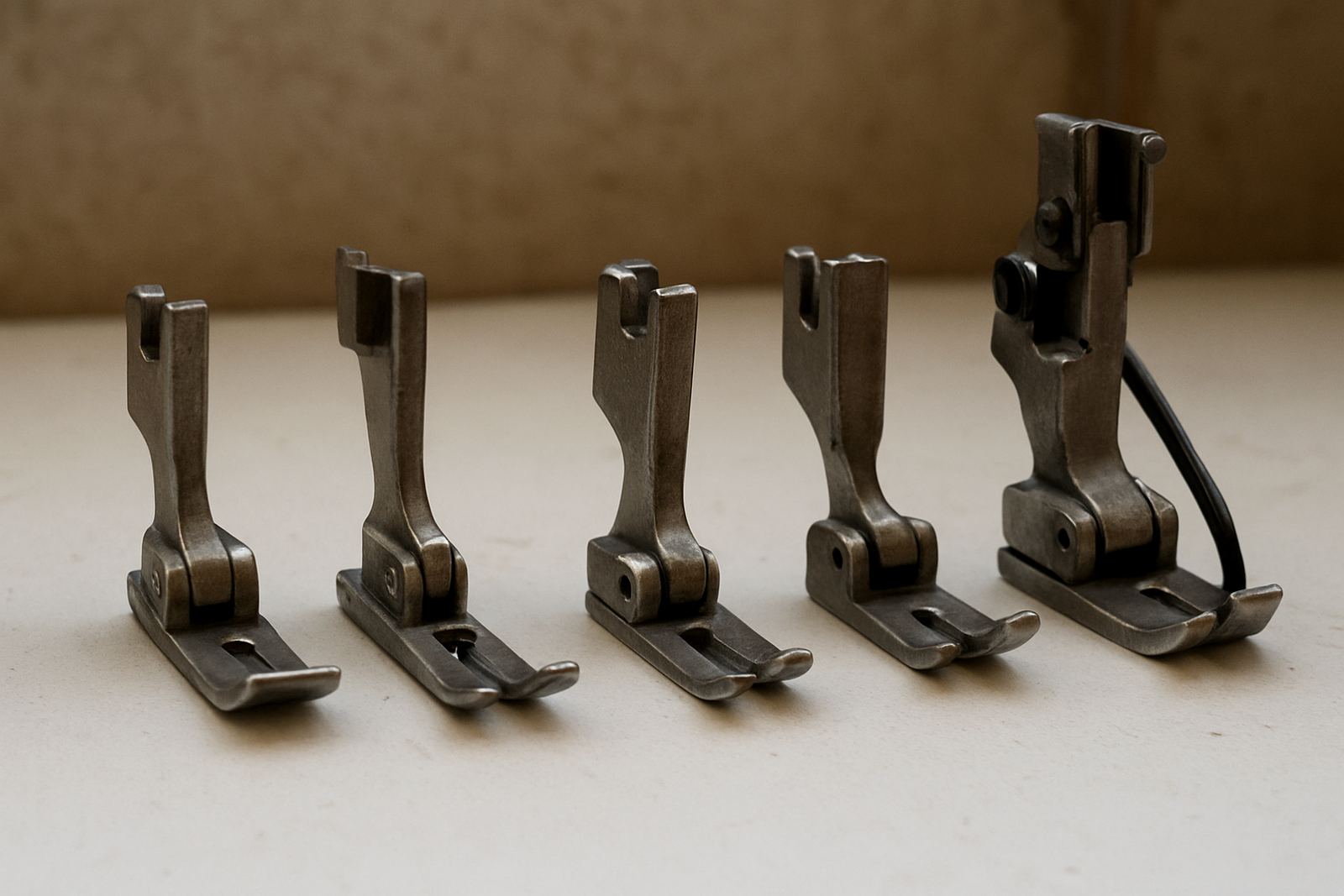
A presser foot holds the fabric against the feed dogs so the work moves forward evenly while the needle stitches. Different feet change how close the stitch sits to an edge, how much pressure is applied and how the fabric is guided. That is why one foot may suit a straight seam while another is better for a zip, a narrow hem or a binding edge.
For factories in Johannesburg CBD, Fordsburg and Germiston, the right foot can reduce rejects and save time on repeat work. For home sewers in Soweto or Pretoria, it makes neat finishing easier and takes stress out of tricky jobs like stretch fabric or small garment repairs.
Most presser feet are made from hardened steel or plated metal, with some specialty versions using low-friction surfaces for smoother feeding. We supply feet for industrial lockstitch, overlock, cover stitch and household models, depending on the machine shank and the way the holder is set up.
Common types and the jobs they handle
There are many presser foot styles, each made for a specific task. Some are general purpose and others are narrow or shaped to follow a particular edge. If you are working in a school sewing room, tailoring shop or factory line, it helps to match the foot to the operation instead of forcing one foot to do everything.
- Zipper feet for close stitching beside metal or plastic zips
- Binding feet for folding and guiding tape around raw edges
- Piping feet for corded or welted seams
- Rolled hem feet for narrow hems on light fabric
- Walking or even-feed feet for layered materials and slippery cloth
- Teflon or low-friction feet for vinyl, leatherette and coated fabrics
- Quilting and guide feet for topstitching, edging and repeat spacing
Some feet come in left, right or centre positions and some are adjustable for tape width or seam allowance. When the work changes often, a small set of properly chosen feet is usually more practicaly than one expensive attachment that only suits a single task.
Sizes, shanks and machine compatibility
Before ordering, check the machine type and the way the foot attaches. Industrial machines may use low shank, high shank or snap-on systems, while household machines vary by model and ankle height. The wrong fitting can cause poor feeding, missed stitches or uneven pressure on the fabric.
For binding and hemming work, the opening size matters as much as the attachment style. A 3 mm foot suits fine work and light garments, while 6 mm, 8 mm and 10 mm versions are often used for heavier bindings or wider fold-overs. Piping feet may be sold in narrow, medium and wide groove options, and some include interchangeable inserts for different cord sizes.
- Machine class or model details
- Shank type and attachment method
- Needle system used on the machine
- Fabric thickness and thread size
- Operation required, such as binding or zip insertion
- Foot width, groove size or opening size needed
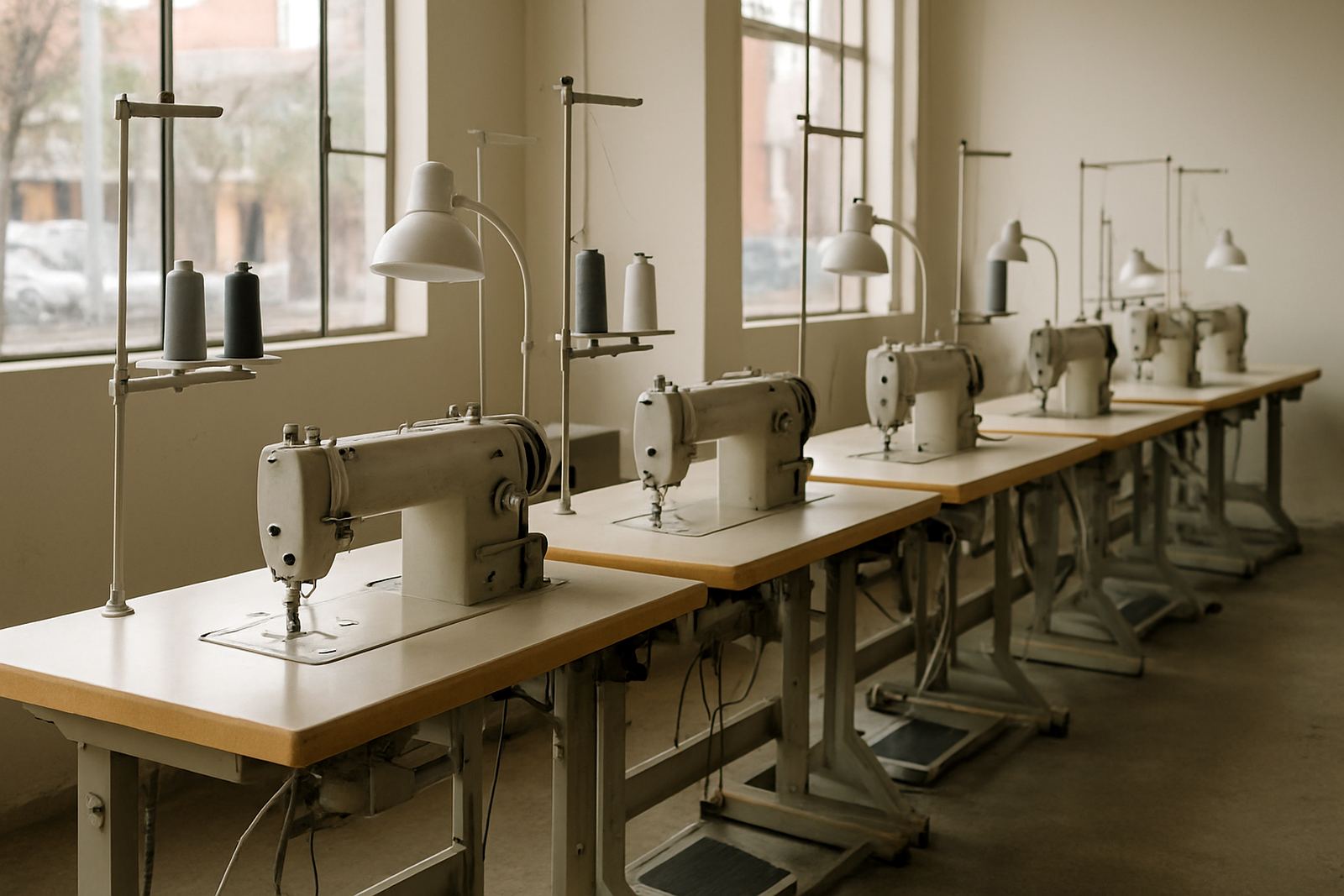
If you are setting up a workroom in Alberton or Randburg, it helps to standardise the machine range where possible. That makes spare parts, feet and operator training easier across the table.
Installation, setup and power needs
Most presser feet do not need separate power or gas. They are mechanical attachments fitted to the sewing machine, so the main requirement is correct installation and adjustment. On industrial workstations, the foot must sit squarely with the needle plate, feed mechanism and thread path. If the foot is too loose, too tight or offset by even a small amount, the result can be skipped stitches or edge wandering.
For some specialist attachments, the presser foot works together with a guide, folder or pressure adjustment. That is common in binding work, piping operations and certain hemming applications. In a busy factory, it is worth checking the operator setup first because the problem is often not the foot itself but the pressure, needle size or stitch length setting.
We assist with machine installation, embroidery setup, motor conversions and workroom planning across Gauteng. If a foot needs to be fitted to several stations, we can advise on the most suitable version for the fabric and the operator experience level.
How to care for feet and keep stitching consistent
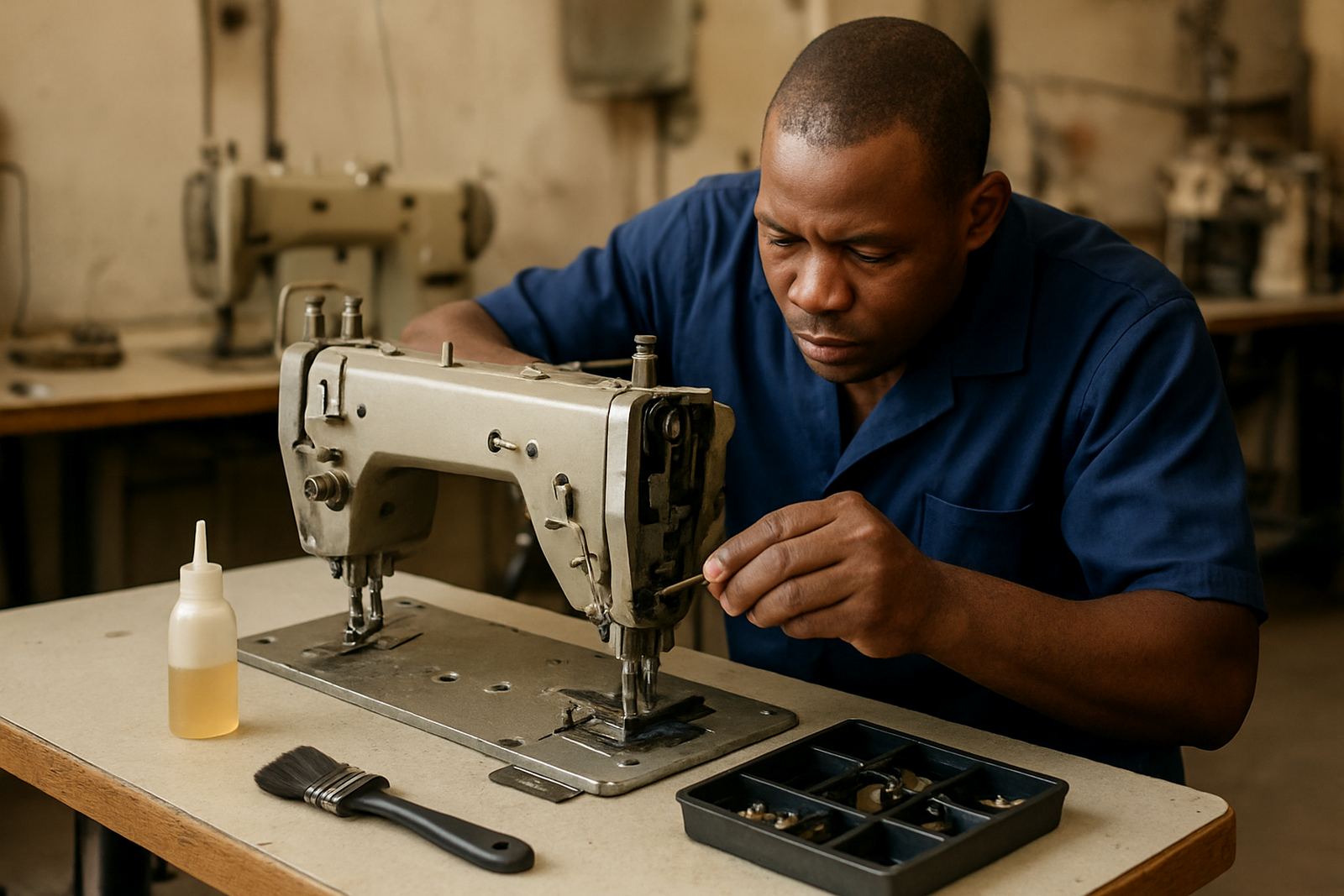
Presser feet work hard and collect lint, thread bits and adhesive residue from fusible fabrics. Clean the foot regularly with a soft brush and wipe off oil or glue build-up. On coastal routes near Pretoria, Germiston and the wider Gauteng supply chain, storage conditions are usually dry enough, but damp or dusty storerooms can still cause surface rust or sticky movement.
Check the foot for wear at the contact edge, especially on zipper work and metal hardware. A worn groove or a bent guide will affect stitch placement. If a foot starts dragging, squeaking or leaving marks on the fabric, it should be replaced or serviced before it slows production down.
- Brush out lint after each shift or sewing run
- Keep feet lightly oiled where the machine design allows it
- Store spare feet in labelled trays or bags
- Do not force a foot onto the wrong shank
- Replace damaged guides, springs or screws promptly
Routine servicing of the machine head also helps. Pressure settings, timing adjustments and needle condition all influence how well the foot performs.
What to check before you order
When ordering presser feet, the best starting point is the machine model and the exact job you want to do. If you bring us the sample seam, zip, binding tape or hem width, we can often match the right foot faster than guessing from a photo alone. This is especially useful for tailoring shops and school workrooms where one machine may handle many different fabrics.
It also helps to know the thread size, needle size and fabric weight. A foot that works on light shirting may not suit denim, upholstery or bonded synthetics. For embroidery or decorative topstitching, clearance around the needle and visibility at the edge become important. If the machine has been altered, fitted with a motor conversion or set up for specialist production, let us know so we can match the attachment properly.
Orders for Johannesburg CBD, Mayfair, Soweto, Fordsburg, Germiston, Pretoria and surrounding areas can be arranged through our enquiry form on the contact page. We can also help with spares, attachments, workshop repairs and operator training where a foot needs to be part of a wider setup.
Key facts
| Product type | Sewing machine presser feet and specialist attachments |
|---|---|
| Typical applications | Binding, zips, piping, hemming, topstitching, quilting and guided seams |
| Compatibility | Industrial and household machines, subject to shank and model match |
| Common sizes | 3 mm, 6 mm, 8 mm, 10 mm and custom groove options |
| Materials | Hardened steel, plated metal and low-friction specialty finishes |
| Support available | Selection, installation, servicing, parts sourcing and setup advice |