

Belts and bobbins for daily production
Belts transfer drive from the motor to the machine head, while bobbins hold the lower thread for clean stitching. In a busy workroom, school sewing room or home setup, both items wear out quicker than many people expect. A cracked belt can cause slipping, uneven speed or stopping under load, and a bobbin that is the wrong size can create tension faults, thread breaks and poor stitch formation.
We stock common consumables for industrial straight stitch machines, overlockers, household zigzag machines and embroidery units. For factories in Johannesburg CBD, Fordsburg, Mayfair and Germiston, we also help match belts and bobbins to older machines that are still doing good work. If a machine is used all day, it is worth keeping spares on hand so a small part does not hold up production.
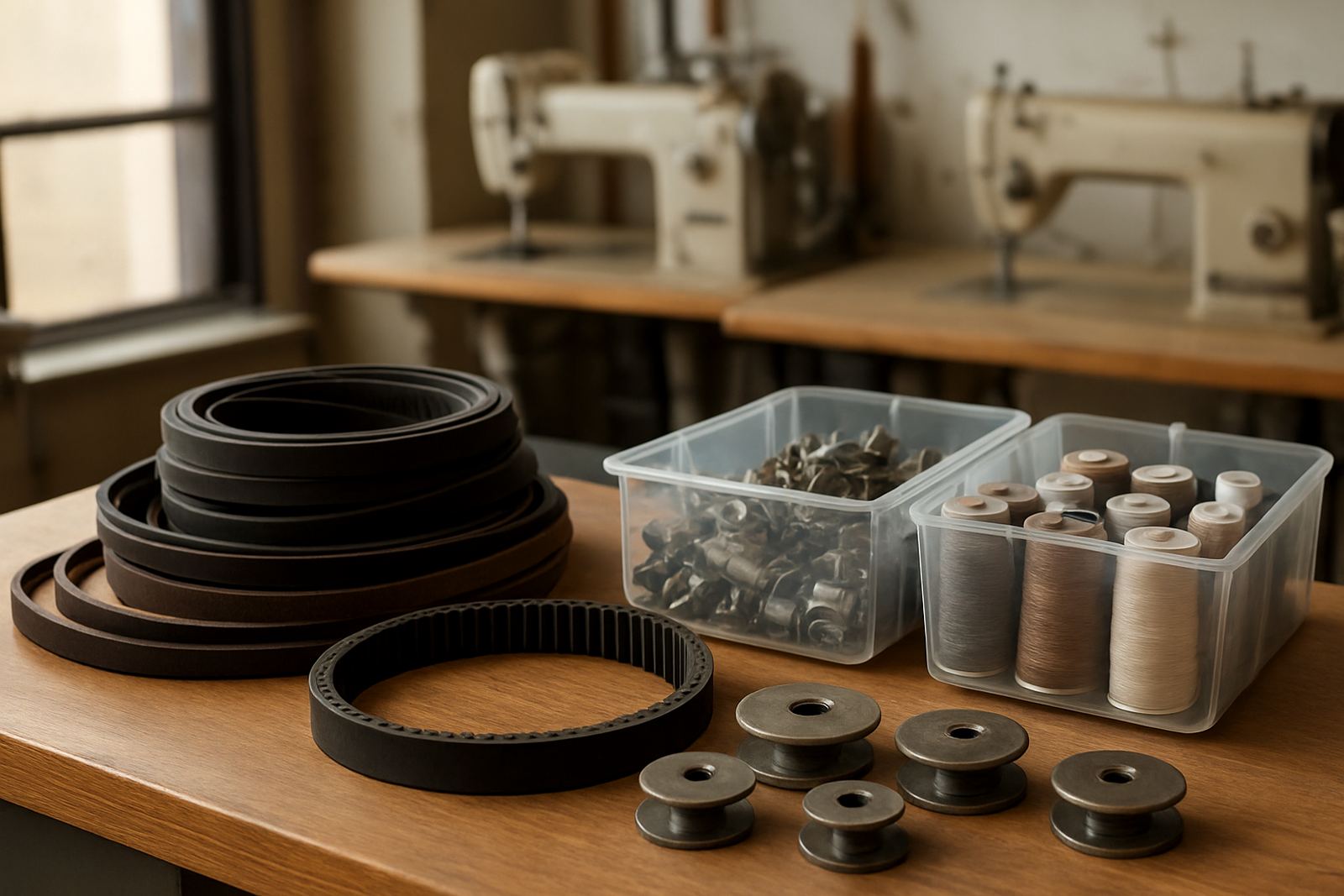
Typical options include flat belts, round belts, motor belts, bobbin cases and bobbins in the common industrial formats. We can also assist with thread path checks and tension settings when a replacement is fitted, because a new belt or bobbin alone will not fix a machine that is already out of adjustment.
Sizes, formats and machine matching
There is no single belt or bobbin that fits every machine. The right match depends on the machine class, the make and the way it is driven. Some machines use standard aluminium bobbins, while others need plastic bobbins or a specific low-profile size. Belts vary by width, length, thickness and profile. Getting this wrong can cause noise, heat build-up or poor drive.
When ordering, it helps to know the machine model, the belt length and width, and whether the machine is domestic, semi-industrial or heavy duty. If the old belt is still available, bring it in or compare it against the replacement. On bobbins, it is best to check the diameter, height and whether the bobbin sits in a side-loading or top-loading case. A quick measurement can save you a return trip and a lot of frustration.
- Flat belts for many industrial heads and table-mounted machines
- Round and motor belts for certain household and older workshop machines
- Standard metal bobbins for industrial use
- Plastic bobbins for selected household and embroidery machines
- Bobbin cases and spares for common lower-thread systems
Where belts and bobbins suit best
These parts suit factories, tailoring rooms, school sewing departments and home sewers who want to keep machines ready between servicing. In places like Soweto, Pretoria and Randburg, we often see machines used for alterations, uniforms, curtains and small batch production. In those settings, a spare belt and a tray of correct bobbins can prevent downtime on a full day of work.
Belts are especially important on machines that run for long periods or on units where the motor has already been converted. If the belt is too loose, the machine will lose drive under pressure. If it is too tight, bearings and pulleys wear faster. Bobbins matter just as much on embroidery machines, where thread delivery needs to stay even for clean lettering and dense fills.
For coastal humidity is not the issue here in Gauteng, but dust, lint and long operating hours are. That means even small consumables need regular checking. We recommend a short inspection every time a new thread batch is loaded or the machine is cleaned out.
Fitting, setup and power needs
Most belts and bobbins do not need special power or gas connections, but they do need correct fitting. A belt should run true on the pulley and handwheel, with no twist and no rubbing against the table cut-out. On motor drive systems, the belt line must be aligned after a motor conversion or timing adjustment. If the belt is fitted badly, the machine may sound louder and sew unevenly, even when the rest of the machine is in good condition.
Bobbins need to be wound evenly and inserted in the correct direction. If the bobbin is wound too loosely or too tightly, stitch tension will vary. On embroidery machines, a poor bobbin wind can cause thread nests beneath the fabric, which wastes time and thread. For workrooms operating through load-shedding, it also helps to keep wound bobbins and spare belts stored neatly so a machine can be restarted quickly after a power cut.
- Check pulley alignment before tightening a new belt
- Wind bobbins evenly and avoid overfilling
- Confirm the belt length after a motor change
- Test the machine at low speed before full production
Care, storage and regular servicing
Belts last longer when they are kept clean, dry and away from direct sun. Heat and oil can harden rubber and shorten belt life. Bobbins should be kept in a container where they will not bend or collect lint. If you store thread, bobbins and spare belts together, keep them off the floor and away from damp walls so they stay ready for use. A little care goes a long way and saves money over time.
During routine servicing, we check the drive path, bobbin condition, tension balance and the general wear on the machine. If a belt is fraying or glazed, it should be replaced before it snaps. If bobbins are dented, scratched or mismatched, replace them rather than trying to force them back into use. It is a simple job, but it affects stitch quality more than many people think.
What to check before you place an order
Before ordering belts and bobbins, confirm the machine type, the current belt measurement and the bobbin format. If the machine is being used in a factory or school, it is worth ordering a small batch instead of one piece at a time. That way operators do not stop work while waiting for parts. For older equipment, bring a sample in if you are unsure, because visual matching is often the quickest way to avoid the wrong part.
Also check whether the machine has had a motor conversion, a table change or any recent adjustment. Those changes can alter the belt length or tension requirements. If the lower thread keeps breaking or the machine is noisy after replacement, the issue may not be the bobbin itself but the tension spring, hook assembly or drive alignment. In that case, we can inspect the complete setup and advise what needs attention first.
- Machine model or clear photo of the name plate
- Old belt length, width and profile if available
- Bobbin diameter, height and material type
- Whether the machine is domestic, industrial or embroidery
- Any recent repair, motor conversion or table change
Clients across Johannesburg CBD, Alberton, Germiston and Pretoria can use our enquiry form to request matching help, stock checks or fitting support. That saves time and makes sure the part you collect is the part that fits.
Key facts
| Product type | Consumables and spares for sewing, embroidery and pressing equipment |
|---|---|
| Belt formats | Flat, round and motor belts, subject to machine model |
| Bobbin types | Metal and plastic bobbins, plus selected bobbin cases |
| Typical use | Industrial workshops, tailoring rooms, schools and home sewing |
| Support available | Matching, fitting guidance, setup checks and servicing |
| Ordering note | Best matched by machine model, sample part or accurate measurement |