
What a pattern tacker does in daily production
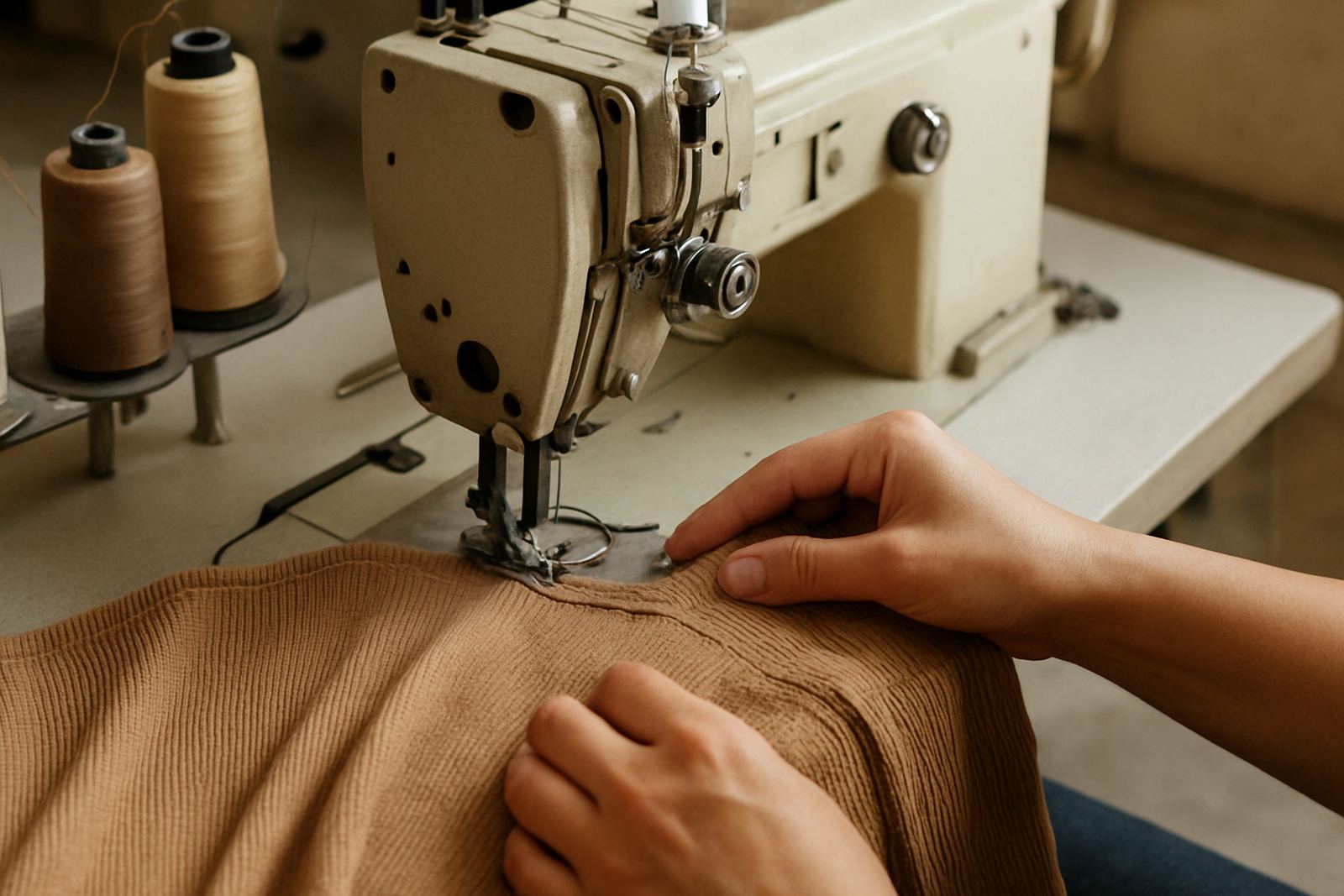
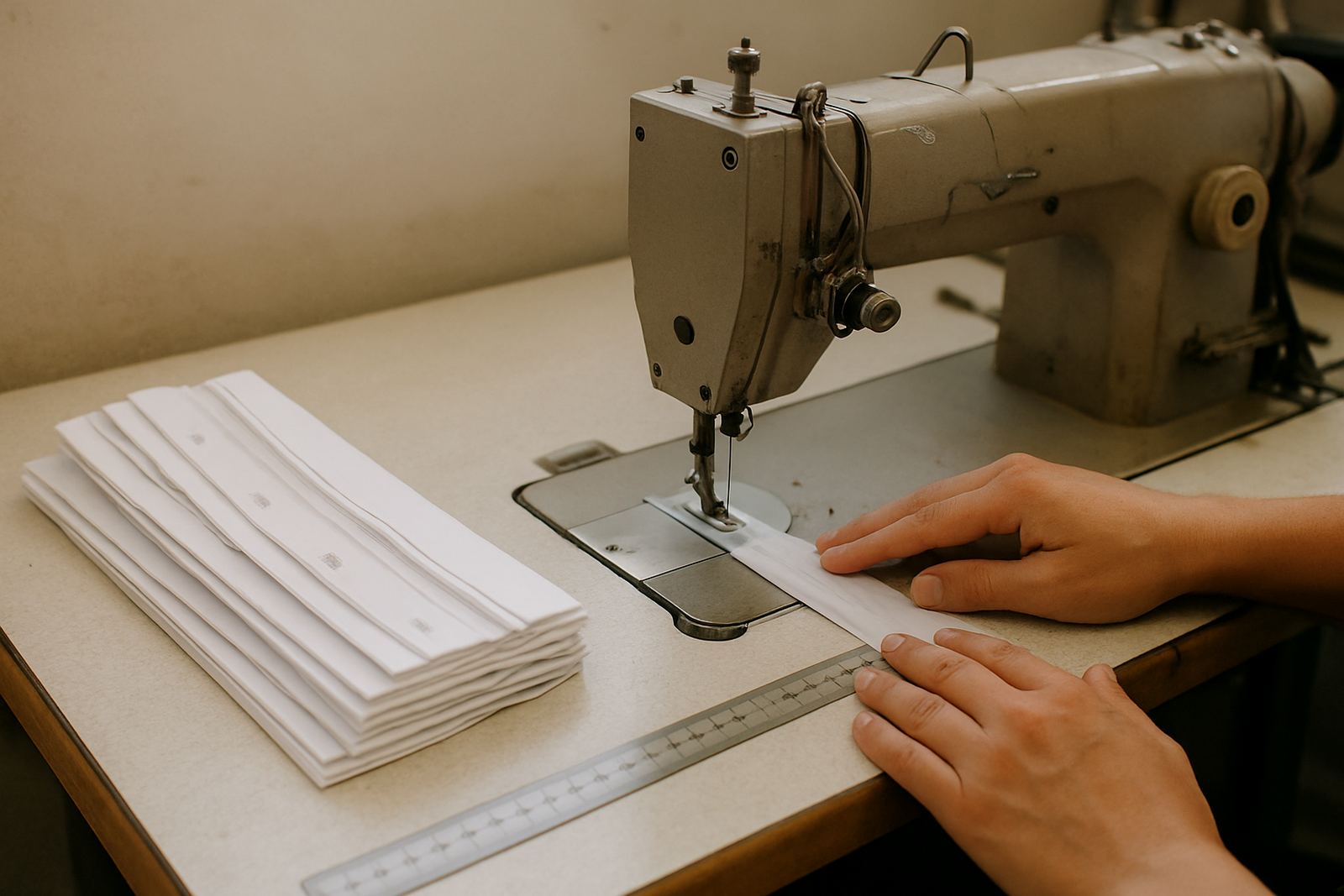
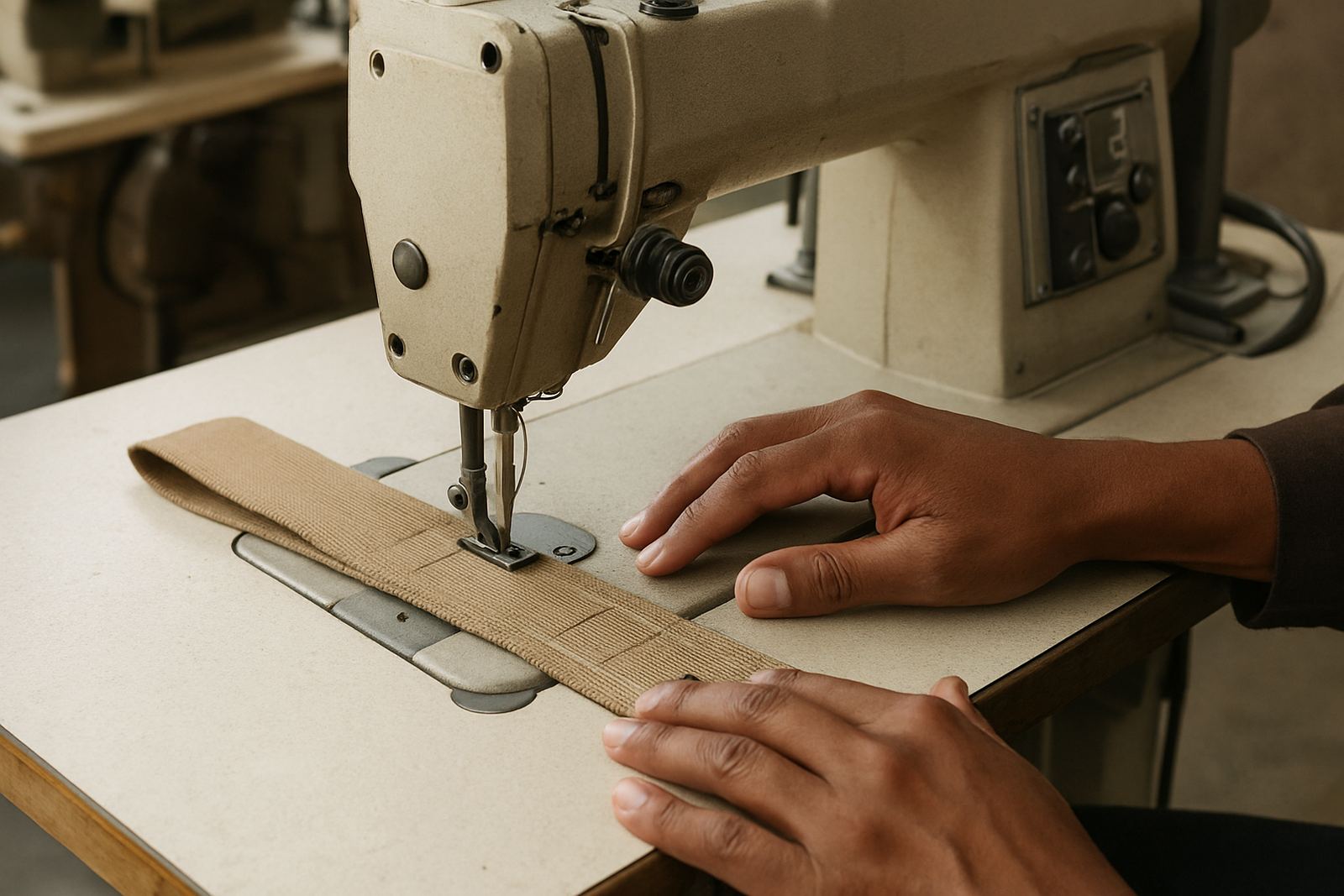
A pattern tacker is a programmable stitch machine made for repeated short patterns rather than long seams. It is commonly used on jeans labels, bag straps, belt loops, tabs, name badges, reinforcements on workwear and small component stitching where accuracy matters more than speed over distance.
The operator loads the item, places it under the clamp or template area, then the machine runs the set stitch path every time. That saves time on work that would otherwise be done by hand or with a general purpose machine, and it gives more consistent stitch length and finish from one piece to the next.
For factories in Johannesburg, Fordsburg, Mayfair, Germiston and Pretoria, this is useful where staff changes, power interruptions and high daily volume can affect consistency. A pattern tacker helps keep the same stitch shape even when one operator is relieved by another.
Sizes and control options available
Pattern tacker units are generally supplied in compact bench sizes for small items and wider table versions for larger reinforcement work. The right model depends on the size of the stitch field, the thickness of the material and how often the pattern will be changed.
Common options include mechanical pattern control, digital programme memory and automatic thread trimming. Some models are better suited to light to medium materials, while others are set up for heavier webbing, canvas and workwear panels. If you are using thicker thread or dense stacks of cloth, the needle system and presser setting must be checked before purchase.
- Small stitch field units for labels, tabs and short reinforcement stitches
- Medium field units for straps, loops and garment components
- Digital memory controls for repeated production runs
- Clamp or template guided feeding for repeat placement
- Optional automatic thread trim and thread break detection on certain models
When matching a machine to your work, think about the smallest and largest item you stitch, not only the average piece. A school uniform workshop, for example, may need a different setup from a bag maker or leather goods shop.
Where it suits best in Gauteng workrooms
This machine suits tailors, garment factories, school uniform makers, promotional item workshops, leather and bag makers, and small home based businesses that need repeat reinforcement stitching. It is also practical for shops doing repairs and alterations where labels, badges and tabs need to be fixed quickly and neatly.
In Gauteng, many customers use pattern tackers for short run work where turnaround is tight. A workroom in Soweto may use one for school clothing repairs, while a Germiston factory might use it for strap reinforcement and tab stitching on repeated batches. In Pretoria and Randburg, it often fits into mixed production rooms where one operator handles several finishing tasks.
- Labels on shirts, jackets and uniforms
- Straps, loops and tabs on bags and garments
- Reinforcement points on pockets, zips and seams
- Small batch production where repeat shapes are needed
- Repair work that needs a neat, controlled finish
Installation, power and workshop setup
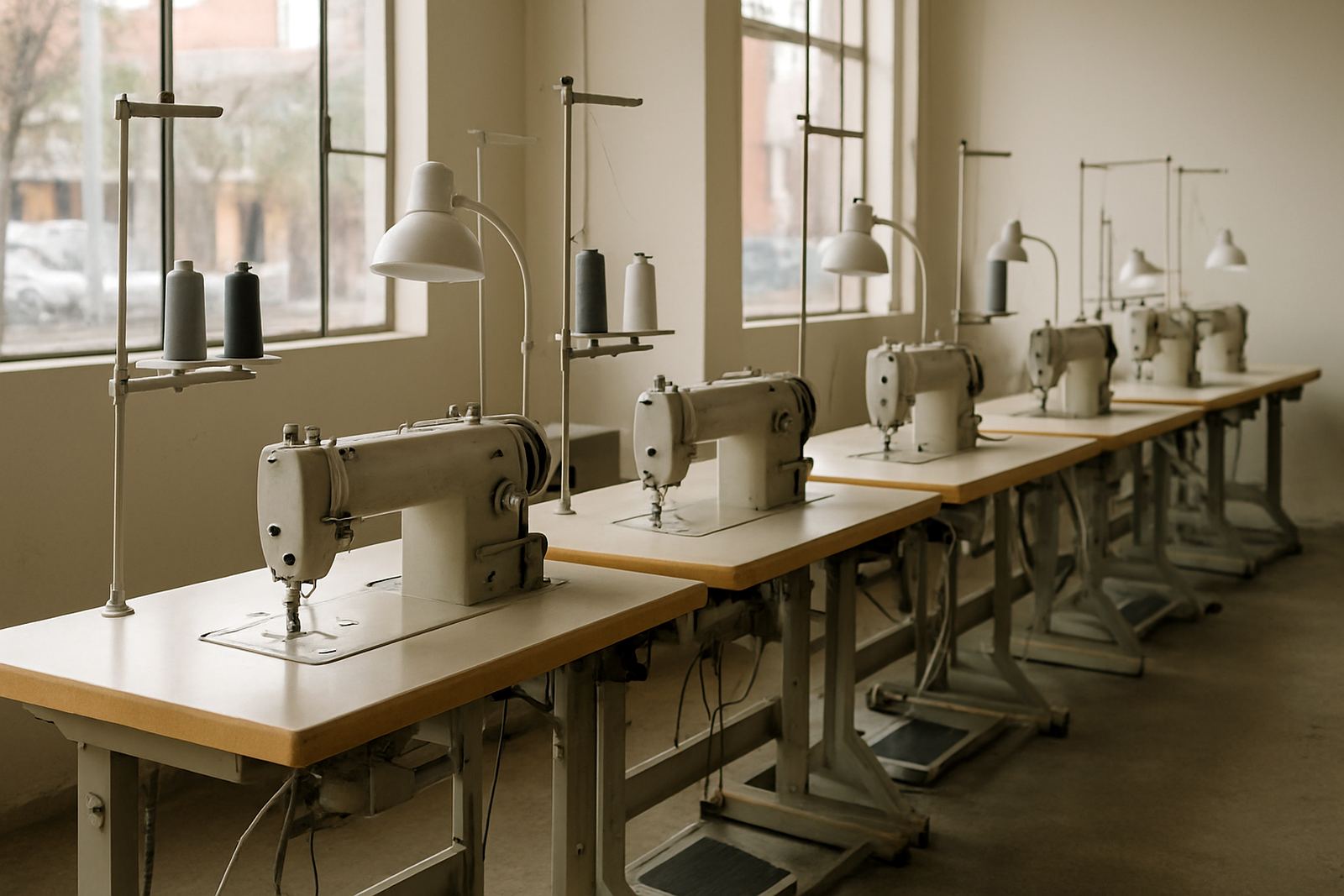
Installation needs a level table or stand, correct machine head mounting and enough space for the operator to place work comfortably. A pattern tacker should be set where the operator can feed items without twisting, because poor positioning slows production and increases mistakes. For a shared workroom, allow space for thread, bobbins, spare needles and finished goods nearby.
Most units run on standard single phase electricity, although the exact motor and control system should be checked before supply is confirmed. If your premises deal with load shedding, we can advise on motor conversion, backup planning and safe shut down routines so the machine is protected when power drops unexpectedly. Air or gas is not normally required for standard pattern tacker operation, but some production rooms use compressed air for other equipment around the machine line.
We also look at extractor needs, table height and operator flow when setting up a room. In a busy CBD workshop, even a small change in layout can improve output and reduce fatigue over a long day.
Care, servicing and parts to keep it productive
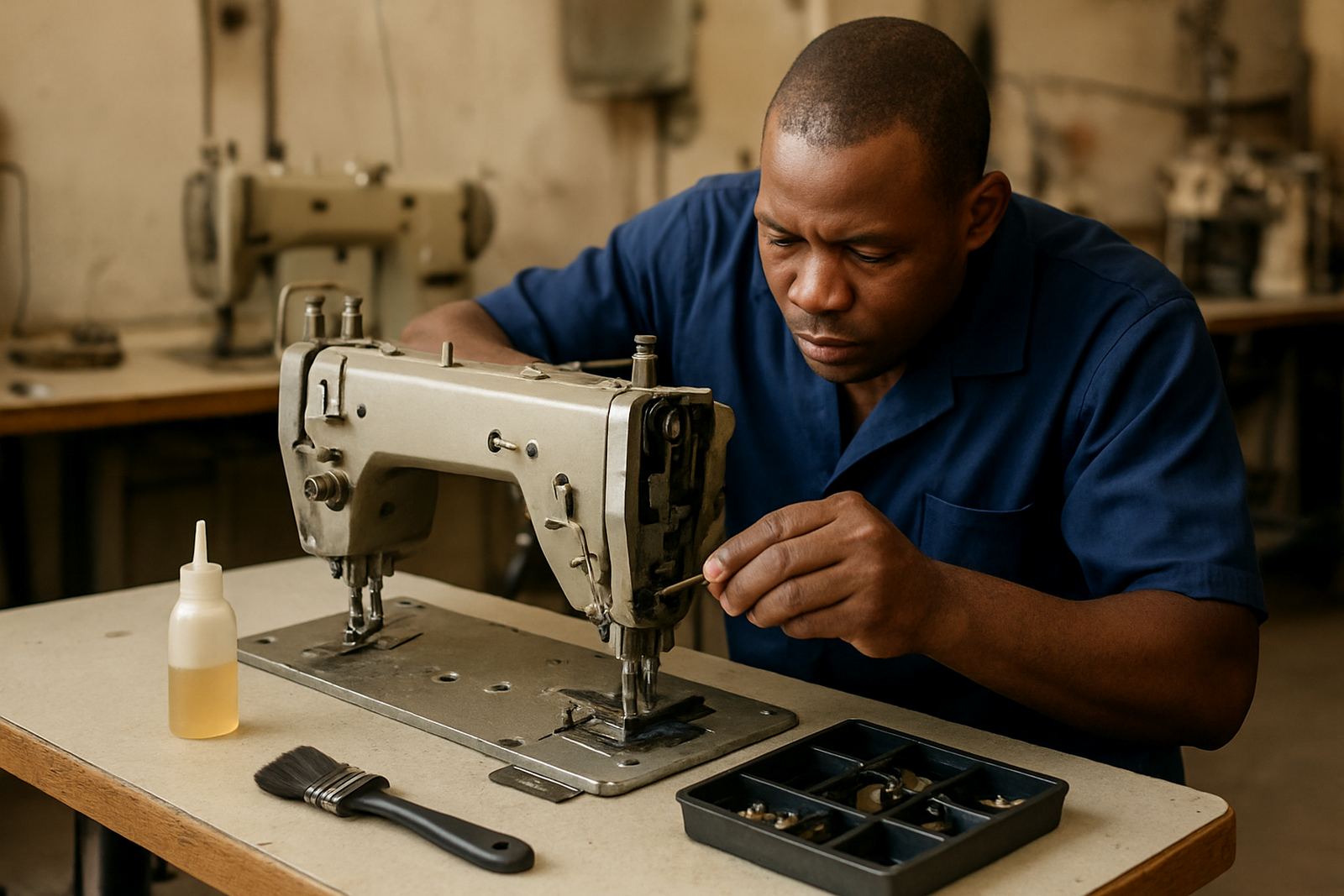
Like any industrial sewing unit, a pattern tacker needs routine cleaning, oil checks where applicable and regular attention to the needle area, thread path and clamp mechanism. Dust, lint and thread build up around the moving parts and can cause skipped stitches or uneven cycles if left too long.
Our workshop and field team handle routine servicing, timing adjustments, motor conversions, on site repairs and workshop repairs across Johannesburg CBD, Fordsburg, Mayfair, Soweto, Germiston and Pretoria. If the machine starts pulling thread, missing stitches or leaving a loose start, it is best to have it checked before the problem affects more garments. A small fault left too long can turn into a full day of lost production, especially when the machine is the only unit making that pattern.
- Clean lint and trimmed thread from the hook and clamp area
- Check needle condition and replace worn or bent needles early
- Keep spare bobbins, thread guides and feet on hand
- Book periodic timing and tension checks
- Use the correct thread weight for the fabric and pattern size
What to confirm before placing an order
Before ordering, bring a sample of the item you want to stitch and be clear about the material thickness, stitch shape and daily quantity. It helps us match the machine to the actual work, not just the description on paper. For some jobs the main issue is stitch field size, while for others it is clamp pressure or thread type.
You should also confirm whether you need installation, operator training, parts sourcing or a full workroom planning visit. If your team will change from general stitching to pattern tack work, training is useful so the operator understands loading, pattern selection and basic care. Check the available floor space, electrical point position and whether your premises need any municipal or building compliance attention for new equipment placement. If the machine will be used near a pressing line or finishing station, make sure the workflow is arranged so pieces move smoothly from one task to the next.
- Sample item and target stitch pattern
- Fabric type, thickness and thread size
- Daily production volume and operator skill level
- Power supply details and space available
- Need for installation, training or ongoing servicing
Clients in Alberton, Randburg and Pretoria often ask for help matching the machine to a mixed workroom. That is usually the safest approach, because the wrong setup can look fine in the showroom but be awkward once real production starts. We can talk through the options and help you choose a unit that fits your work, your room and your budget.
Key facts
| Machine type | Programmable pattern tacker for repeat stitch cycles |
|---|---|
| Stitch use | Labels, straps, tabs, loops and reinforcement points |
| Work field | Compact to medium stitch field options available |
| Power | Standard single phase supply on most models, confirm before installation |
| Applications | Garments, uniforms, bags, leather goods and repairs |
| Service support | Installation, training, servicing, repairs and parts sourcing from Johannesburg CBD |