

What a sewing table stand does in a workroom
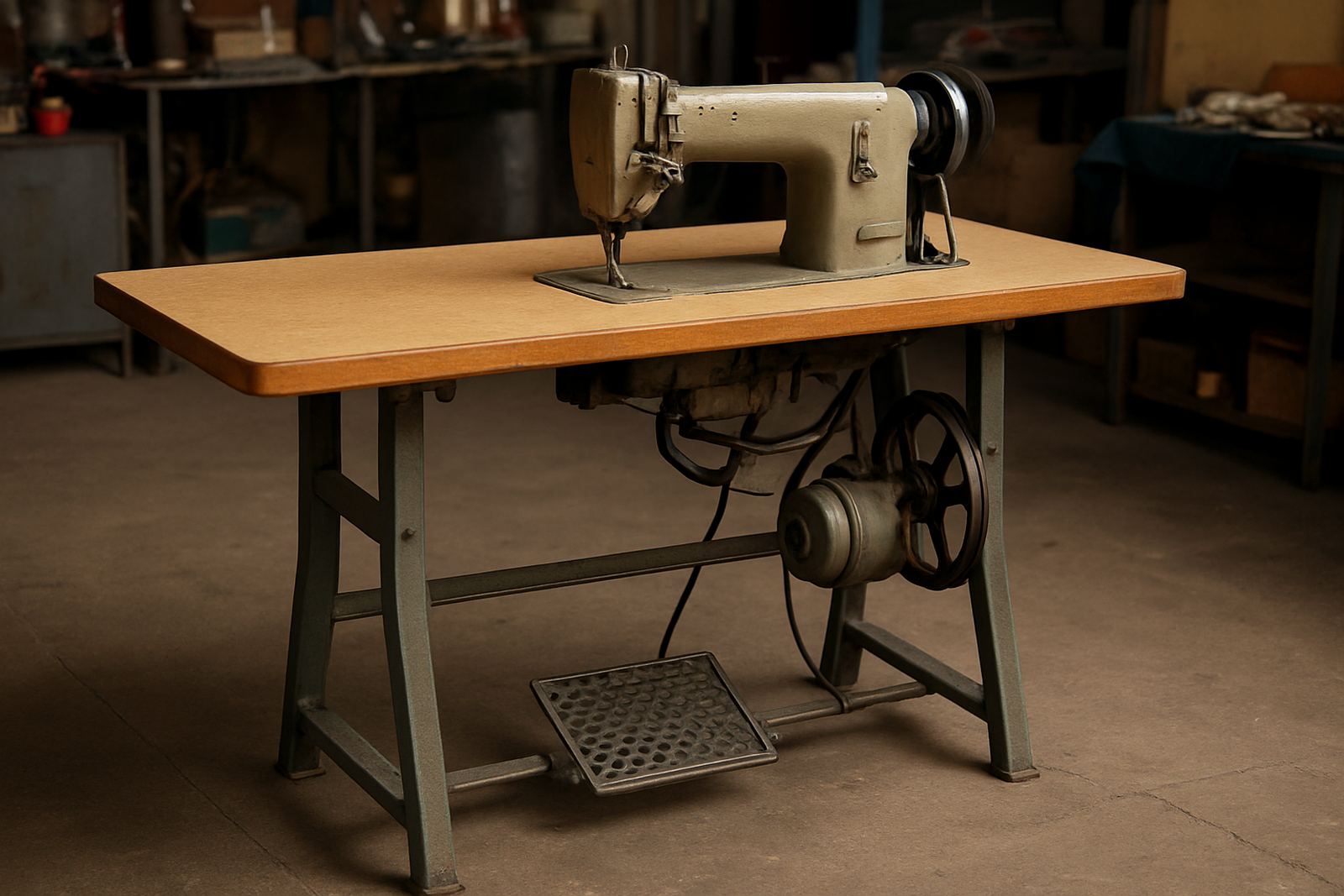
A sewing table stand is the support frame and top that carry an industrial machine head, motor mount, pedal and belt drive in one working unit. It is used where the machine needs a fixed position, a stable treadle or pedal action, and enough space underneath for the operator to sit correctly without crouching or reaching too far.
For factories, tailor shops, school sewing rooms and home workshops, the right stand helps reduce vibration and improves operator comfort. It also makes servicing easier because the machine sits at a standard height and the motor, belt and wiring can be checked without moving the whole setup around the room.
Sizes and stand options that suit common machine heads
Most sewing table stands are supplied with a steel frame, laminated top, pedal opening and adjustable feet. The top size must match the machine head and the cut-out position, otherwise the head may sit off centre and the belt line will not run cleanly. We can advise on stands for plain stitch heads, overlock heads, coverstitch heads and some specialty units, depending on the underside space needed.
- Top size: usually about 1 060 mm to 1 200 mm long and 450 mm to 600 mm wide, depending on the machine type
- Frame: powder-coated steel with height adjustment on selected models
- Pedal layout: treadle or foot pedal position matched to the operator's seating side
- Cut-out: factory cut-out for the machine bed, switch and belt path
- Extras: drawer options, cone stand mounts, caster feet or fixed levelling feet
For shared workrooms, a wider top can be useful for fabric handling and pattern pieces, while smaller rooms in Fordsburg or Mayfair may need a compact stand that still gives proper legroom. If the floor is uneven, or the room gets moved around for cleaning, a stand with levelling feet is worth asking for.
Where this stand works best in Gauteng workshops
This product suits operations that need long daily running hours and a fixed workstation. It is common in clothing factories, school sewing rooms, alteration shops, upholstery corners and home businesses that have moved beyond a table from the house. In places like Soweto, Germiston and Pretoria, where space and power supply can vary from one building to the next, a proper stand keeps the machine more predictable in use.
The stand also helps when you are setting up multiple machines in a row. Operators can share the same working height, the machine heads are easier to align, and the workroom layout becomes more orderly. That matters when you are planning a cutting table nearby, a pressing area down the line or a packing corner that must remain clear for movement.
Installation, motor fitment and power needs
Installation should start with the correct machine head, motor and belt alignment. The stand must sit level before the head is fitted, then the pedal travel, belt tension and needle position should be checked. If the setup uses a clutch motor or servo motor, the mounting points and pulley height must line up so the machine starts smoothly and does not run too fast for the operator.
- Power: standard 220V supply for most workshop motors, with clean wiring and a proper plug point
- Motor fitment: side-mounted or under-table mount depending on the motor style
- Belt line: must run straight from motor to handwheel without rubbing the table edge
- Floor needs: level concrete or firm flooring is best; broken tiles should be packed before installation
- Optional control: speed control, knee lift or foot pedal accessories if the machine model allows it
In areas with load-shedding, some customers add a backup supply for the motor or keep a lower-speed setting for careful work. That helps with training rooms and smaller teams where sudden restarts can cause broken thread or misplaced stitching. The stand itself does not need gas, but the surrounding workshop may need safe cable routing and a clear path for extension leads if power backup is used.
Care, servicing and signs the stand needs attention
A sewing table stand needs less maintenance than the machine head, but it still benefits from regular checks. Tighten loose bolts, clean lint and thread from the pedal area, and keep oil off the top surface so fabric does not pick up marks. If the stand starts to wobble, the operator will feel it in the stitching and the machine may walk across the floor under speed.
Watch for cracked feet, warped tops, rusty frame sections or a belt path that no longer lines up after a workshop move. If the motor bracket sags, the belt can slip and the machine may sound strained. In humid areas or rooms close to open doors, some rust can appear faster, so a quick wipe-down and inspection during routine servicing is worthwhile.
What to confirm before you place an order
To supply the correct sewing table stand, we need to match the stand to the exact machine head and the space available in your room. A few measurements upfront save time and reduce the risk of return fitting work later on. If you are buying for more than one machine, it is worth checking each head type rather than assuming all industrial machines use the same cut-out.
- Machine model or head type: plain stitch, overlock, coverstitch or specialist unit
- Available floor space: room width, aisle space and nearby tables or presses
- Operator setup: left or right foot use, seated height and preferred legroom
- Power plan: standard supply, backup supply or workshop extension arrangement
- Accessories required: motor, pedal, drawer, cone holder or caster feet
If you are fitting a new workshop in Johannesburg CBD, Alberton or Randburg, we can also help with the full layout so the stand works with the cutting and pressing flow. That avoids a cramped floor plan and keeps machines where they can be serviced properly later on.
Why customers order stands with setup and servicing support
A sewing table stand is best treated as part of the full machine setup, not as an item on its own. When the head, motor, pedal and stand are installed together, the stitch formation, operator posture and daily output are easier to manage. This is especially useful for schools and production rooms where several people use the same machine during the week.
Our Johannesburg CBD base supports sales, setup and servicing across Gauteng, including Fordsburg, Mayfair, Soweto, Germiston, Pretoria, Alberton and Randburg. If your workroom needs a replacement stand, a new machine base or a full installation with servicing follow-up, we can advise on the practical fit before the unit goes in. It saves time, and the machine runs better from the start.
Key facts
| Product type | Industrial sewing table stand with top, frame and pedal opening |
|---|---|
| Typical top size | About 1 060 mm to 1 200 mm long x 450 mm to 600 mm wide |
| Frame material | Powder-coated steel |
| Top material | Laminated board with machine cut-out |
| Power requirement | Standard 220V supply for compatible motor fitment |
| Common use | Factories, tailors, schools and home sewing rooms |