

Why end of day cleaning matters in a busy workroom
When a machine runs all day, lint drops into the needle plate area, under the bobbin case and around the feed dogs. If that debris is left overnight, it mixes with oil, thread fluff and fine dust. By the next shift, the machine may start skipping stitches, pulling thread unevenly or making a dull knocking sound.
In Gauteng, many workrooms deal with dry dust in winter, open doors for deliveries, and load shedding that interrupts production patterns. Those conditions make daily cleaning even more important. A machine that is wiped down and cleared properly at close of business is easier to start up the next morning, and it gives the operator a better chance of spotting a loose screw, bent needle or worn thread guide before it becomes a bigger repair.
At Asia Sewing Machines in Johannesburg CBD, we often see machines brought in for service that were not badly damaged at all, just neglected on a daily basis. A simple cleaning routine does not replace proper servicing, but it does help keep industrial and household machines running cleaner and more consistently.
A practical five minute closing routine
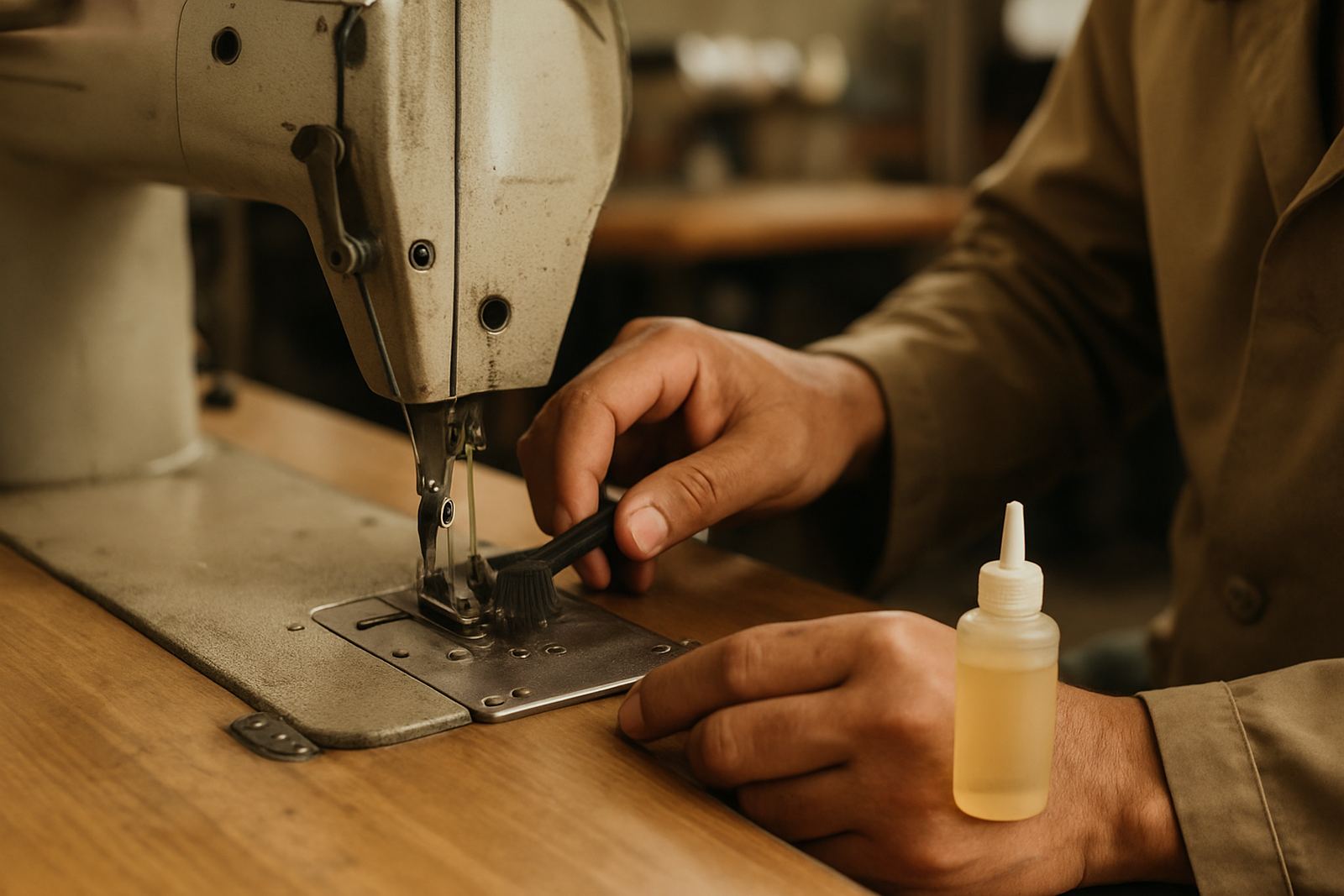
Keep the routine simple enough for every operator to follow. If it takes too long, it will be skipped on a busy Friday afternoon. Use a small brush, a lint cloth and a hand vacuum with a narrow nozzle where suitable. Avoid blowing dust deeper into the machine with compressed air unless the machine type allows it and the area is properly controlled.
- Switch off and unplug the machine before cleaning.
- Remove the needle and check whether it is bent, blunt or marked.
- Open the needle plate and clear lint from the bobbin area.
- Brush out feed dogs, tension discs and visible thread paths.
- Wipe the top cover, thread stand and table surface.
- Check the bobbin case for stray thread ends or rough edges.
- Replace the needle if it has completed a long production run.
If your workroom uses several machines, assign the same closing steps to each station. That makes it easier to spot differences. One machine may be collecting more lint because of fabric type, needle size or a threading issue. Another may need a timing check or a motor adjustment after repeated heavy use.
Where lint hides on industrial and household machines
Every machine has its own trouble spots. Industrial straight stitch machines usually collect lint around the bobbin housing, under the throat plate and beneath the work area if oil and thread fluff combine. Overlock machines trap more debris in the looper area and around the blade. Household machines often gather fluff near the feed system, under the bobbin cover and inside the removable accessory compartment.
For embroidery machines, daily cleaning is even more important because they handle multiple thread paths and high stitch counts. Thread fluff can build up around the needle bar area, under the hoop frame path and in the bobbin section. If the machine is working on delicate fabric or dense designs, even a small amount of dust can affect stitch tension and thread breakage.
As a rule, clean the places you can reach safely and leave deeper internal work to a qualified technician. Never force open a cover that does not move easily. Never scratch at lint with metal tools, because that can mark the hook, throat plate or timing points. A soft brush and careful visual check is usually enough for daily maintenance.
What to check while you clean
Daily cleaning is also the right time for a quick inspection. Many faults start small, and a short look-over can catch them before they stop production. This is especially useful for factories, schools and home sewers who share machines between different users.
- Needle condition: bent, dull or inserted incorrectly.
- Thread path: knots, loose guides or thread caught behind a spool pin.
- Bobbin tension: obvious tangles, uneven winding or damaged case edges.
- Presser foot: lint trapped under the foot or signs of uneven pressure.
- Motor and belt area: loose dust, slack belt or unusual heat.
- Power supply: frayed cord, damaged plug or unstable connection after load shedding.
If a machine has been off during an outage, wait until power is stable before testing it again. Sudden starts and stops can affect electronic controls on computerised machines. In some workshops near Fordsburg and Mayfair, the machine room runs longer than the cutting room, so a quick post-shutdown check can prevent a rushed restart and unnecessary strain.
Cleaning habits that protect stitch quality
Good cleaning is not just about keeping the machine neat. It directly affects stitch formation. When lint sits in the hook area or around the feed dogs, the thread may not move evenly. That can lead to missed stitches, loose seams, puckering and needle heat. On darker fabrics, the dirt may also transfer onto the work, which means rework and wasted time.
Operators should keep thread cones stored cleanly and away from floor dust. Fabric scraps should be swept off the table rather than brushed into the machine bed. If a workroom handles bulk orders for uniforms, schoolwear or alterations, make sure each station has its own small cleaning kit so staff are not sharing one brush between several tables.
We often advise clients in Germiston, Soweto and Pretoria to link cleaning with changeover time. When one fabric run ends and another begins, that is the right moment to clear the machine, check the needle and confirm the thread path. It is a small habit, but it helps when you need consistent stitching across long shifts.
When daily cleaning is not enough
Sometimes the machine keeps collecting lint even after careful cleaning. That may point to a deeper issue such as worn thread guides, poor needle choice, incorrect threading, loose timing, damaged tension parts or a motor that is running harder than it should. If a machine keeps skipping stitches, running hot or making a grinding sound, it is time for a proper inspection.
Our workshop in Johannesburg CBD handles routine servicing, workshop repairs, on site repairs, timing adjustments, motor conversions and embroidery setup. We also assist with parts sourcing, attachments, spare needles, threads and haberdashery. For factories and schools, we can look at how the room is set out, how machines are used and whether a small change in layout could make cleaning easier and reduce downtime.
If you are running a busy floor in Alberton, Randburg or Pretoria and the same machine keeps giving trouble after cleaning, do not keep pushing it. A short service visit is often cheaper than repeated lost production.
A simple local example from a Johannesburg CBD workroom
One small clothing workshop near the Johannesburg CBD was having repeated needle breaks on two straight stitch machines. The operators assumed the problem was old thread, but the real issue was a build-up of lint under the needle plate and around the bobbin area. The machines were being wiped on top, but nobody was opening the lower section at the end of the day.
After introducing a five minute close-down routine, the team saw fewer skipped stitches and less thread snapping. They also started replacing needles on schedule instead of waiting for a fault. Production became steadier and the machines needed fewer emergency calls. It was not a fancy solution, just consistent care.
That is the point of daily cleaning. It is a small task, but in a workroom where every order has a deadline, small tasks matter. Clean machines stay easier to thread, easier to control and easier to trust when the next job starts.