

Why cutting flow matters before the first seam
When cutting is disorganised, the whole room feels it. Bundles go missing, offcuts pile up, and machinists wait while someone searches for the next panel set. A better cutting flow starts with one simple idea: every piece should move in one clear direction, from fabric receipt to marker, cutting, bundling and then to sewing.
That matters even more in Johannesburg CBD and nearby areas where floor space is tight. Many factories, school uniform workrooms and tailoring businesses are working in older premises, with narrow passages, mixed power supply and limited storage. If the cutting table is crowded, the sewing line slows down. If parts are cut accurately and sorted properly, the machine room can keep pace without constant rechecking.
A clean cutting process also reduces waste. Even a small saving per garment adds up over a month, especially on schoolwear, overalls and work shirts where repeat orders are common. Better flow also helps with load-shedding planning because you can finish more of the manual work before power returns to the sewing area.
Set the cutting room up for straight movement, not backtracking
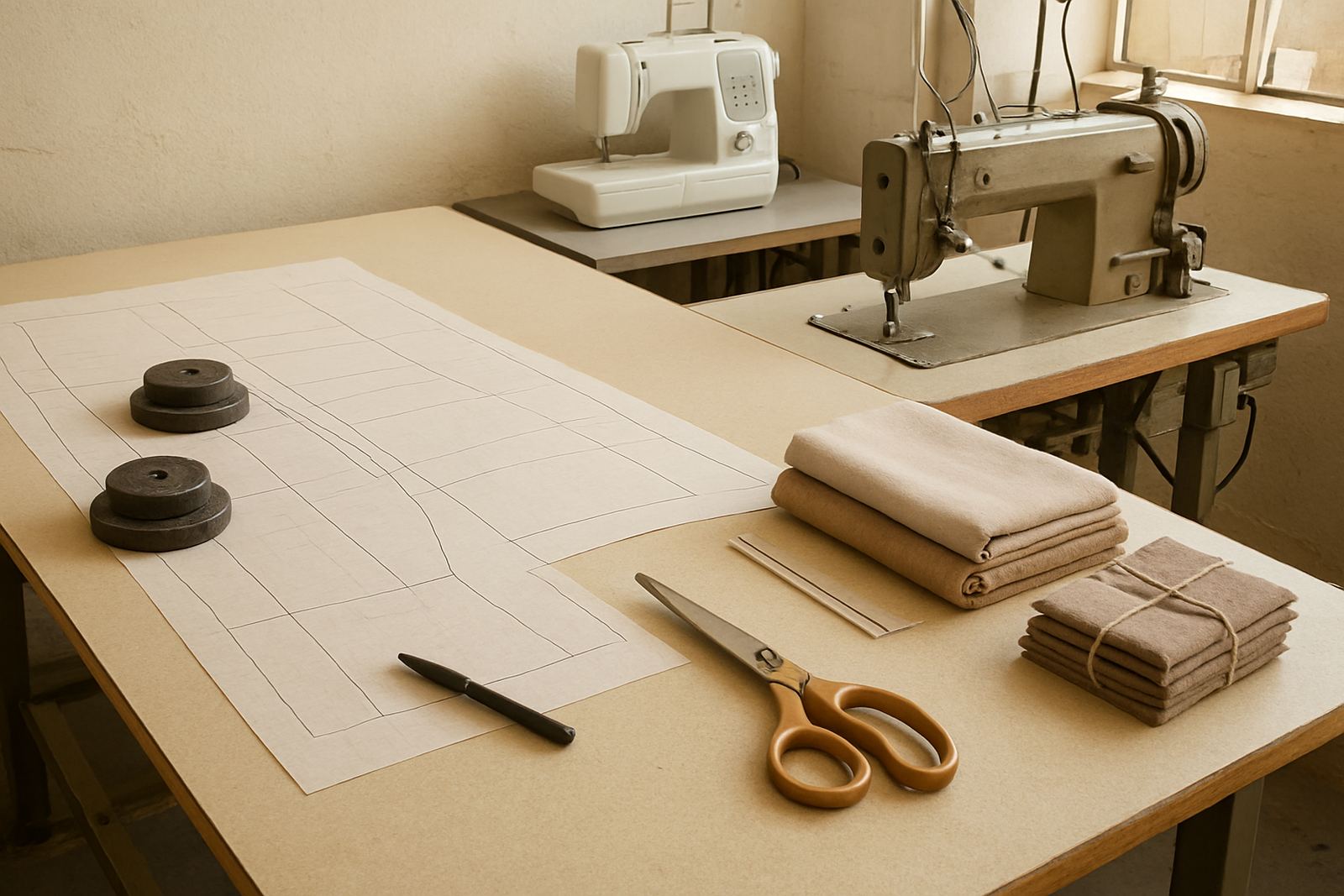
The best cutting rooms are not always the biggest. They are the ones where fabric enters one side, gets checked, measured and cut in sequence, then leaves the table in clearly marked bundles. Keep the path open so staff do not walk around piles of cloth or cross in front of the cutting edge carrying half-finished work.
If your room serves factories and home sewing orders at the same time, separate them by job type. One side can handle bulk repeats, while the other handles small custom work. That stops labels, patterns and thread cards from mixing. In places like Fordsburg, Mayfair and Soweto, where many businesses handle urgent repairs as well as production, this kind of separation saves a lot of confusion.
- Place incoming fabric close to the checking point, not near the sewing machines.
- Keep pattern papers, rulers and marking tools in one fixed spot.
- Use trolleys or stackable trays for cut bundles instead of loose piles.
- Mark one exit point for cut work heading to sewing, pressing or embroidery.
Even small changes like these make it easier for operators to feed machines without waiting for someone to sort through a mixed stack. That is useful in busy workrooms in Germiston, Pretoria and Alberton where deadlines often overlap.
Cut accuracy first, then feeding to the sewing line becomes easier
If the cut is uneven, the sewing station spends extra time correcting it. Operators end up trimming, matching or stretching pieces to make them fit. That slows output and can shorten the life of needles, feed dogs and motors because the machine is working harder than it should.
Accurate cutting starts with proper laying, clear markings and consistent blade handling. It also helps to check the first few pieces before the full batch is cut. A quick sample check can prevent a whole bundle of bad parts from reaching the sewing room. For work that includes collars, cuffs, waistbands or embroidery panels, the tolerances need to be tight because even a few millimetres off can show up on the final garment.
Once the pieces are cut right, feeding them to sewing stations is simpler. Operators can stitch in order, finish one job before starting the next, and spend less time asking for missing panels. That is important for businesses handling school uniforms, hospitality wear or repair work, where the job mix changes during the day.
Use bundles, labels and colour coding that your team will actually follow
Good flow depends on plain systems that workers can follow under pressure. Fancy labels are not useful if they peel off or get hidden under fabric. Choose a method that works in a dusty room, during a hot afternoon, or when the power goes off and work continues by daylight.
Many Gauteng workrooms find that simple colour coding works well. For example, one colour for schoolwear, one for industrial overalls and one for embroidery jobs. Number each bundle and keep the same number on the cut ticket, sewing ticket and packing note. That way, if a bundle goes missing, you know exactly where it should be.
- Use large, easy-to-read bundle labels.
- Keep offcuts in one marked bin for later reuse where suitable.
- Do not mix finished panels with uncut fabric on the same shelf.
- Record who cut the job and when it was sent to sewing.
This also helps when you have more than one area working on the same order. A clean tracking method supports better planning for machine setup, embroidery sequencing and pressing later in the job.
How machine condition affects cutting flow more than many owners expect
A cutting room does not work alone. If the sewing machines are poorly adjusted, the cutting team often gets blamed for delays that started elsewhere. When stitch quality is poor, operators ask for recuts. When motors are weak, work backs up. When embroidery machines need setup changes or a fusing press is uneven, the whole order moves slower and the cutting room has to hold more WIP than it should.
That is why machine installation, timing adjustments and routine servicing matter to the cutting plan. A business in Johannesburg CBD or Randburg may have enough cutting capacity, but if the sewing line cannot keep up, the bundles stack up beside the table. In that case, better flow means matching the cutting volume to the actual machine output, not the other way round.
At Asia Sewing Machines, many customers ask for workroom planning together with parts sourcing, workshop repairs and on site repairs. That makes sense because a tidy cutting process is only useful if the machines downstream can handle the pace. A sensible setup keeps the room moving without extra handling, dropped panels or unnecessary rework.
A local example from a mixed-order workroom in Johannesburg
A small workroom in the Johannesburg CBD was cutting school trousers in the morning and doing embroidery panels for corporate shirts in the afternoon. The team had good machines, but bundles were being stacked on a table near the door and pattern papers were kept in several places. The result was repeated delays, especially when two jobs used similar navy fabric.
After the room was re-arranged, the cutting table had one side for incoming fabric and the other side for finished bundles. Labels were made larger, the offcut bin was placed under the table, and a separate shelf was assigned for embroidery jobs. The sewing station could now take one complete bundle at a time instead of waiting for missing pieces.
Within a short period the room was moving more steadily, and the staff spent less time sorting and more time sewing. The owner also found it easier to plan work around load-shedding because the cut jobs were already grouped and ready to go when power returned. It was not a major rebuild, just a smarter flow.
When to review your cutting process and ask for help
If you are seeing waste, repeated recuts or piles of cut work waiting for sewing, it is time to review the process. The same applies if operators are constantly asking where the next bundle is, or if the cutting team is working hard but output still feels slow. Those are signs that the room layout or machine support needs attention.
A practical review should look at the whole path, from fabric receipt to finished bundle delivery. That may include workroom planning, machine installation, on site repairs, fusing press service, pressing station service and operator training. In some cases, a few changes to the room layout are enough. In others, you may need better spares, attachments or a servicing schedule to keep the line steady.
If your business serves customers across Gauteng, from Fordsburg to Pretoria, a better cutting flow can help you handle more jobs without adding chaos. It keeps the workroom cleaner, makes sewing stations easier to feed and gives you a clearer grip on every order.