

Start with the needle before you touch anything else
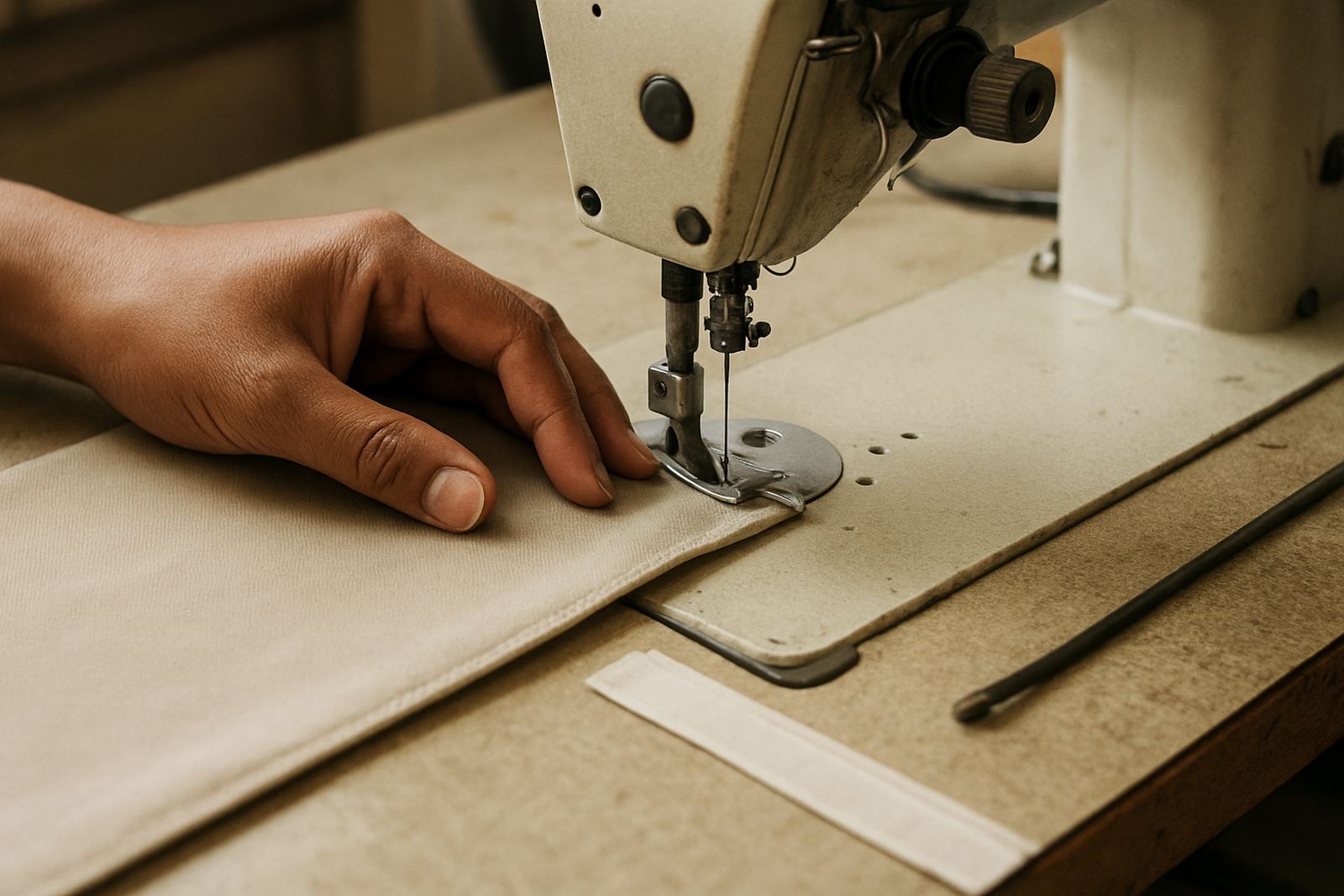
In many workshops across Johannesburg CBD, Fordsburg and Mayfair, skipped stitches begin with the simplest part on the machine. A bent needle, the wrong needle point for the fabric, or a needle fitted upside down can throw the stitch off at once. On household machines and industrial heads alike, the needle must match the fabric weight and the thread size. A 90/14 needle will behave very differently on denim than a 70/10 on light shirting.
If the machine was sewing neatly yesterday and now skips on one seam or one layer, inspect the needle closely. Look for a groove, a slight bend, or a blunt point. Replace it rather than trying to make it last another job. It is a cheap part and often the fastest fix.
- Change the needle first if it has been used for more than a full day of sewing on hard fabric.
- Check the needle clamp and make sure the needle is seated fully to the top.
- Use the correct point type for stretch, woven, denim or leather work.
Threading faults can mimic serious machine trouble
When the thread is not sitting correctly in the tension discs, take-up lever or guides, the machine may form weak loops and miss stitches. This is common after a reel runs out, a spool catches, or someone rethreads the machine in a hurry. In factories and tailoring rooms around Soweto and Germiston, we often find that the machine was not damaged at all, it was simply threaded badly after a stop in production.
Pull the thread out completely and rethread from the spool to the needle. Do not skip guides because the machine was working before. Keep the presser foot raised while threading so the thread can seat into the tension system. If the bobbin case is dirty or the bobbin is wound unevenly, the machine may also skip because the lower thread cannot feed smoothly.
- Check for lint around the tension discs and under the bobbin area.
- Make sure the thread is feeding freely from the cone or spool stand.
- Replace damaged bobbins that are not winding evenly or have burrs on the edges.
Timing problems show up after rough handling or long use
If a machine still skips after a new needle and careful rethreading, timing may be out. The hook must meet the needle at the right moment to catch the loop of thread. If that meeting point is too early or too late, the machine will miss stitches, especially on thicker seams. This is common after a jam, a needle strike on a plate, or a machine that has gone a long time without service.
Do not keep sewing through a timing fault. Continued use can damage the hook, needle bar or feed system. On industrial machines used for school uniforms, workwear and upholstery in Pretoria and Alberton, a missed stitch can quickly become a full production stoppage if the issue is ignored.
Signs that timing may be off include:
- Stitches skipping only at certain speeds.
- Needles hitting the hook or needle plate.
- Thread shredding after a jam or sudden stop.
- The machine sounding normal but forming uneven stitches.
Fabric, speed and operator habits all affect stitch quality
Not every skipped stitch means a fault inside the head. Stretch fabrics, thick seams, seam crossings and very fast sewing can all expose weak setup. A machine that runs well on plain cotton may struggle on knitwear or layered work if the needle, presser foot pressure and thread tension are not adjusted properly. This is often seen in home workshops and small tailoring businesses where one machine is used for many jobs.
Operators should slow down at bulky sections and guide the fabric without forcing it. Pushing the material can move the needle out of line just enough to miss the loop. If the machine has adjustable pressure, test it on a scrap piece before starting the job. A small change can make a clear difference.
- Test the machine on the same fabric and seam thickness as the real job.
- Reduce speed at joins, hems and thick cross seams.
- Adjust tension and pressure in small steps, then sew a sample again.
When the motor or drive system is part of the problem
Some skipped stitch complaints are linked to the drive, not only the sewing head. A slipping belt, weak motor, loose pulley or poor clutch setting can cause the machine to lag at the exact moment it should pick up the next loop. On older machines being converted to modern motors, the speed setting may also be too aggressive for the operator or the work being done.
In Johannesburg CBD workshops, load shedding can make this worse if a machine is restarted under pressure and the operator goes straight back to full speed. After a power cut, check that the machine is running evenly and that the handwheel turns smoothly before production resumes. If the machine hesitates, hunts or makes uneven strokes, the drive system should be checked as part of the fault finding.
A practical Johannesburg example and when to call for service
A tailoring shop in Fordsburg came in with a head that was skipping every third stitch on jacket fronts. The owner thought the hook was worn out. The real issue was a blunt needle, lint packed under the bobbin case, and a slight timing shift from a needle strike the week before. After a proper service, new needle, timing adjustment and a test on the same fabric, the machine was sewing cleanly again. The repair took far less time than the owner expected.
That is why the best order is always simple first, technical second. If the needle is correct, the thread path is clean, the bobbin is sound and the machine still skips, then it is time for workshop repair or on site attention. Do not wait until the machine starts chewing thread or damaging fabric.
Call for service when:
- The machine skips after every needle change and rethreading.
- The hook is striking the needle or the machine is making a knocking sound.
- Stitch quality changes as soon as speed increases.
- You need testing, timing adjustment or operator training on multiple machines at once.