
Start with the work you actually do, not the room you wish you had
Small sewing spaces go wrong when they are filled before the workflow is understood. A tailor in Fordsburg making alterations all day needs a very different setup from a school sewing room in Soweto or a home sewer in Germiston doing evening jobs. Before you buy shelves, trolleys or tables, list the tasks that happen most often: cutting, stitching, pressing, embroidery setup, finishing and packing.
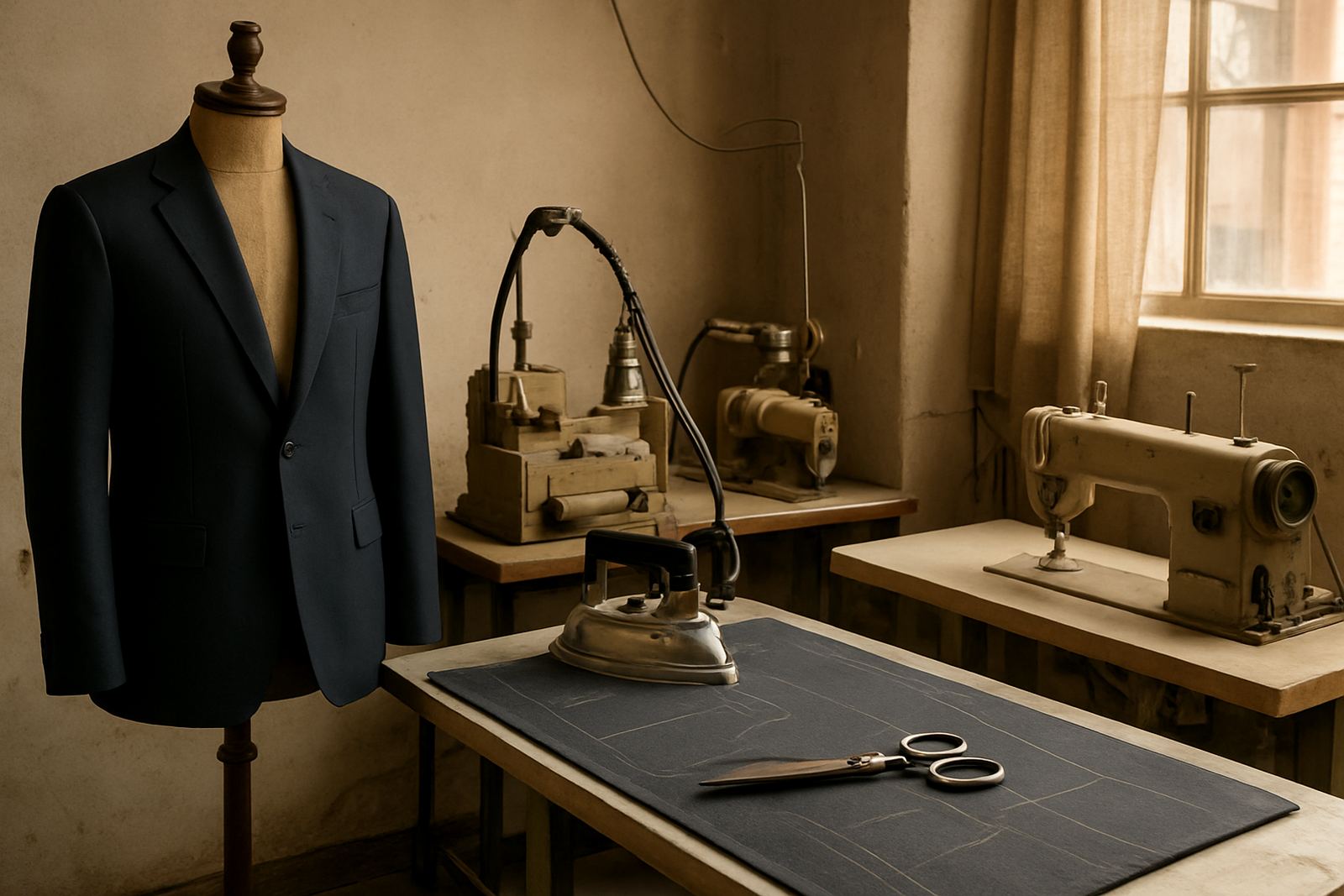
That list tells you what must stay close to the machine and what can be stored further away. If you do a lot of jacket alterations, for example, the press and steam iron should be within one or two steps of the sewing position. If you work with embroidery blanks, you need clear space for hoops, stabiliser and thread cones not a stack of mixed supplies on one surface.
A compact room also needs clear paths. In a narrow workroom, people should be able to turn with a garment in hand without knocking over thread stands or boxes. The fewer times you move an item, the less time you waste and the less chance there is of damage.
Use folding surfaces and vertical storage to keep the floor open
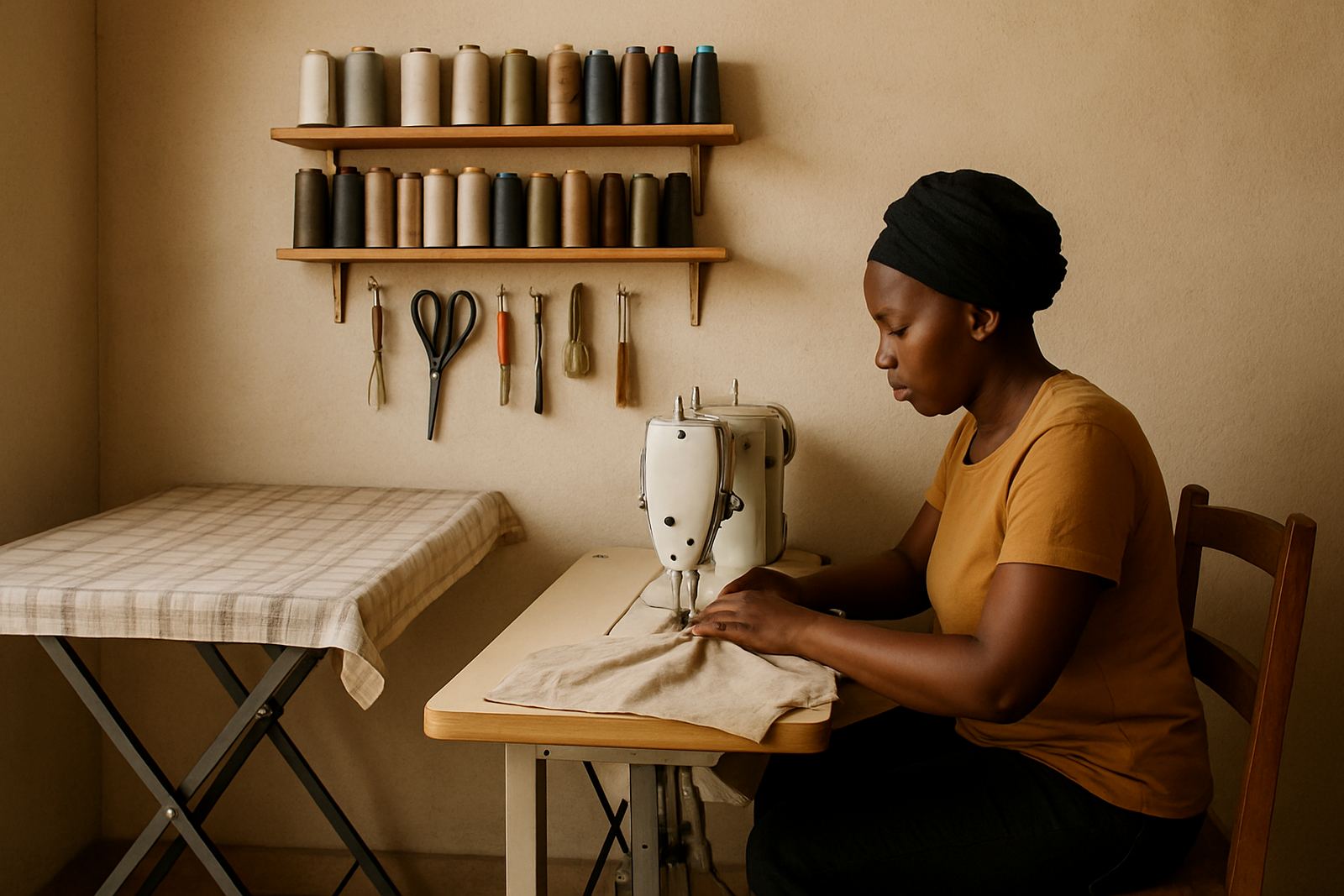
When square metres are limited, the best storage is often up the wall or built to fold away. Folding cutting tables, wall mounted thread racks and shelves above shoulder height can free up the floor for machine stands and a trolley. In a home workshop this can make the difference between a room that feels blocked and one that still has working space after hours.
For stores and schools in Johannesburg CBD, where rooms can be shared for multiple uses, lockable mobile units are useful. They can hold fabric, bobbins, needles and spare feet, then roll aside when the space is needed for another class or stock count. In a busy setup, the point is not to hide everything, but to keep each item where it can be reached quickly.
Do not let storage become a second pile on the floor. If the room is full of boxes, offcuts and mixed haberdashery, you lose both access and airflow. Moisture can build up in tight rooms especially near the coast or in older buildings with poor ventilation, and that can affect threads, packaging and metal parts.
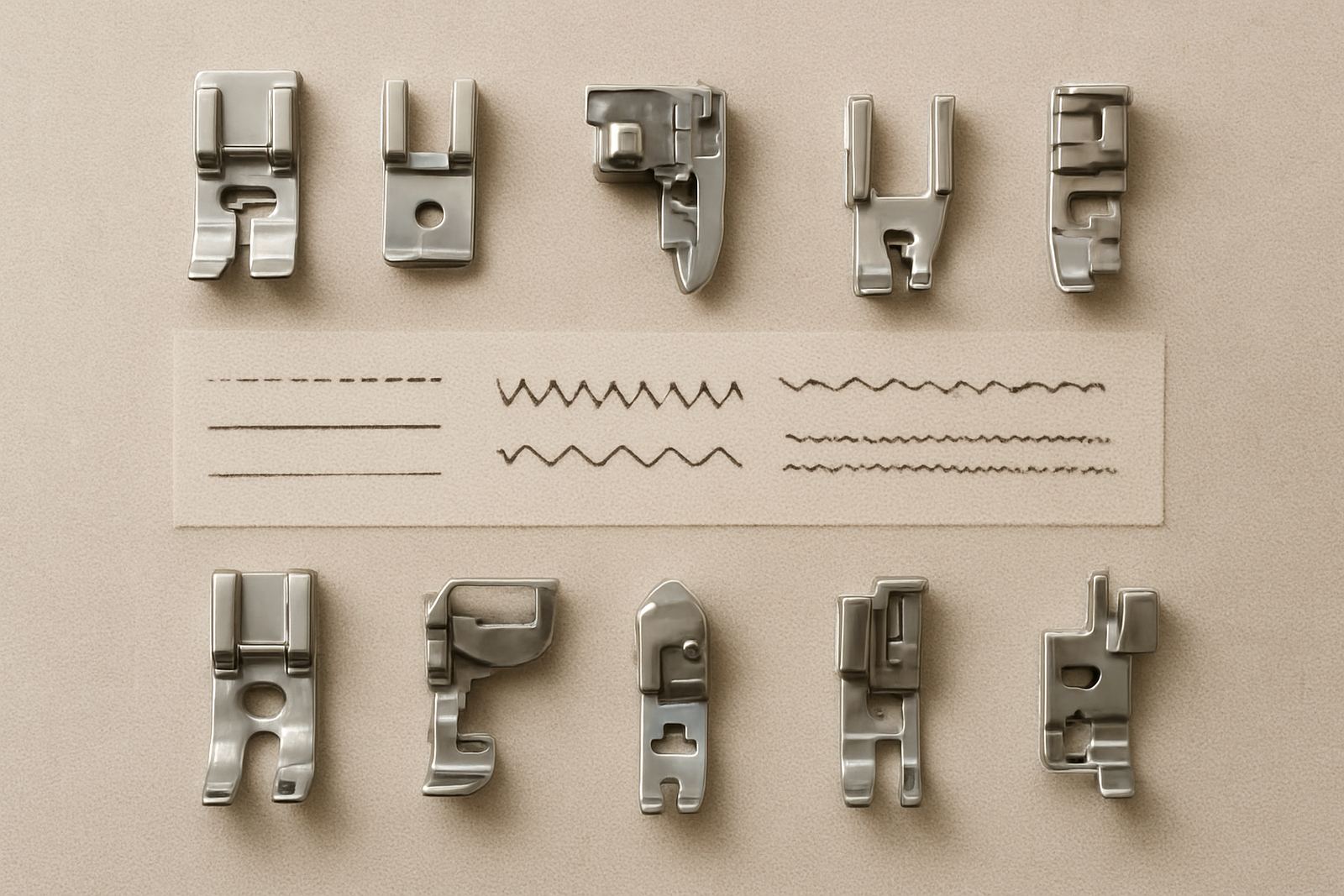
- Use labelled clear containers for feet, needles, bobbins and small tools.
- Keep heavy stock low and lighter items above waist height.
- Leave one shelf empty for incoming work and overflow.
- Mount frequently used tools where the operator can reach them without standing up.
Choose machines that suit the room and the power supply
Small spaces call for equipment that matches the actual workload. A single household machine may be enough for mending and light dressmaking, while a small factory unit may need an industrial straight stitch, overlocker and pressing station packed into one room. The right choice depends on volume, fabric type and how much floor space you can spare.
In areas such as Pretoria, Randburg and Alberton, many workrooms now need to think about load-shedding as well as floor space. If the electricity drops in the middle of a job, a plan for safe shutdown matters. That may include motor conversions on older machines, surge protection and a clear method for storing work during an outage. A machine that suits the room but cannot cope with the local power conditions becomes a problem very quickly.
Computerised embroidery machines and fusing presses also need breathing room. They cannot be wedged into a corner where fabric passes are blocked or where operators must twist awkwardly. A tight fit may save a few centimetres on paper, but it usually costs more in slow work and bad handling later on.
- Measure the footprint of the machine plus operator movement space.
- Check the door width if the machine will need to be moved for servicing.
- Allow space for thread paths, waste bins and finished garments.
- Plan for a safe power point close to the machine, not across the room.
Make the press and cut zones part of the same workflow
In a small sewing room, the press is not an afterthought. If pressing happens far from the sewing machine, work gets carried back and forth and the room becomes cluttered with half finished garments. A good small layout places pressing, stitching and trimming in a single loop so the operator can move in one direction without backtracking.
That matters in places like Mayfair and Soweto where space is often shared with stock or front counter activity. A pressing station beside the main work area can help keep seam finishing tidy, while a foldaway cutting surface can be pulled out only when needed. This saves room and makes the work flow easier to supervise.
For businesses that handle uniforms, school wear or repair work, the smallest changes often have the biggest effect. A dedicated spot for cut pieces, a hook for garments waiting to be pressed and one tray for finished orders can stop the whole room from becoming one mixed pile. It is simple, but simple systems usually last longer than complicated ones.
Keep spares and consumables close, but only the ones you really use
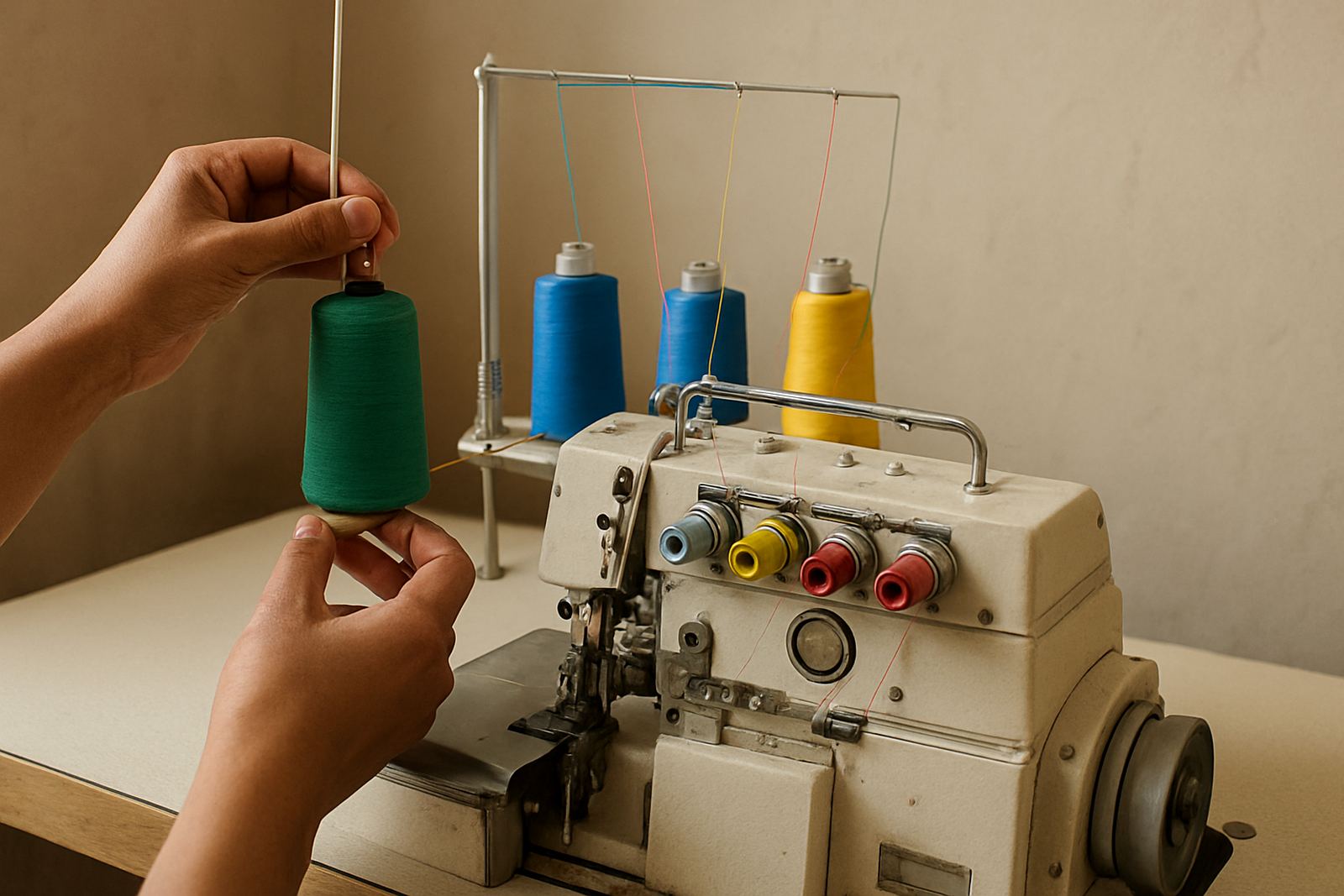
Small rooms often waste space by keeping too much stock on hand. Threads, needles, oil, buttons, zips, bobbins and spare attachments should be close enough to reach quickly, but not spread across three cupboards. A lean setup reduces clutter and helps you see what must be reordered before it runs out.
For many operators, the easiest habit is to divide supplies into daily use and reserve stock. Daily use stays by the machine. Reserve stock stays in one locked or clearly marked storage area. That way the work surface stays clear and the workshop supervisor can check levels without searching through random bags and boxes.
- Store matching threads together by colour or job type.
- Keep repair spares in a shallow drawer or small parts cabinet.
- Separate school work, alteration work and production stock if the room serves more than one client type.
- Inspect needles, belts, bobbins and oil levels on a fixed schedule.
That routine is especially useful where several people work in the same room. It prevents arguments about missing items and cuts down on lost time before the next order is started.
A Johannesburg CBD example: one room, three functions, less clutter
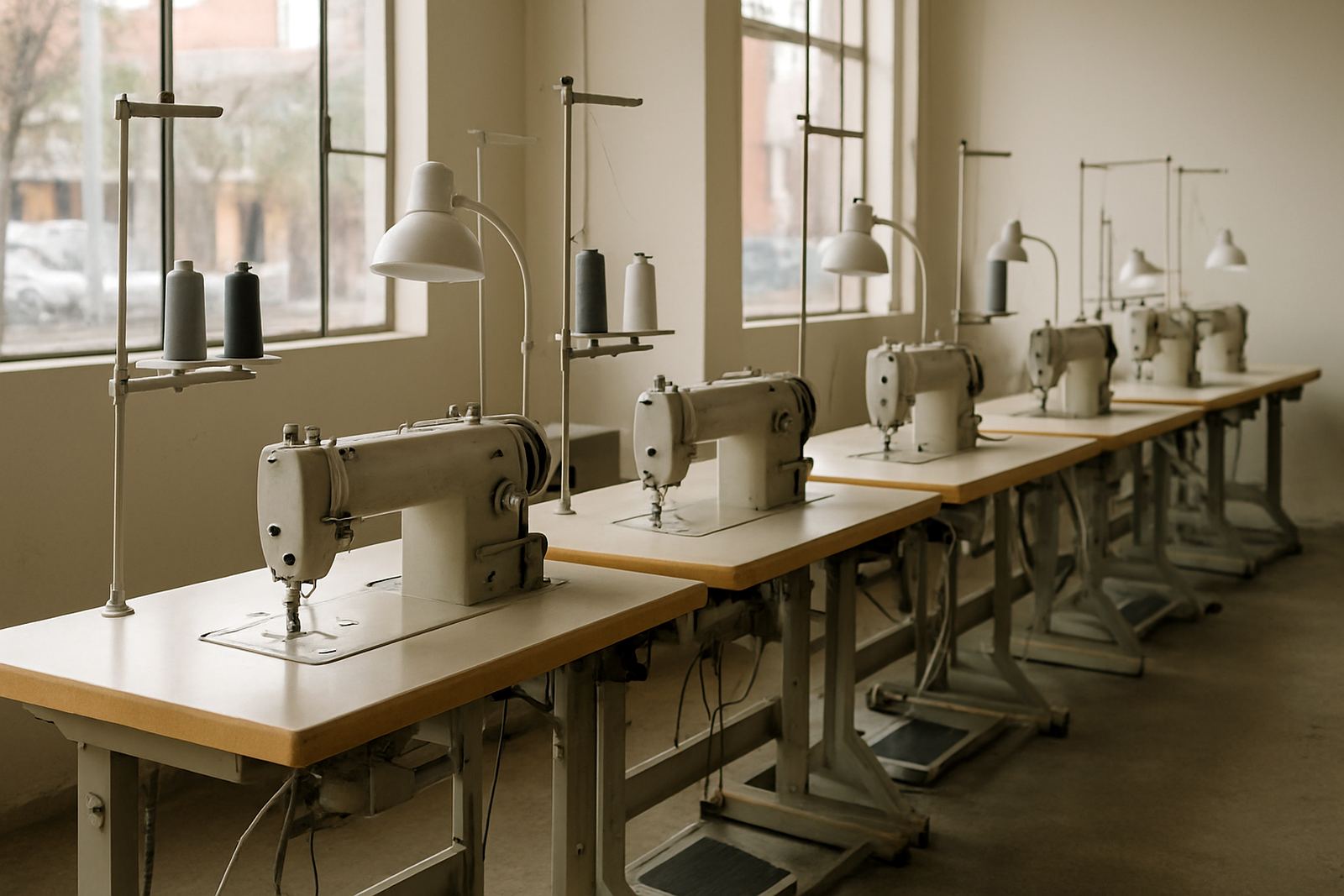
A small workroom in the Johannesburg CBD often has to do more than one job. It might serve walk-in alterations, school uniform repairs and a few small production runs for nearby traders. In that kind of setting, the best layout is usually one that separates the room into three clear zones: stock, machine work and finishing.
One practical setup is a wall of shelving for fabric and consumables, a central machine line for stitching and a folding press area near the exit or a side wall. If the room is deep enough, finished work can move forward in a simple path without crossing the cutting area. This reduces clutter and keeps the floor usable when more than one person is working.
We often see the same issue in compact premises across Gauteng: a good machine is there, but the room layout is fighting the operator. Once the storage is tightened, the surface heights are sorted and the machine positions are adjusted, the work feels easier without adding more square metres. That is usually when the room starts earning properly.
Plan for servicing before the machine starts giving trouble
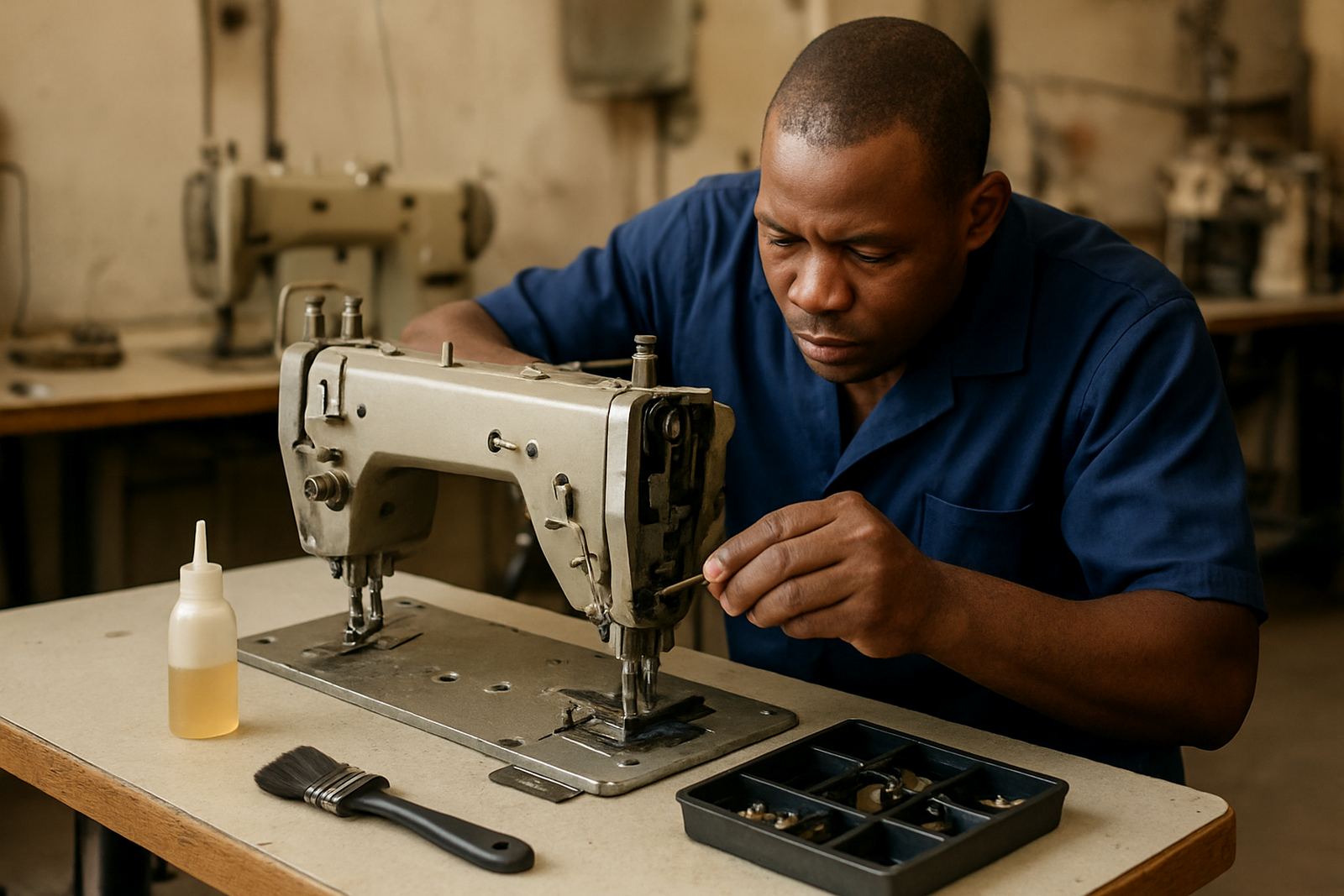
In a small space, a machine breakdown takes up more than time. It blocks the passage, interrupts the flow and often leaves other work piled around it. Regular servicing, timing adjustments and clean installation help prevent that. It also makes the room easier to keep orderly because there is less emergency movement of heavy equipment.
If your setup includes embroidery or pressing equipment, the servicing plan should include the full work area, not only the machine head. Cables, motors, stands, tables and attachments all affect how well the room functions. A technician can spot issues with placement, vibration or access that are hard to notice when the workroom is busy.
For a compact sewing space, maintenance is part of layout planning. The right arrangement should still allow the machine to be lifted, moved or adjusted without dismantling half the room. That saves time, reduces wear and keeps the space practical for the long term.