

Start With the Thread You Use Most
The best storage plan begins with what leaves the shelf every day. In a small tailoring room in Fordsburg, that may be black, white, navy and a few key fashion shades. In a school workshop or factory floor, the mix can be wider but the principle stays the same: keep the most used cones closest to the operator and the slow movers in a separate section.
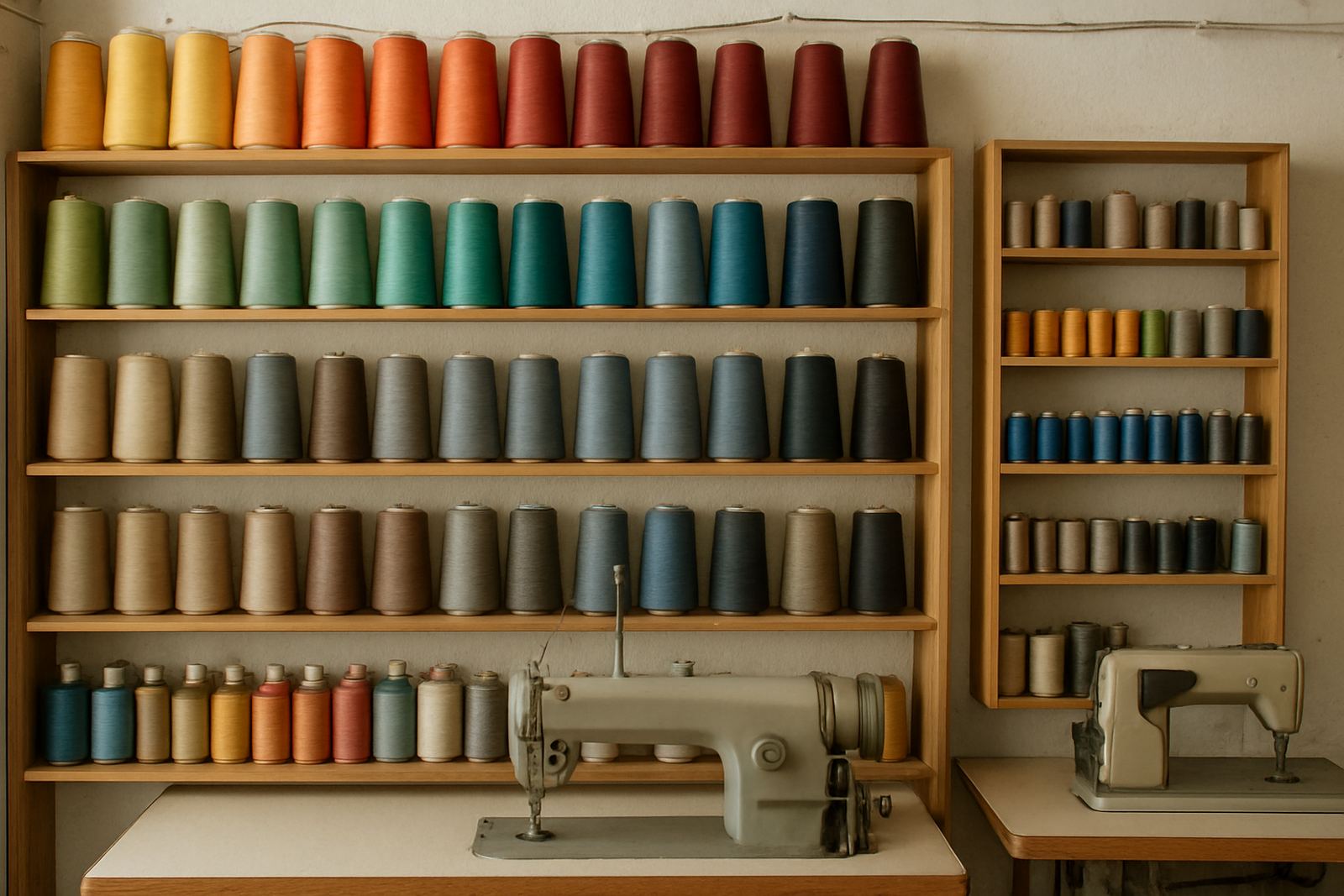
Good storage is not only about tidiness. When thread is visible and sorted by colour family, size and fibre type, staff spend less time opening boxes and more time sewing. It also helps you spot low stock early, which matters when you are preparing for school uniforms, alteration season or a bulk order with a tight handover date.
- Group cones by colour family, then by shade.
- Keep the most used sizes at eye level.
- Separate embroidery thread, sewing thread and overlock thread.
- Mark shelves for fast picking during busy shifts.
Choose Storage That Keeps Dust and Sun Off the Cone
Thread picks up dust quickly in workrooms, especially where windows stay open for heat or where cut fabric fibres move through the air. In Gauteng, a room can also get dry and warm during the day, then cooler at night, so closed or covered storage works better than leaving cones exposed on every flat surface.
Use clear lidded bins, drawer units, wall racks with covers or shelving inside a cupboard. If the room faces strong sun, avoid placing spools against a window because colour can fade and the outer layers can become brittle over time. In areas with load-shedding, keep the storage system simple enough that staff can still find the right thread when the lights are out and the backup power is only for the machine.
- Use dust covers for open racks.
- Keep thread off the floor to avoid damp and leaks.
- Store away from direct sun and heat sources.
- Leave enough space between shelves so cones do not crush each other.
Sort by Use, Not Only by Colour
Colour sorting is helpful, but a workroom runs better when thread is also grouped by purpose. Embroidery cones, topstitch thread, bobbin thread and general sewing thread should not live together in one mixed box. When a machine operator needs a certain weight or finish, the search becomes slower if everything is stacked by colour alone.
A practical system is to divide stock into working groups. One shelf for machine thread, one for embroidery supplies, one for repair stock and one for special shades. Label each section clearly, and if several people share the room, keep a simple written list of where each group belongs. That matters in places like Soweto or Germiston where a workroom may serve many jobs in one day and more than one person needs to find the same reel quickly.
- By machine type: household, industrial, embroidery.
- By job type: repairs, uniforms, fashion, finishing.
- By thread weight: light, medium, heavy.
- By fibre: polyester, cotton and speciality thread.
Use Matching and Tracking to Cut Waste
Thread storage works best when it supports matching. Keep related shades together, and place a sample on the front of the shelf or bin so staff can compare under the room light before taking stock to the machine. This is useful when a customer brings in a garment for a repair and the match has to be close, not just near enough from memory.
Tracking also helps with stock control. If you use cones and reels of different lengths, write the size on the shelf label so the team does not grab the wrong length for a production run. In a workshop handling schoolwear in Pretoria or alterations in Randburg, those small checks reduce repeat trips to the supply shelf and help avoid half finished jobs.
One useful habit is a weekly stock check. Count the colours that move fastest, note any damaged cones and separate thread that has become dirty or snagged. A small box for damaged stock keeps it away from good reels and stops it being mixed back into circulation by mistake.
Plan the Shelf Around the Machine Room
Thread storage should fit the way the room works. If the sewing line is long, place daily use colours at the point where operators start and finish their tasks. If the room has embroidery machines, store the most common shades near the setup area so colour changes are quicker and the operator does not walk back and forth across the workroom.
Where floor space is tight, use vertical storage. Wall mounted racks, narrow shelving and stackable bins can free up room for cutting tables, pressing stations and walking space. Make sure shelves are fixed securely, especially in older CBD premises where walls and floors may not all be level. Good planning also helps during inspections because stock is neat, accessible and not blocking fire exits or service access.
In a busy Johannesburg CBD unit, one neat shelf system can support both retail customers and workshop work. That means less confusion when a customer comes in from Mayfair with a matching request, or when a tailors team from Alberton needs a quick restock before the afternoon rush.
A Simple System That Works in Real Life
A good thread store does not need to be fancy. It needs to be consistent. Start with sturdy shelving, clear labels and a set place for every colour family. Add closed storage for slow moving stock, and keep the daily use cones within easy reach. Once the team knows the layout, the system stays useful even when the room is full and the phone is ringing.
For many local businesses, the real test comes during busy periods. A school uniform order may land at the same time as a machine service, or a garment maker may need a quick thread match after a power cut. When stock is organised properly, the room stays calm and the job keeps moving. That saves time, protects thread and helps the whole workroom run with fewer delays.
If your storage is already crowded, begin with a single shelf and improve it section by section. Sort out the most common colours first, then add labels, then move less used reels into covered boxes. Small changes can make the space much easier to work in.
- Review the layout every month.
- Remove damaged or dusty stock.
- Move the most used colours to the best shelf positions.
- Keep labels large enough to read at a glance.