

Why a small spares shelf makes sense
Most sewing room stoppages do not start with a major breakdown. They start with a worn needle plate, a bobbin case that no longer holds tension properly, a snapped belt, or a foot that has seen too many hours of use. If you run a factory floor, a tailoring room, a school workroom or a home studio, keeping a few common spares in stock can keep the work moving while you wait for a service call or a workshop repair.
In Johannesburg CBD and nearby industrial areas, many businesses work long shifts and cannot afford to lose a machine for a simple part. A small shelf of spares is not about hoarding. It is about having the items that fail most often, so a team can change them quickly and carry on with the day's sewing.
The parts that are worth keeping on hand
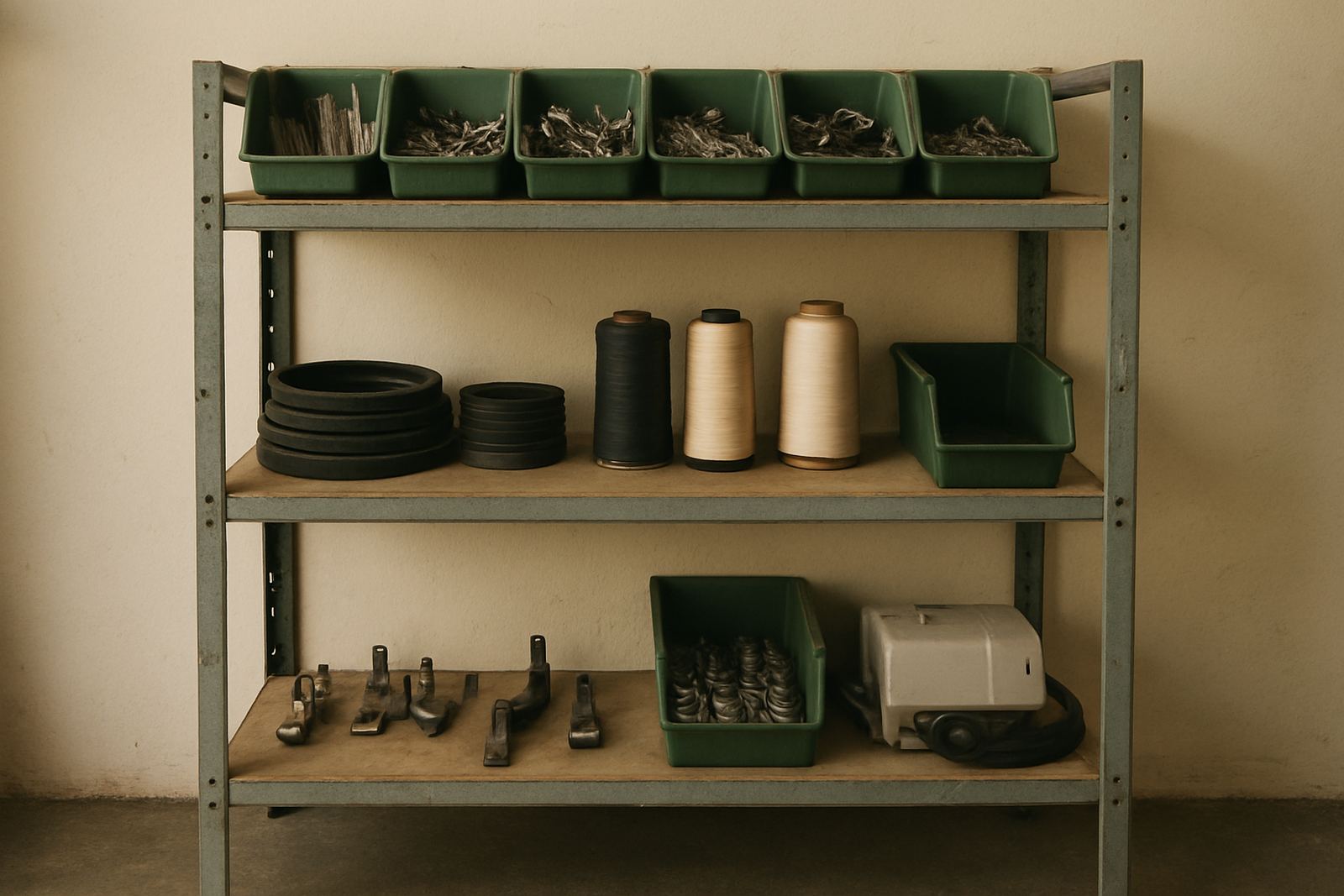
Not every machine uses the same items, but there are some parts that come up again and again on industrial and household machines, as well as on embroidery units and fusing presses. These are the parts we often suggest clients keep ready, especially where production stops if one operator is down.
- Needles in the correct sizes for your fabrics
- Bobbins and bobbin cases for each common machine type
- Needle plates and throat plates
- Presser feet and walking feet used daily
- Belts for motors and hand wheels
- Thread guides, tension springs and thread take-up parts
- Lamps, fuses and simple electrical consumables
- Brushes, wicks and oil for routine servicing
For embroidery machines, it is also wise to keep spare hoops, thread clips, trimming knives and the parts needed for common thread path wear. For pressing equipment, have extra fuses, foot pads, heating elements where suitable, and pressure pads if your machine uses them.
Stock by machine, not by guesswork
The best spares list depends on the machines you actually use. A school in Soweto with a few household machines will not need the same shelf stock as a garment factory in Germiston running several industrial lockstitch and overlock units. A shop in Pretoria doing alterations may need more feet, needles and bobbins, while a busy embroidery room in Randburg may need more thread sensors and trimming parts.
Before you buy, write down the machine model, the needle system, the motor type and the main jobs each unit does. That simple record saves time when someone has to source parts in a hurry. It also helps if you are mixing older machines with newer computerised units, which is common in many Gauteng workrooms.
If the same machine goes down more than once for the same reason, that is usually the part to keep in stock. It may be a belt wearing out every few months, or a foot that gets damaged by heavy use and rough handling.
How to build a sensible stock list for Gauteng workshops
A good spare parts list should be practical, not crowded with items you may never use. Start with the parts that stop production, then add the items that fail often because of dust, heat, fabric lint or long operating hours. In a CBD setting, machines often run in compact rooms where lint builds up quickly and operators share equipment across different jobs.
- Choose one box for fast-moving consumables
- Keep parts labelled by machine type
- Store needles and feet in sealed containers to avoid damage
- Record what was used and when it was fitted
- Review stock after every service visit
- Replace missing screws, clips and washers immediately
It also helps to keep a short note of the correct threading path, tension setting and needle size for each machine. When a spare is fitted, the operator can return the machine to work faster and with fewer mistakes.
Common mistakes that waste money
One of the biggest mistakes is buying the wrong spare because the machine was not identified properly. Another is keeping only one critical item and using it up without replacing it. Some teams also store spare parts in a warm, dusty corner where they rust, warp or go missing. In coastal humid conditions this gets worse, but even in inland Gauteng dust and heat can spoil parts if they are left open.
It is also a mistake to wait until a breakdown happens before checking what is missing. By then, the machine is already standing and the operator is under pressure. A better habit is to review spares during routine servicing, then top up what has been used. That saves time and helps avoid unnecessary delays when orders are due.
A local example from a busy workroom
A tailoring room in Mayfair had three industrial machines and one embroidery unit. When the main lockstitch machine started skipping stitches, the team assumed it needed a full workshop repair. On inspection, the issue was a worn needle plate and a tired bobbin case. Because those parts were already on site, the machine was back in use the same morning.
The lesson was simple. The room did not need a large parts store, just a small, well chosen kit. After that, they kept the most used needles, feet, bobbins and a spare belt for each machine on hand. The change reduced downtime and made it easier for the team to plan their orders.
When to ask for help with sourcing parts
If a machine is older, imported, or used for specialised work, part matching can be tricky. The same applies when a motor has been converted, a press has non-standard controls, or an embroidery machine has been moved and reinstalled. In those cases, it is better to confirm the exact part before spending money on the wrong item.
Asia Sewing Machines works with factories, tailors, schools and home sewers across Johannesburg CBD, Fordsburg, Soweto, Germiston, Pretoria, Alberton and Randburg. Our team can help with parts sourcing, workshop repairs, on site repairs, machine installation, embroidery setup and routine servicing, so you keep the right spares on hand for the machines you actually use.
For most businesses, the goal is not a full storeroom. It is a small, practical stock that keeps sewing, pressing and embroidery work moving without avoidable stops.