

Machines that suit straps, zips and shaped panels
Bag work puts stress on every seam. You need a machine that can pull through layers of canvas, coated fabric, foam, lining and webbing without skipping stitches or drifting out of line. For most bag makers in Johannesburg, Fordsburg, Mayfair, Soweto, Germiston and Pretoria, the starting point is a straight stitch machine for assembly, a heavier feed machine for thick seams, and a finishing option for binding or topstitching.
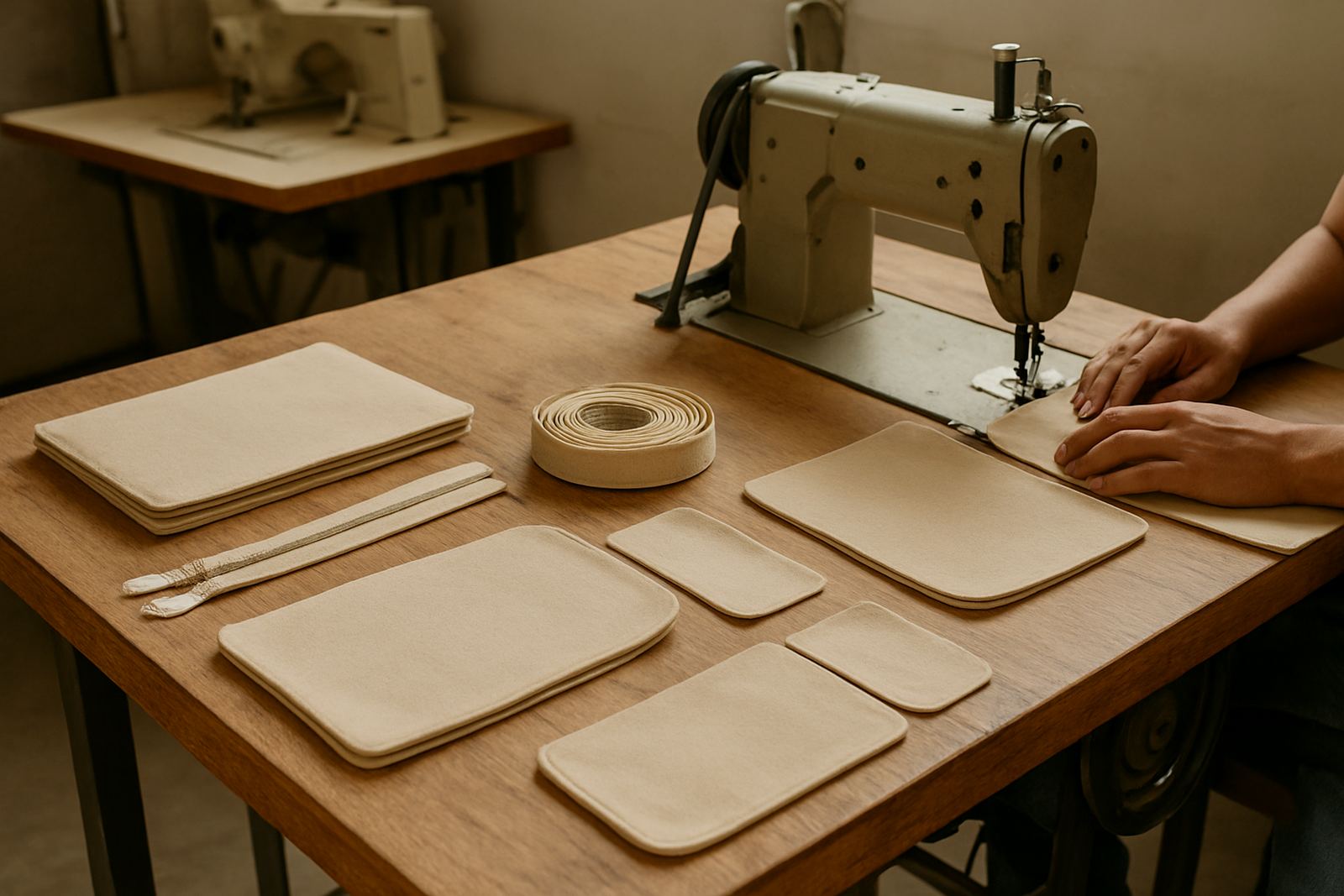
Where bags have long straps, boxed corners, gussets or padded sections, the needle must stay accurate at low speed. If your team works with school bags, laptop sleeves, travel bags or promotional carry bags, ask for machines that can manage varied thread types and still sew cleanly after long shifts. We also supply attachments and needles suited to different fabrics and seam finishes.
- Straight stitch machines for main assembly and seam closing
- Walking foot or compound feed machines for thick layers and straps
- Overlock machines for lining edges and internal finishing
- Binding attachments for edge finishing and internal tape work
- Fusing presses for panels, badges and reinforcement areas
A practical setup for a small bag workshop
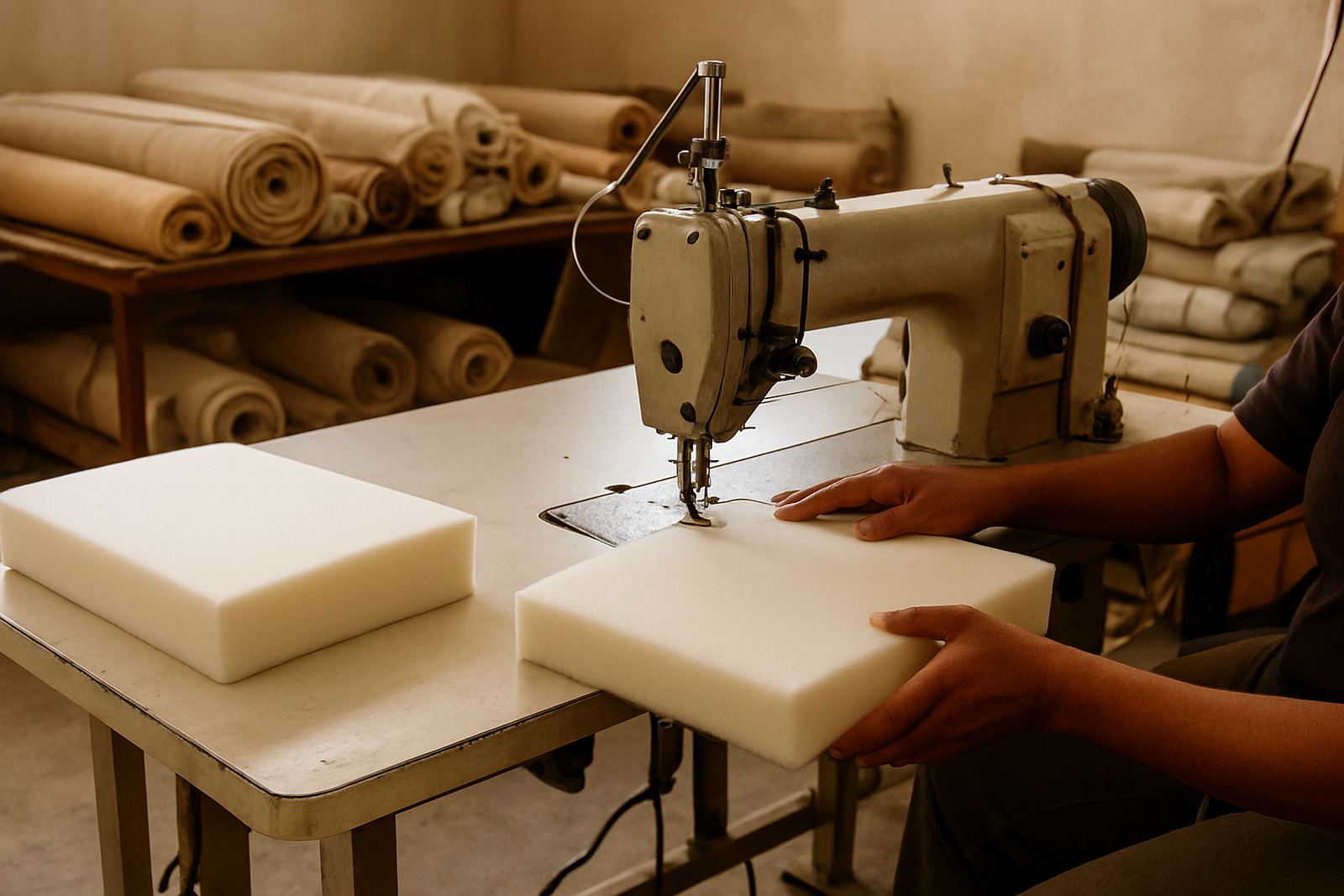
A small bag workshop does not need every machine on day one. A useful starter line is usually one straight stitch machine, one heavier duty machine for webbing and topstitching, one overlocker and one fusing press. If you are adding branded bags or sectioned panels, a computerised embroidery machine can help with logos, names and school marks.
Our Johannesburg CBD base supplies and sets up machines for workshops that make 20 units a week and also for operations running hundreds a day. The right mix depends on seam thickness, material finish, worker skill, and how much product variation you handle. For example, a line making simple drawstring bags will need a different layout from a factory sewing padded laptop bags with zips, foam inserts and pockets. We look at machine positions, operator flow and materials movement so the workroom does not bottleneck at the cutting or finishing stage.
- Single operator bench for sample making and repairs
- Two to four station line for cut, sew, bind and finish
- Separate pressing or fusing space for reinforcement work
- Parts and thread storage close to the main sewing area
Layout advice for clean workflow and fewer delays
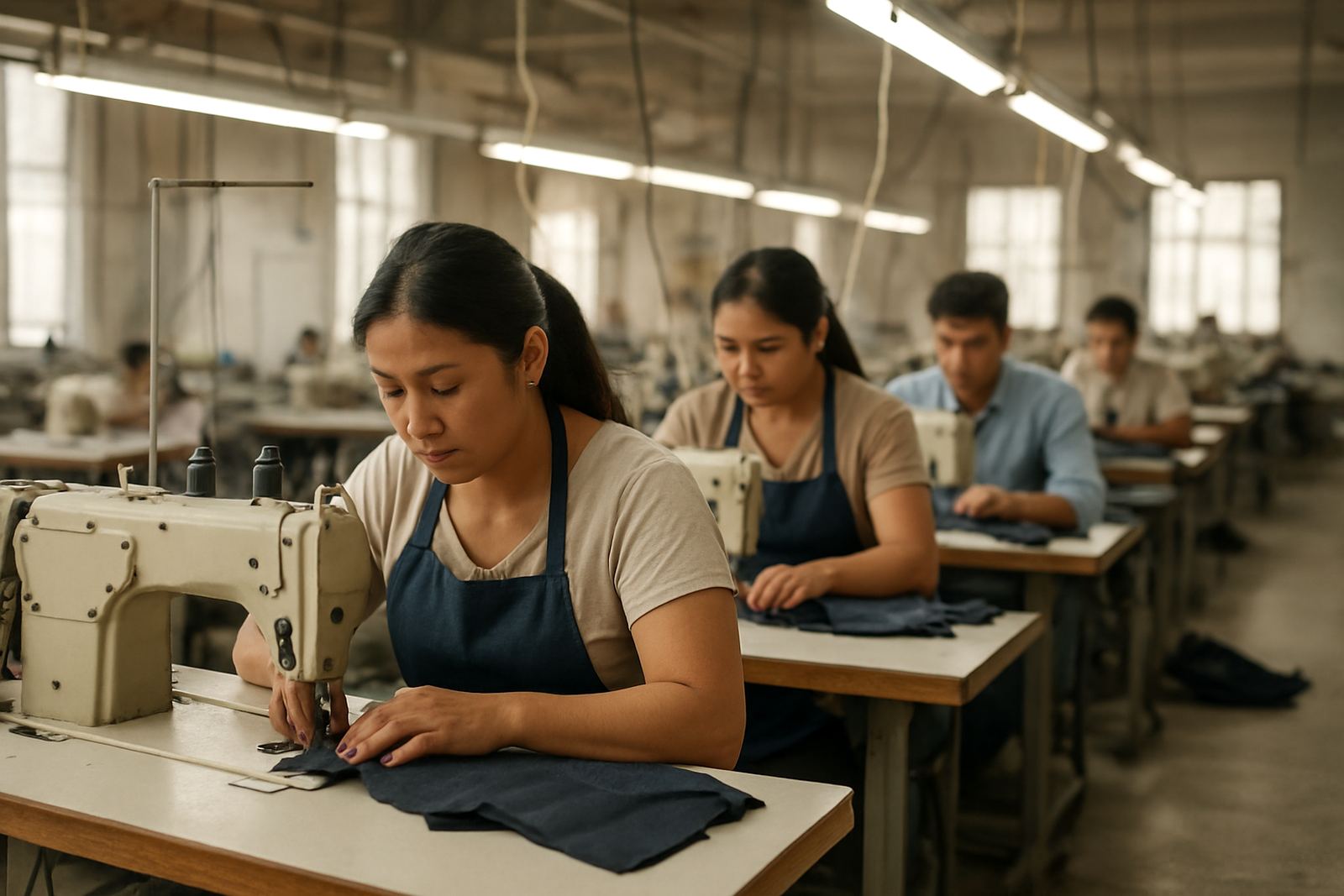
Bag making rooms often lose time through poor bench spacing and cluttered material flow. If the cutting table is too far from sewing, or if finished goods must pass through the sewing area again, you get confusion and damaged work. Keep the workflow simple: cutting, prep, sewing, pressing or fusing, then packing. That helps both speed and quality.
In Gauteng, load-shedding and uneven power supply can interrupt production, so it helps to plan your machine positions around stable sockets, surge protection and clear access to generators or backup power if you have it. In older buildings in Johannesburg CBD or Germiston, also allow for ventilation, lighting and safe cable routing. Bag materials can be dusty, adhesive backed, or heat sensitive, so the workroom needs enough airflow and space around the fusing press. A crowded room almost always causes thread breaks, missed seams and operator fatigue.
For schools and training sites, a simple layout also helps with supervision. When learners can see each step clearly, mistakes are easier to spot and correct before the batch is finished.
Common bag-making mistakes we see in the field
Many problems come from using a machine that is too light for the job. A standard household unit may manage a sample or two, but once you add webbing, foam and zips, the stitch quality drops fast. Another common issue is using the wrong needle and thread combination, which leads to puckering, broken thread or skipped stitches. Then there is timing. If the hook timing is slightly out, the machine may sew for a while and then start giving trouble on thicker seams.
We also see operators forcing fabric through by hand, which bends needles and damages the feed. Bag work needs the presser foot pressure, stitch length and thread tension set correctly for the material. If you are making coated or laminated bags, the finish also depends on heat settings during fusing and pressing. Poor setup can cause bubbling, peeling or weak seams that fail after only a few uses.
- Using household machines for heavy webbing or multiple layers
- Incorrect needle size or thread weight
- Poor timing after a repair or motor conversion
- Weak fusing because of wrong temperature or pressing time
- No spare parts on hand for common wear items
Budget ranges for bag makers in Rand
Budgets vary depending on whether you are starting from scratch, replacing old machines or expanding an existing workroom. For a small bag-making setup, a basic entry package may start around R18 000 to R35 000 for a mix of sewing and finishing equipment. A more practical production setup for regular orders can fall between R45 000 and R120 000, depending on machine type, number of stations and whether you need embroidery or fusing equipment.
Higher output lines, school bag workrooms and custom branding setups can move beyond R150 000 when you add specialist machines, spare parts, attachments and installation work. It is usually better to buy the correct machine once than to keep repairing the wrong one. We can also help you phase your purchases, so you start with the essentials and add machines as orders grow. That approach suits many businesses in Pretoria, Randburg and Alberton that are building up production slowly.
Running costs should also include servicing, needles, oil, belts, bobbins, thread, and an allowance for repairs. A little planned maintenance saves a lot of downtime later.
How our Johannesburg CBD team supports bag makers
Asia Sewing Machines works with factories, tailors, schools and home sewers across Gauteng from our Johannesburg CBD base. Our team includes Lerato Mokoena in sales, Yusuf Patel in the workshop, Naledi Khumalo for embroidery, Willem van Wyk on field service, Anele Dlamini in parts and stores, and Farah Ismail in customer support. We handle machine installation, on site repairs, workshop repairs, routine servicing, motor conversions, timing adjustments, embroidery setup, fusing press service, pressing station service, parts sourcing, operator training and workroom planning.
If you are making bags and need help choosing the right setup, we can look at your product type, floor space, power supply and production target before recommending equipment. Clients reach us through the enquiry form on our contact page, and we help across Johannesburg CBD, Fordsburg, Mayfair, Soweto, Germiston, Pretoria, Alberton and Randburg.
- Workshop and on site support for new and existing bag lines
- Parts sourcing for common wear items and attachments
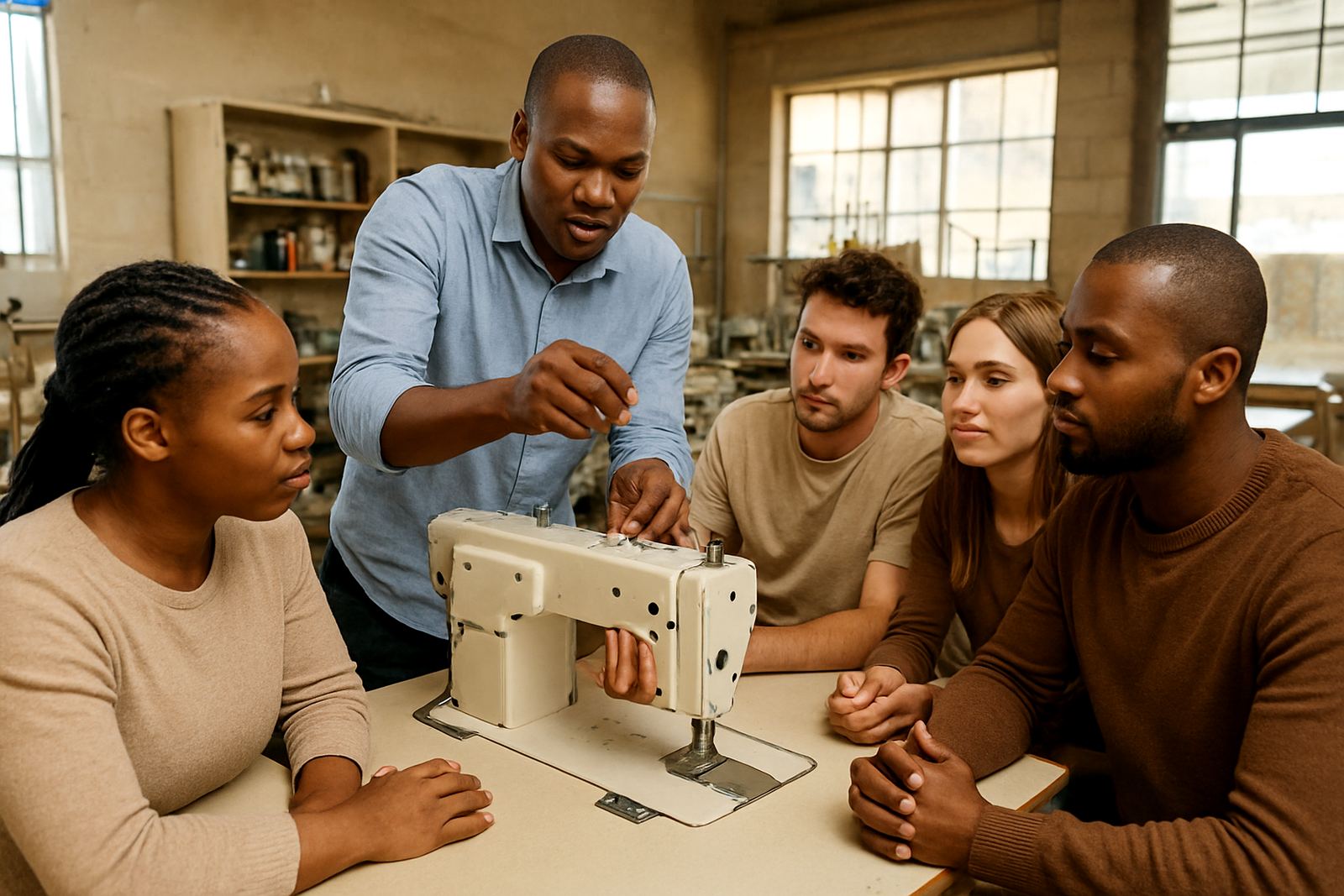
- Training for operators, supervisors and start-up teams
- Planning for production flow, spacing and machine placement