

What upholstery workrooms need from day one
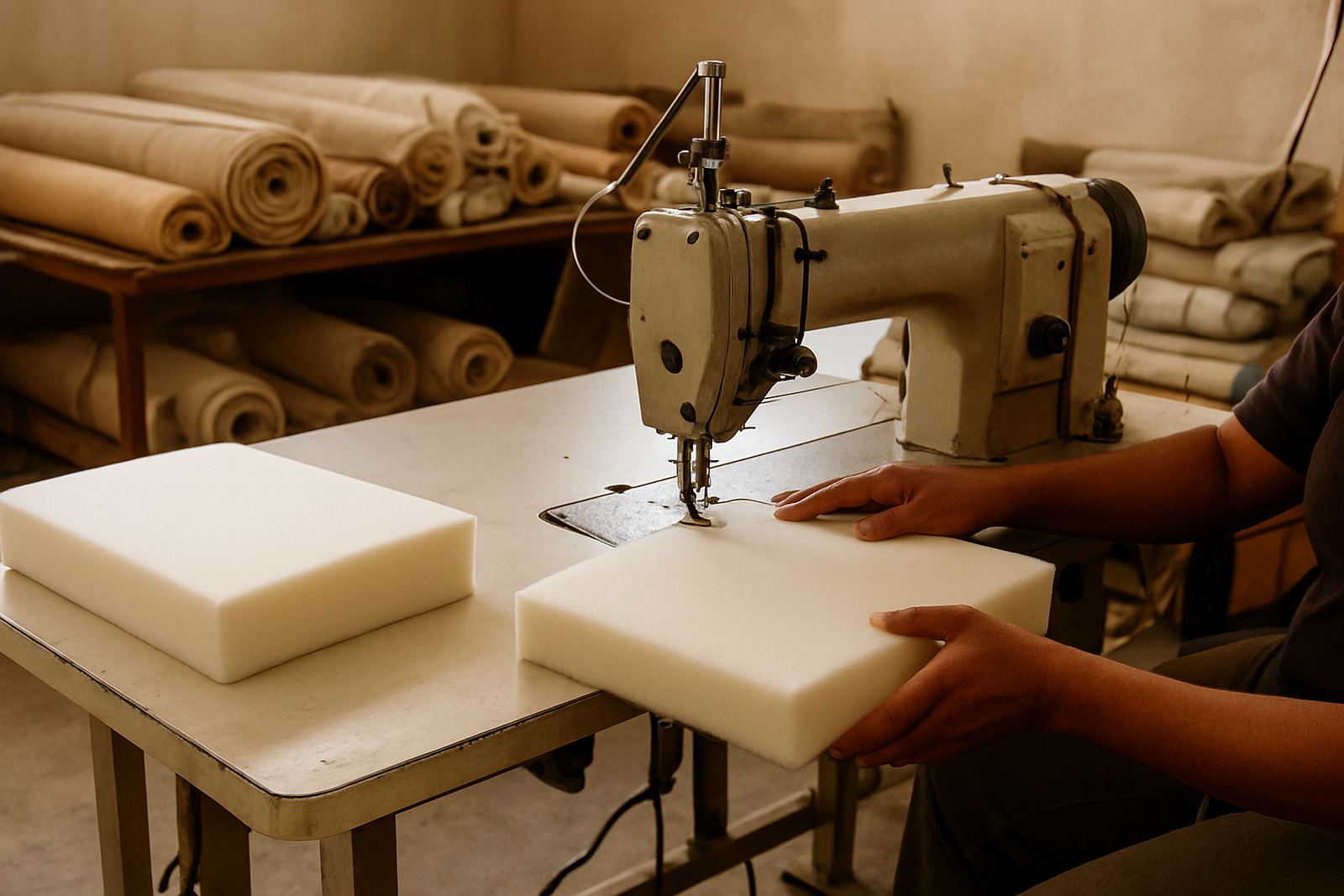
An upholstery room is not the same as a clothing workshop. You are dealing with foam, webbing, linings, piping, vinyl, canvas and padded panels that put real strain on needles, feed systems and motors. If the machine skips stitches or struggles on corners, the whole job slows down and the finish suffers.
For factories, schools, small trim shops and home-based upholsterers, the main need is consistent stitch quality on heavy material. That means stronger frames, larger motors where needed, and proper setup for the work you actually do. A good layout also matters because bulky cushions and loose rolls of fabric can waste time if the room is cramped.
- Chair and sofa covers
- Cushions and scatter cushions
- Loose covers and fitted covers
- Headboards, panels and padded items
- Binding, topstitching and edge work
Typical machines and equipment in an upholstery line
Most upholstery workrooms run a mix of industrial and household machines, depending on volume and budget. A straight stitch machine is usually the workhorse for seams and topstitching. For stretch materials or decorative work, some rooms add zigzag or specialised units. Where thick layers are common, motor conversion and timing checks make a big differance to performance.
We also supply fusing presses for interfacings and reinforcement, plus pressing stations for shaping and finishing covers before final assembly. If your workroom handles branded school or hospitality jobs, embroidery machines can be useful for name panels, logos and small detail work. Threads, needles, attachments and spares need to be on hand, otherwise the machine sits idle while one small part is sourced.
- Industrial straight stitch machines
- Heavy-duty household machines for lighter upholstery jobs
- Computerised embroidery machines for names and logos
- Fusing presses for reinforcement and bonding
- Pressing stations for shaping and finishing
- Needles, feet, bobbins, belts, motors and other spares
Layout and planning for bulky materials
Upholstery work needs space to move. A room that is fine for garment sewing can feel tight once you add foam sheets, backing boards, large cushions and half-finished frames. Keep cutting, sewing, pressing and storage in separate zones where possible. That cuts down on fabric damage and makes the room safer.
In Johannesburg CBD, Fordsburg, Mayfair and Germiston we often see workrooms squeezed into narrow spaces, so planning has to be practical. Leave clear walking routes, put heavier machines on solid floors, and keep the pressing area away from loose fabric stacks. If your area has load-shedding, plan for how machines restart, how lights stay on, and where unfinished work is stored during a power cut.
Good workroom planning also means thinking about delivery access. Big rolls of fabric and foam should not have to pass through busy sewing areas. The smoother the flow from cutting to stitching to pressing, the fewer mistakes and the less wasted material.
Common setup mistakes that cost time and money
The most common mistake is buying a machine that is too light for the work. It may sew at first, then start struggling once the workload rises or the material gets thicker. Another problem is poor thread and needle matching, which leads to skipped stitches, bobbin nests and broken needles. That kind of downtime adds up fast.
We also see workrooms using machines that have never been timed correctly after repairs or motor changes. A machine can look fine but still fight the operator on thick seams. In some cases the foot pressure, feed adjustment or thread path is simply not right. Small faults become repeated faults when the room is busy and the operator has to keep forcing the job through.
- Choosing light machines for heavy layered work
- Running the wrong needle size for thick thread
- Poor timing after repairs or motor conversions
- No spare parts for common wear items
- Cramped layouts that slow the work flow
Servicing, repairs and support in Gauteng
Our Johannesburg CBD base supports upholstery workrooms across Gauteng, including Soweto, Pretoria, Alberton and Randburg. We handle machine installation, on-site repairs, workshop repairs, routine servicing, motor conversions, timing adjustments, embroidery setup, fusing press service and pressing station service.
For many clients, the best approach is a planned maintenance routine instead of waiting for breakdowns. That keeps tensions, belts, feed components and motors in better shape. If your room works long hours, especially in a dusty or humid area, servicing becomes even more important. Coastal humidity is not the main issue in Johannesburg, but dust and lint still build up quickly in upholstery environments.
Our team includes Lerato Mokoena, Yusuf Patel, Naledi Khumalo, Willem van Wyk, Anele Dlamini and Farah Ismail, so the right person can handle sales, parts, workshop work or field support as needed.
Budget ranges for an upholstery workroom
Budget depends on whether you are starting from scratch, adding one machine, or fitting out a full production room. A basic upholstery setup with a dependable heavy-duty machine, tools and starter spares can begin around R8 000 to R18 000. A stronger industrial setup with a proper work table, pressing support and better accessories often sits between R20 000 and R45 000.
For a fuller workroom with multiple machines, a fusing press, pressing station and service back-up, the spend can move from about R50 000 to R120 000 or more depending on capacity. It is usually better to buy the right machine once than to replace a weak one later. We can help you match the setup to your actual jobs and your budget, rather than over buying or under buying.
If you are upgrading an existing room in Fordsburg, Soweto or Pretoria, we can also assess what can be repaired, what should be converted, and what should be replaced. That often saves money and gets the room back into steady work sooner.