

Production lines that keep pace with daily output
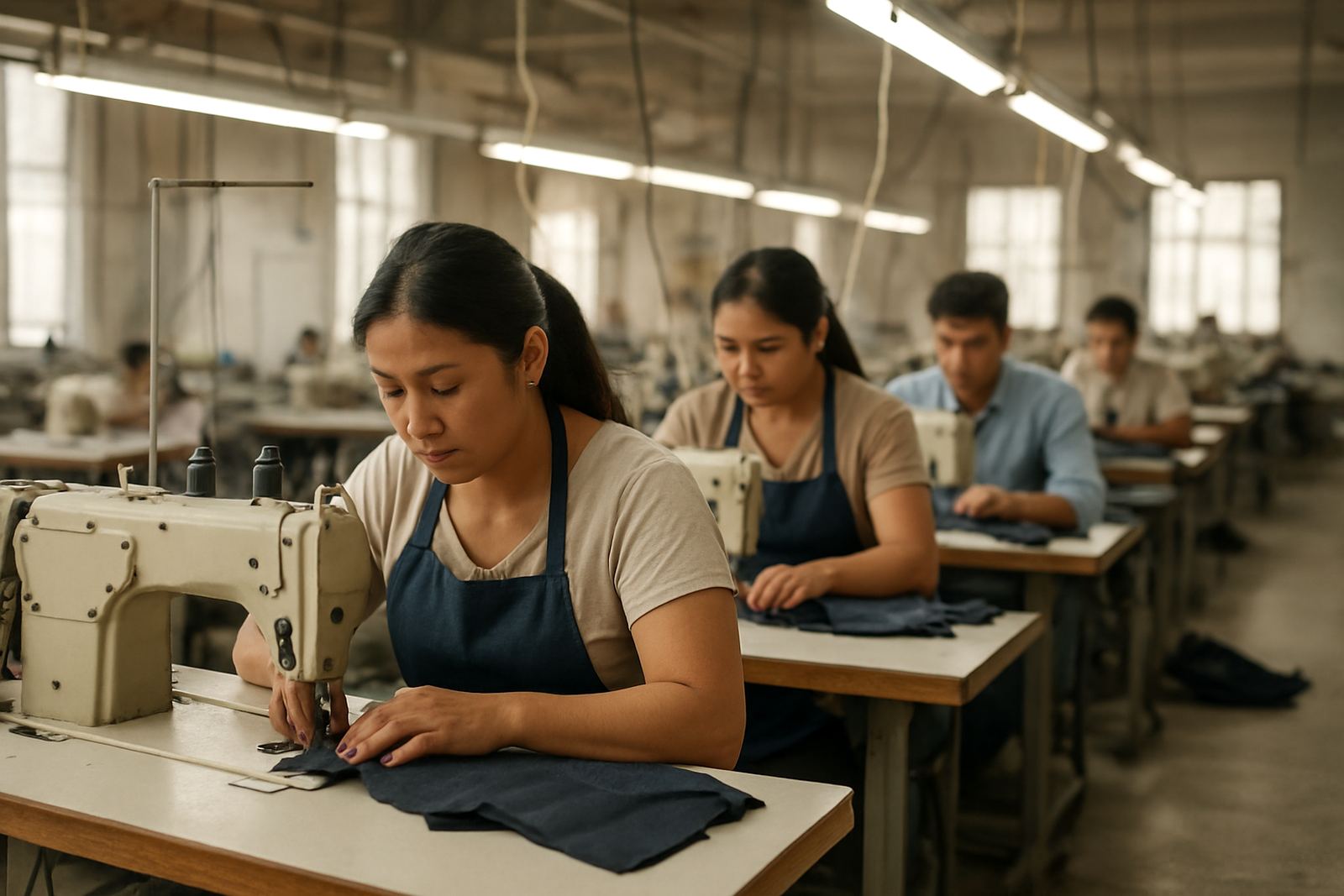
In a clothing factory, the issue is rarely only the machine itself. The bigger issue is whether every station feeds the next one without bottlenecks, skipped stitches or constant rework. We work with factories that need reliable industrial sewing machines for seams, topstitching, overlocking, bar tacking, button work and finishing, plus embroidery and fusing where product range demands it.
For many Gauteng operations, the pressure comes from changing orders and a mixed team of experienced and newer operators. That means machine choice and layout must suit the work, not the other way round. We look at fabric type, daily volume, operator skill, power supply and floor space before recommending the right set up.
- Cut and sew lines for basic garments and uniforms
- Finishing stations for hems, labels, pressing and trim work
- Special machines for stretch fabric, heavier cloth or repeat detailing
Typical machine set for a clothing factory floor
A clothing factory usually needs more than one type of machine, and the balance matters. Too many speciality units can slow the floor, while too few leads to people sharing equipment and losing time. We help match the machine mix to the work plan, whether the site is making schoolwear in Soweto, corporate uniforms in Germiston or fashion runs in Pretoria.
Common equipment for factory use includes straight stitch machines, overlock machines, cover stitch units, button and bar tack machines, fusing presses and, where required, embroidery machines for badges or branding. Some sites also need thread and haberdashery supply, spare parts, needles, bobbins, belts and attachments so the workshop does not stall over one small missing item.
- Industrial sewing machines for daily production runs
- Computerised embroidery machines for logos and badge work
- Fusing presses for collars, cuffs and structured panels
- Pressing stations for finishing and shape control
Layout planning for smoother flow and less handling
Good factory layout cuts wasted movement. If cut pieces travel too far between sewing, pressing and packing, you lose time, increase handling damage and make supervision harder. We assist with workroom planning so your station order follows the garment process and not just the shape of the room.
In Johannesburg CBD and nearby areas, many factories work in spaces that were not originally built for clothing production. That makes it important to plan around power points, ventilation, aisle width, machine access and stock storage. We also consider load-shedding backup, because a production line with no recovery plan can lose a whole shift in one outage.
- Place high-use machines where operators can move freely and supervise quickly
- Keep pressing and finishing close to the final inspection point
- Allow clear access for servicing, oiling and part replacement
- Separate stock, work in progress and finished goods to reduce mix-ups
Servicing and repairs that protect throughput
Factories cannot afford a workshop culture where machines are only looked at after a breakdown. Routine servicing keeps stitch quality steady, reduces noise and helps avoid timing faults that damage production. We offer on site repairs, workshop repairs, timing adjustments, motor conversions and routine servicing for both industrial and household equipment used in factory training rooms or small production spaces.
Our team also handles embroidery setup, fusing press service and pressing station service. If a machine is slowing the line, skipping stitches or burning fabric, we check the cause properly rather than pushing a quick fix. That includes tension issues, worn feed components, poor threading habits and motor or pedal faults. A small fault left for too long can become a full stop, especially on a Monday when the floor is already under pressure.
Common mistakes we see in factory setups
One common mistake is buying machines before mapping the actual product mix. Another is placing all machines in one line without thinking about material flow, operator reach or maintenance access. We also see factories underestimating how much spare parts, attachments and training matter once production starts.
Some sites try to save money by running older machines without proper servicing or by assigning one technician to do every task. That can work for a short period, but the line soon becomes uneven. A better approach is to plan for maintenance from the start and budget for the small items that keep output consistent. In our experience, the difference between a busy line and a productive line is often simple things done well, not expensive extras.
- Buying machines that do not suit the fabric weight
- Ignoring power stability and backup planning
- Using poor layout that causes crossing traffic
- Skipping operator training on threading, cleaning and basic checks
Budget ranges for clothing factories in Rand
Budget depends on the size of the floor, the product range and whether you are starting from scratch or upgrading a working line. A small clothing workshop with a few industrial machines and basic setup may start around R45 000 to R120 000. A medium production floor with mixed machines, pressing, setup support and spare stock can sit between R150 000 and R450 000.
Larger factory installations with multiple stations, embroidery capability, fusing equipment and proper workroom planning can run from about R500 000 upwards, depending on machine count and specification. We always advise clients to keep part of the budget aside for installation, training, spare needles, belts, thread, routine servicing and emergency repairs. That reserve saves time later and helps keep the line moving when orders suddenly rise.
For factories in Fordsburg, Mayfair, Alberton, Randburg, Germiston, Soweto and Pretoria, we can discuss the layout, machine mix and service plan before equipment is ordered. Clients reach us through the enquiry form on our contact page, and we use that first discussion to understand the production target and the space available.
How our team supports factory managers and owners
Different factories need different support. Some need a full start-up package for a new production room, while others only need one critical repair and a better service schedule. Our team in Johannesburg CBD includes sales, workshop, embroidery, field service, parts and customer support, so the advice you get is practical and tied to what can actually be supplied and maintained.
We work with factories, tailors and schools that need dependable production equipment across Gauteng. Whether the issue is a machine that will not hold timing, a press that is uneven across the platen, or a floor that needs a better work flow, we help put the pieces in place. The aim is simple: less downtime, better consistency and a setup that can handle everyday pressure without constant drama.