

What curtain makers need from a sewing setup
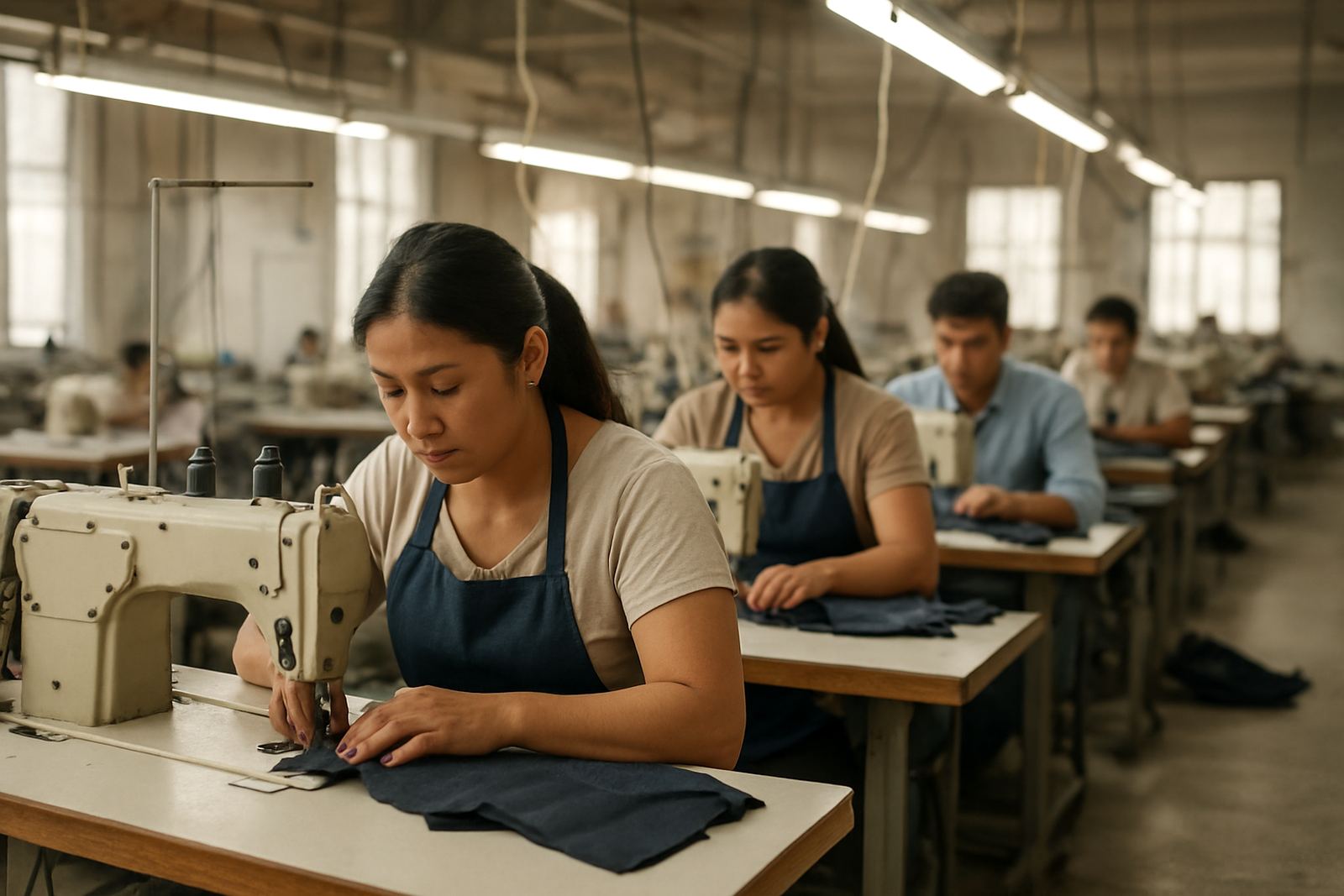
Curtain work is repetitive, long and unforgiving on poor equipment. A small foot pedal delay, weak motor or uneven feeding shows up fast on metres of lining, face fabric and heading tape. For factories and workrooms in Johannesburg CBD, Fordsburg, Mayfair, Soweto, Germiston and Pretoria, the right setup should keep straight seams true and reduce rework on every job.
Most curtain makers need a mix of industrial straight stitch machines, overlock machines for edge finishing, and a press for hems, pleats and heading tape preparation. If you are doing school curtains, hospitality jobs or domestic orders, the machine set must handle different fabric weights from sheer voile to heavy blockout and lined drapery.
- Long seams on wide panels without puckering
- Clean hems on lightweight and heavy fabric
- Reliable top-stitching on heading tape and tabs
- Fast finishing where every order is measured by metre
Typical machine set for a curtain workroom
A practical curtain room does not need every machine under the sun. It needs the right combination for cutting, stitching, pressing and final finishing. We help clients choose machines that suit their volume, staff experience and power supply, especially where load-shedding or unstable workshop wiring can interrupt production.
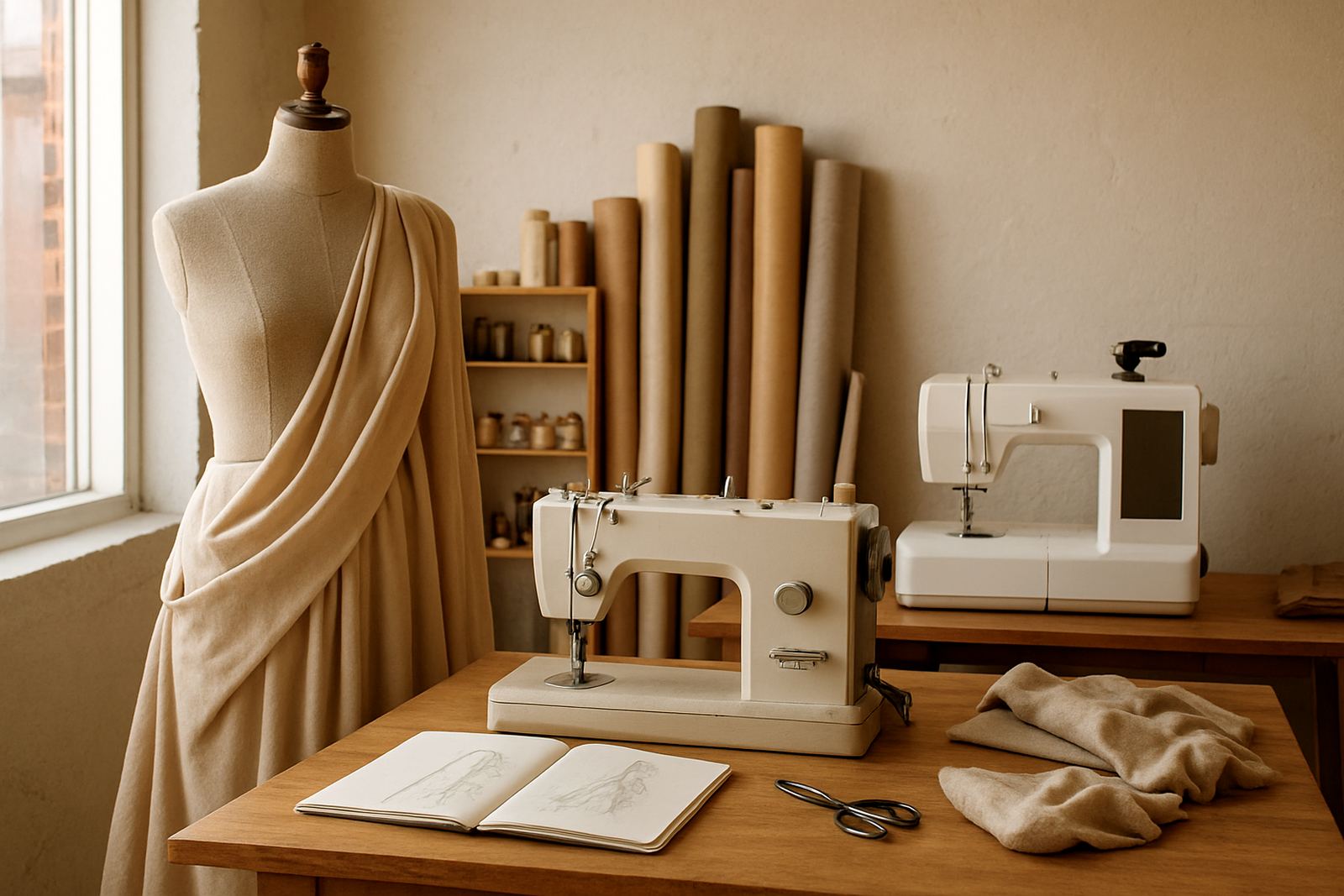
A common set includes a heavy duty straight stitch machine for general assembly, an overlocker for raw edges, a blind hem machine for invisible hems on premium curtains, and a steam iron or fusing press for tape and finishing. Some workrooms also add a motor conversion to older machines so they run faster and more efficiently.
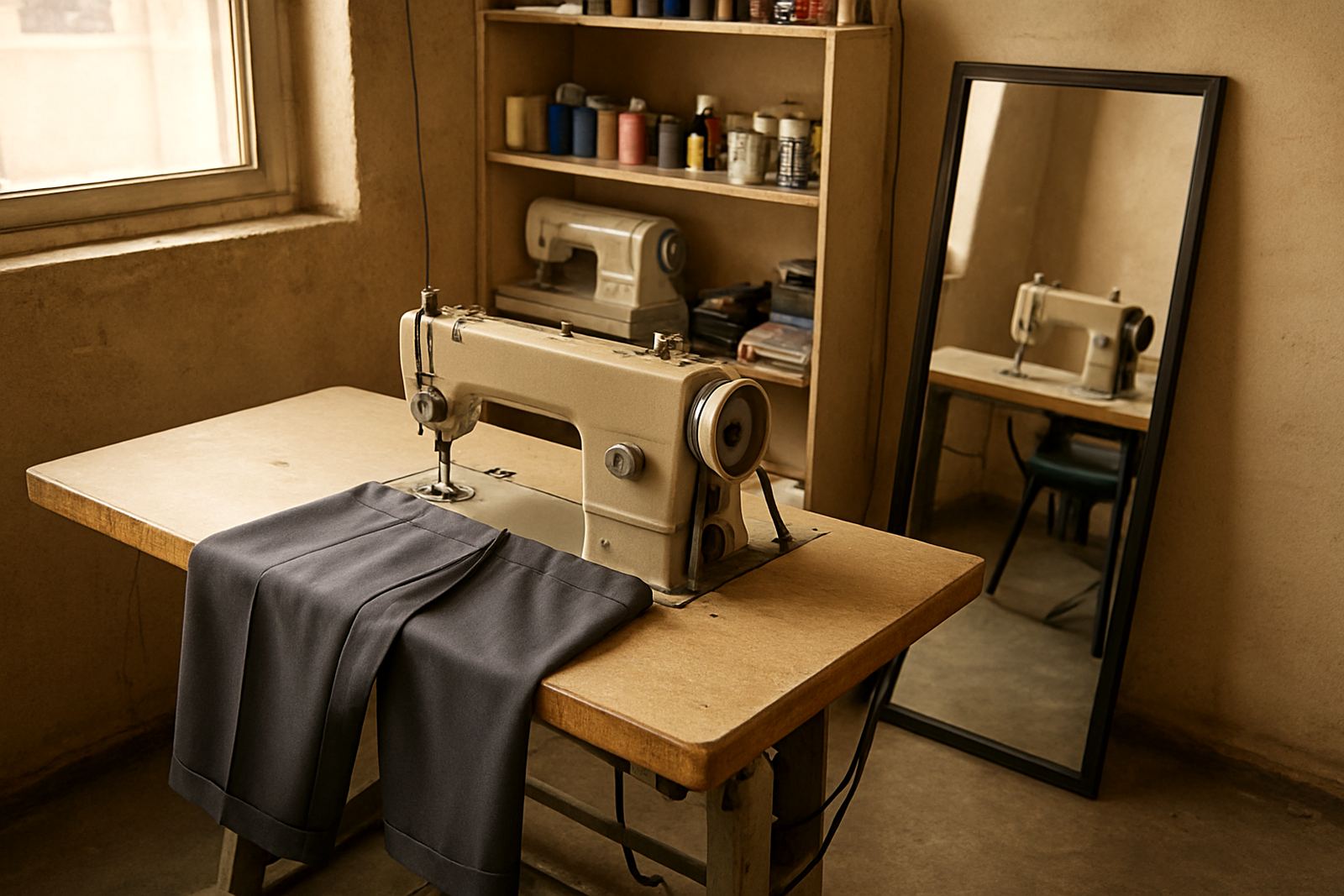
- Industrial straight stitch machine with stand and motor
- Overlocker for clean edge finishing
- Blind hem machine for neat folded hems
- Steam press or fusing press for heading tape and pressing stations
- Spare needles, bobbins, oil and thread in matching weights
For smaller businesses and home sewers, a well serviced household machine can still handle curtain repairs, alterations and sample work. But once the orders grow, an industrial machine is usually better for speed and consistency.
Layout and planning advice for better flow
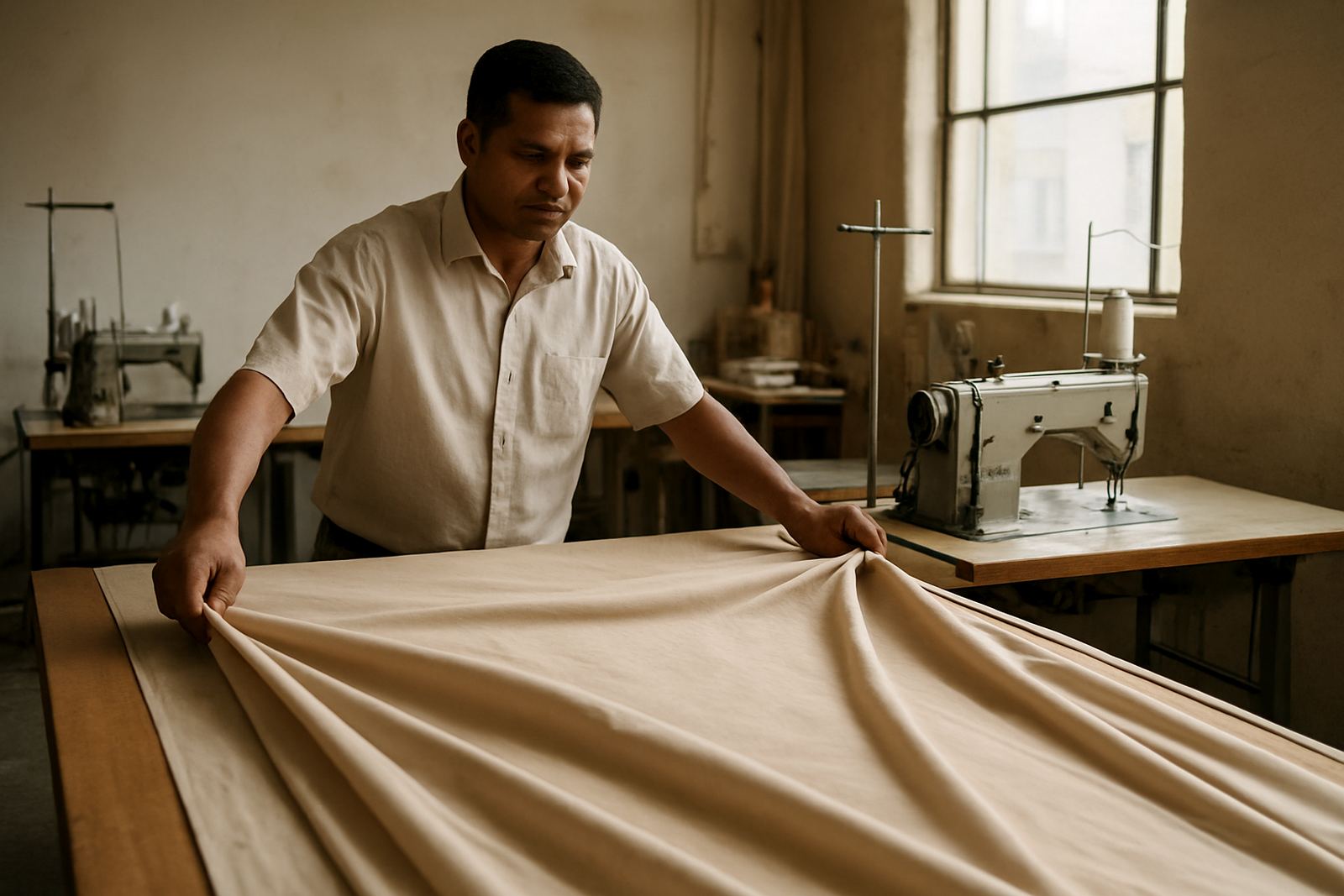
Curtain workrooms need space more than anything. Long lengths of fabric can drag on the floor, catch on corners or shift while sewing if the table layout is cramped. A good layout should allow the fabric to move in a straight path from cutting to sewing to pressing, with enough clear floor area for large panels and bundled orders.
We often advise clients to separate the room into three practical zones. Cutting and measuring, sewing and assembly, then pressing and packing. This keeps staff from crossing each other with loose panels and helps reduce mistakes on size, heading style and pair matching.
- Leave clear space beside each sewing station for wide panels
- Keep threads, clips and attachments close to the operator
- Place the pressing station near the final inspection table
- Store lining, tape and finished goods off the floor in dry racks
In humid areas like parts of Gauteng with poor ventilation, fabric can pick up moisture and behave differently under the foot. Good airflow and clean storage help avoid stretching, waviness and staining on light colours.
Common mistakes that slow curtain production
One of the biggest mistakes is using a machine that is too light for the job. Curtain fabric may look soft, but long seams place constant strain on the feed and motor. Another issue is poor needle choice. A blunt or wrong-size needle can leave skipped stitches, pulls or damage on delicate sheers.
Many workrooms also underestimate the need for proper servicing. Dust, thread lint and oil build-up can affect stitch quality very quickly. If a machine is used daily for metre after metre, it should not wait until it fails completely before attention is given. Routine servicing, timing adjustments and basic operator training save time and reduce waste.
- Ignoring thread tension until seams pucker
- Using household machines for heavy production work
- Skipping oiling and cleaning between jobs
- Not checking motor speed for new staff
We also see problems where operators cut corners on measuring. A curtain that is 10 to 15 mm out on one panel may look fine at the machine, but it becomes obvious when a pair is hung. Accurate setup and steady work habits matter.
Service support for factories, tailors and schools
Asia Sewing Machines supports curtain makers from our Johannesburg CBD base and works with clients across Alberton, Randburg and surrounding areas. We handle machine installation, on site repairs, workshop repairs and routine servicing for both industrial and household machines. Where needed, we can also assist with workroom planning so your equipment fits the space properly.
For curtain makers, this usually includes timing adjustments, motor conversions, embroidery setup for branded soft furnishings, parts sourcing and pressing station service. If a machine is down in the middle of an order run, getting it checked early can keep delivery dates on track.
- Machine installation for new workrooms
- On site repairs for urgent breakdowns
- Workshop repairs for more detailed fixes
- Routine servicing to keep stitch quality steady
- Parts sourcing for attachments, spares and consumables
Our team includes Lerato Mokoena, Yusuf Patel, Naledi Khumalo, Willem van Wyk, Anele Dlamini and Farah Ismail, each focused on making sure clients get the right support and not just the nearest part off the shelf.
Budget ranges for curtain making equipment
Budget depends on whether you are starting a small alteration room, supplying school curtains, or running a full production floor. Entry level household equipment for light curtain work and repairs can start from around R2,500 to R8,000 per machine, depending on condition and accessories. Basic industrial straight stitch setups often begin around R8,500 to R18,000.
For workrooms that need better speed and finishing, expect to budget around R15,000 to R35,000 for a practical mix of industrial machines, stands, motors and a pressing solution. More specialised units such as blind hem machines, heavier overlockers or computerised embroidery support can move above that range, especially when you add installation and operator training.
- Small home or sample setup: R2,500 to R8,000
- Starter industrial workroom: R8,500 to R18,000
- Busy curtain production setup: R15,000 to R35,000 plus
- Servicing and repairs: priced after inspection and fault check
Cheap machines can look attractive at first, but if they struggle with long seams or require repeated repairs the real cost climbs fast. A better matched machine often saves more over a full season than chasing the lowest upfront price.