

What an embroidery shop needs to handle daily orders
An embroidery shop usually starts with mixed work. One day it is school badges and PE names, the next it is corporate shirts, caps, staff jackets or personalised gifts. The machine choice and the layout must suit that mix, not just one nice sample run. In the Johannesburg CBD, many shops work from compact rooms and need equipment that can handle steady production without taking over the whole floor.
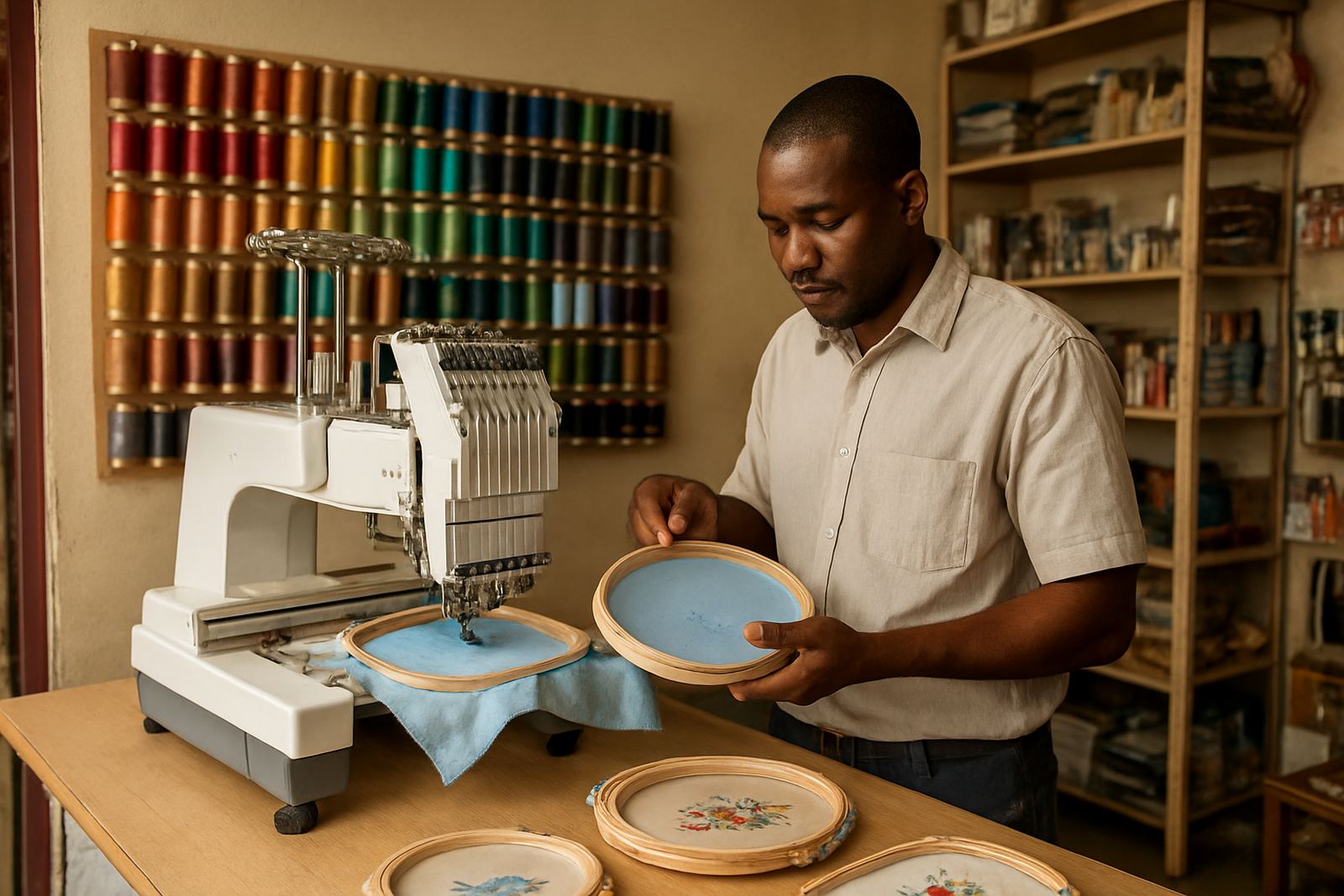
For names and logos, accuracy matters more than speed alone. A good setup should support clean registration, stable thread tension and simple design changes between jobs. If the work includes repeat school or company orders, it helps to keep digitising, hooping and finishing close together so the operator does not waste time walking between stations. That matters in busy areas like Fordsburg, Mayfair and Soweto where turnaround time is often the difference between keeping a client and losing them.
- Single-head embroidery machines for mixed small orders and personalisation
- Multi-head machines for repeat badges, logos and bulk uniform work
- Cap frames, flat hoops and garment fixtures for different garment types
- Thread, stabiliser, needles and spare parts kept on site for quick changeovers
Typical machine sets for shops, schools and small factories
The right machine set depends on volume and the type of products you sell. A start-up embroidery room may begin with one computerised embroidery machine, a pressing area, a good cutting table and space for storing threads and backing materials. A larger workroom in Germiston or Pretoria may need more than one embroidery head, a fusing press, and separate finishing space for folding and packing.
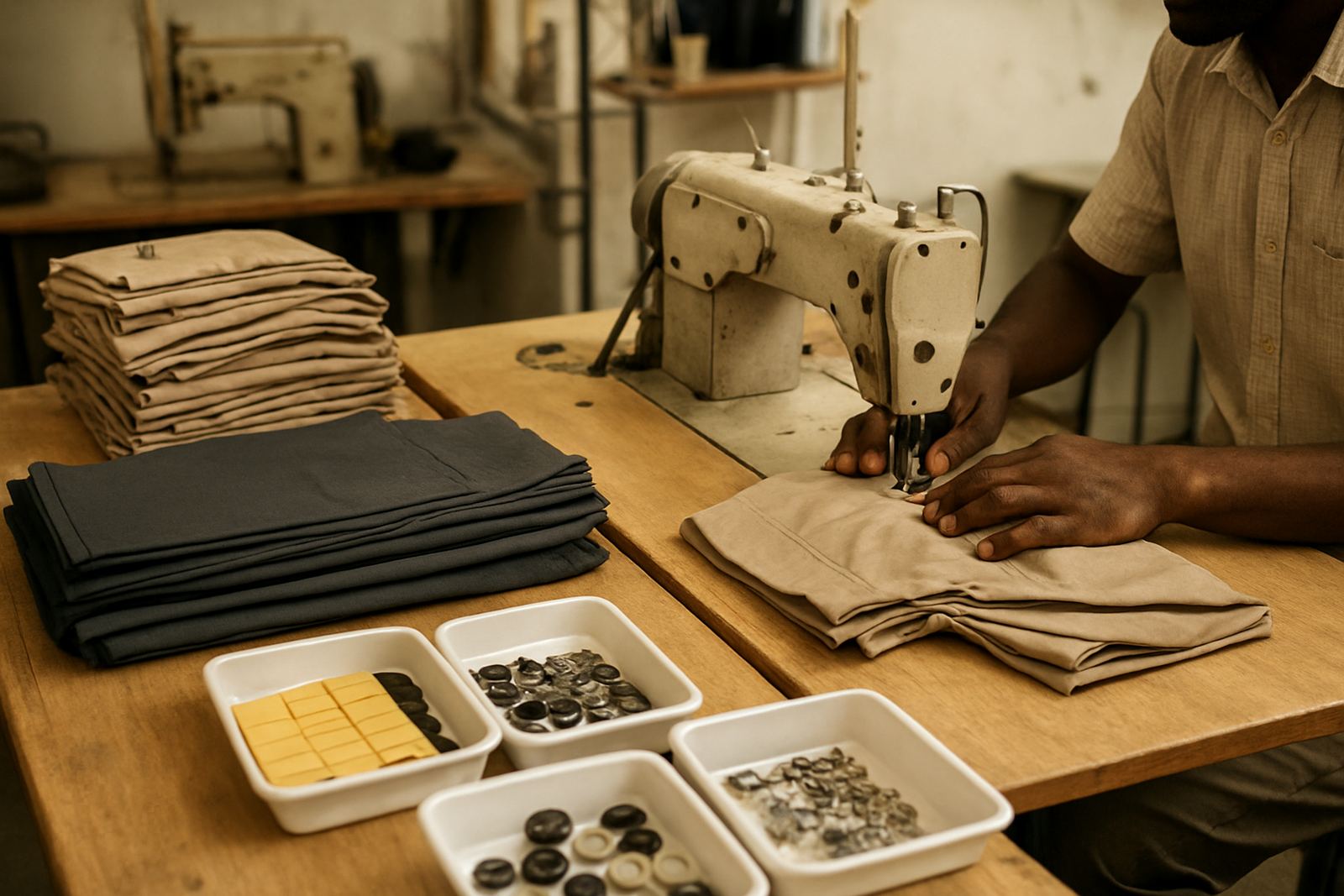
For garment names and badges, many businesses also use a household sewing machine for mending, hems and small alterations. Industrial sewing machines are useful when the shop also repairs school wear, workwear or promotional items. If the work includes jacket logos or structured items, a fusing press can help fix backing and keep the garment flat before embroidery starts. We also supply attachments and spares, because a missing hoop or worn thread guide can stop production for half a day.
- Computerised embroidery machine with software and stable power supply
- Industrial or heavy-duty sewing machine for finishing and repairs
- Fusing press for badges, appliqués and backing preparation
- Thread racks, hoops, needles, bobbins and trimming tools
Layout advice for better speed and fewer rejects
Good layout saves time every shift. The embroidery machine should sit on a level surface with enough room at the back and sides for servicing and threading. Keep the stabiliser, threads and hoops close to the operator, but not so close that the work area becomes cluttered. In many CBD premises, the problem is not machine size, it is poor flow between sewing, hooping, stitching and finishing.
We often advise shops to split the room into clear work zones. One zone for preparing garments, one for machine operation, one for pressing and one for packing. If the shop takes walk in orders, a small front counter helps keep customer garments separate from work in progress. Where power cuts are common, an arrangement that allows safe shutdown and restart is worth planning for. A machine left mid-run during load-shedding can waste thread, backing and time if the room is not organised properly.
For humid areas or older premises with dust, keep thread away from open windows and store finished goods off the floor. Use clean shelving for white garments and school items. Good lighting is important too, because dark thread on dark fabric is easy to miss until the client collects the order.
Common embroidery mistakes that cost time and money
Most embroidery problems start before the first stitch. A badly hooped garment, the wrong backing, incorrect tension or a loose frame can all cause puckering and broken thread. Another common issue is trying to use one machine for every type of job without adjusting settings for fabric weight. A cap, a towel and a school shirt behave very differently under the needle.
Busy shops also lose money by underestimating training. Even a good machine will produce poor results if the operator does not know how to set speed, position designs or clear thread paths. We see this often when a shop expands quickly and adds staff without formal setup. Small errors then turn into repeated rework and wasted materials.
- Hooping garments too tight and causing marks or distortion
- Using the wrong stabiliser for knitwear, caps or stretch fabric
- Ignoring needle wear, which leads to skipped stitches and fraying
- Running machines without regular cleaning and tension checks
Budget ranges for setting up or improving an embroidery room
Budget depends on whether you are starting from scratch or improving an existing room. A small embroidery setup for personalised orders can begin in the lower budget range if you buy one machine and the basic accessories needed to start work. A more serious production room with better throughput, backup spares and finishing equipment will need a larger budget, especially if you are serving schools, corporate clients or workwear accounts across Gauteng.
As a working guide, a basic entry setup may start from about R35,000 to R85,000, depending on machine type, included attachments and the condition of the equipment. A more complete shop setup can range from about R90,000 to R250,000 or more if you need multiple machines, a press, work tables, training and layout changes. Regular servicing and small repairs are usually far cheaper than replacing a machine after it has been run into the ground. Factories and schools in Alberton, Randburg and Pretoria often save money by planning maintenance before peak order periods.
If you need a clear figure, it helps to list your monthly order volume, fabric types and the size of the names or logos you do most often. That lets us match the machine and workflow to the business instead of guessing.
How we support embroidery shops in Johannesburg and Gauteng
Asia Sewing Machines works from Johannesburg CBD and supports embroidery shops, tailors, schools and home sewers across Fordsburg, Mayfair, Soweto, Germiston, Pretoria, Alberton and Randburg. We handle machine installation, on site repairs, workshop repairs, routine servicing, motor conversions, timing adjustments, embroidery setup, parts sourcing, operator training and workroom planning. If your shop needs a practical repair, a better workflow or help choosing the next machine, we can assess the space and recommend a usable setup.
Our team includes Lerato Mokoena, Yusuf Patel, Naledi Khumalo, Willem van Wyk, Anele Dlamini and Farah Ismail, so clients get support from sales through to workshop service and parts. For embroidery shops, that means help with the machine, the attachments, the consumables and the day to day running of the room. If a change in thread path, hoop size or table position will improve output, we will say so plainly.
Clients reach us through the enquiry form on our contact page when they need pricing, servicing or a visit for setup advice.