

What uniform work needs from the workshop floor
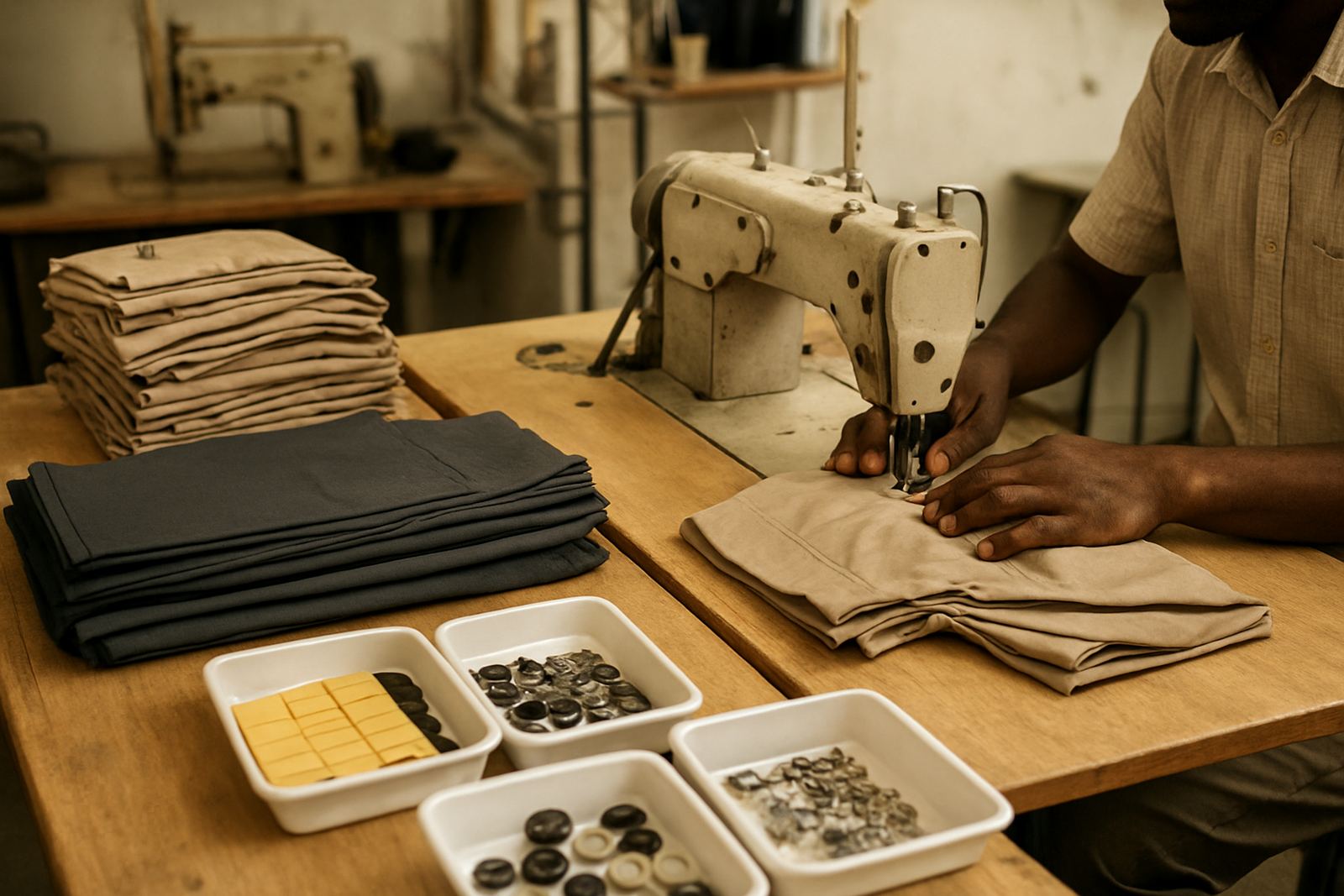
Uniform production is rarely one fabric and one machine. A school shirt line may move from light polycotton to thicker trouser seams, while a workwear order may need stronger topstitching, button fixing, embroidery and steady pressing. The setup has to handle repeat runs, day after day, without frequent stoppages.
For factories in Johannesburg CBD, Fordsburg, Mayfair, Soweto, Germiston, Pretoria, Alberton and Randburg, the main concern is consistency. If one machine drifts out of timing or a press heats unevenly, the same fault shows up across the whole batch. That is where correct installation, operator training and routine servicing save time and money.
We support schoolwear suppliers, corporate uniform makers, small tailoring shops and larger cut-make-trim workrooms. Some customers need a full line fitted out. Others only need a single embroidery machine, a reliable overlocker or a pressing station repaired before the next order lands.
Typical equipment for schoolwear and workwear orders
The right mix depends on the garments, the stitch types and the daily output. A uniform workroom usually needs a combination of sewing, trimming, pressing and finishing equipment. We help customers choose practical machines that match the volume and the fabric weight, not equipment that sits idle.
- Single needle lockstitch machines for seams, hems and general assembly
- Overlockers for edge finishing on shirts, skirts and trousers
- Coverseam machines for knitwear, cuffs and stretch items
- Bar tack and button machines for high wear areas and closures
- Computerised embroidery machines for badges, school crests and names
- Fusing presses for collars, cuffs, waistbands and facings
- Pressing stations for shape setting and final presentation
- Spare parts, attachments, threads and haberdashery for day to day use
For schools and uniform contractors, embroidery setup matters just as much as stitching. Badges must be placed consistently on every garment, and the machine should hold a clean stitch on both lighter shirt fabric and heavier twill. We also source the smaller items that keep production moving, such as needles, feet, bobbins and guides.
How to plan the layout for faster repeat production
A uniform room works best when the flow is simple. Cutting, sewing, embroidery, pressing and packing should move in one direction with as little backtracking as possible. If garments keep crossing the room, bundles get mixed up and time gets lost.
We often advise on workroom planning for new setups and for businesses that are changing from home-based work to a larger premises. In a Johannesburg CBD unit, space can be tight so it helps to plan around plug points, lighting, ventilation and operator movement from the start. In areas with load-shedding, it also makes sense to place sensitive equipment where backup power can reach it without running long leads across the floor.
For coastal humidity issues are less of a concern in Gauteng, but dust and lint still build up fast. Machines should be positioned for easy cleaning and regular access to the hook, motor and tension points. If you are using fusing presses, leave enough clearance for safe opening, fabric handling and heat dissipation.
Common mistakes that slow down uniform orders
Most production delays do not come from the fabric itself. They come from poor setup, rushed training or trying to push the same machine beyond its intended use. A good workshop avoids these problems before they start.
- Buying machines that are too light for thick school trousers, overalls or bag work
- Skipping routine servicing until the machine starts skipping stitches or overheating
- Using the wrong needle, thread or presser foot for the fabric type
- Putting embroidery and pressing stations too close together, which creates congestion
- Ignoring motor wear, noisy bearings or timing issues until a batch is already late
- Leaving operators without proper training on threading, tension and fabric handling
We see this often in workshops around Soweto, Germiston and Pretoria where orders are growing quickly. The business may already have customers, but the equipment was chosen for a much smaller output. A machine that worked well for home sewing can struggle once production turns into daily contract work.
Budget ranges for a uniform sewing setup
Budgets vary widely depending on whether you are opening a small schoolwear room or fitting out a larger workwear floor. A sensible plan starts with the core machines first, then adds embroidery, fusing and finishing equipment as orders grow. It is usually better to buy fewer reliable machines than to spread the budget too thin.
For a basic uniform setup, a small business may spend from about R15 000 to R45 000 on one or two sewing machines, an overlocker, a pressing iron and starter accessories. A more active workroom with several stations, a fusing press and better finishing equipment can move into the R60 000 to R180 000 range. Embroidery machines, multiple workstations and heavier industrial units can take the budget higher, depending on capacity and setup needs.
We also help customers balance upfront cost with running cost. A machine that is cheap to buy but hard to maintain can cost more over a year. Power use, spare parts, service intervals and operator efficiency all matter when the same garments must be produced week after week.
Service, repairs and support from our Johannesburg CBD base
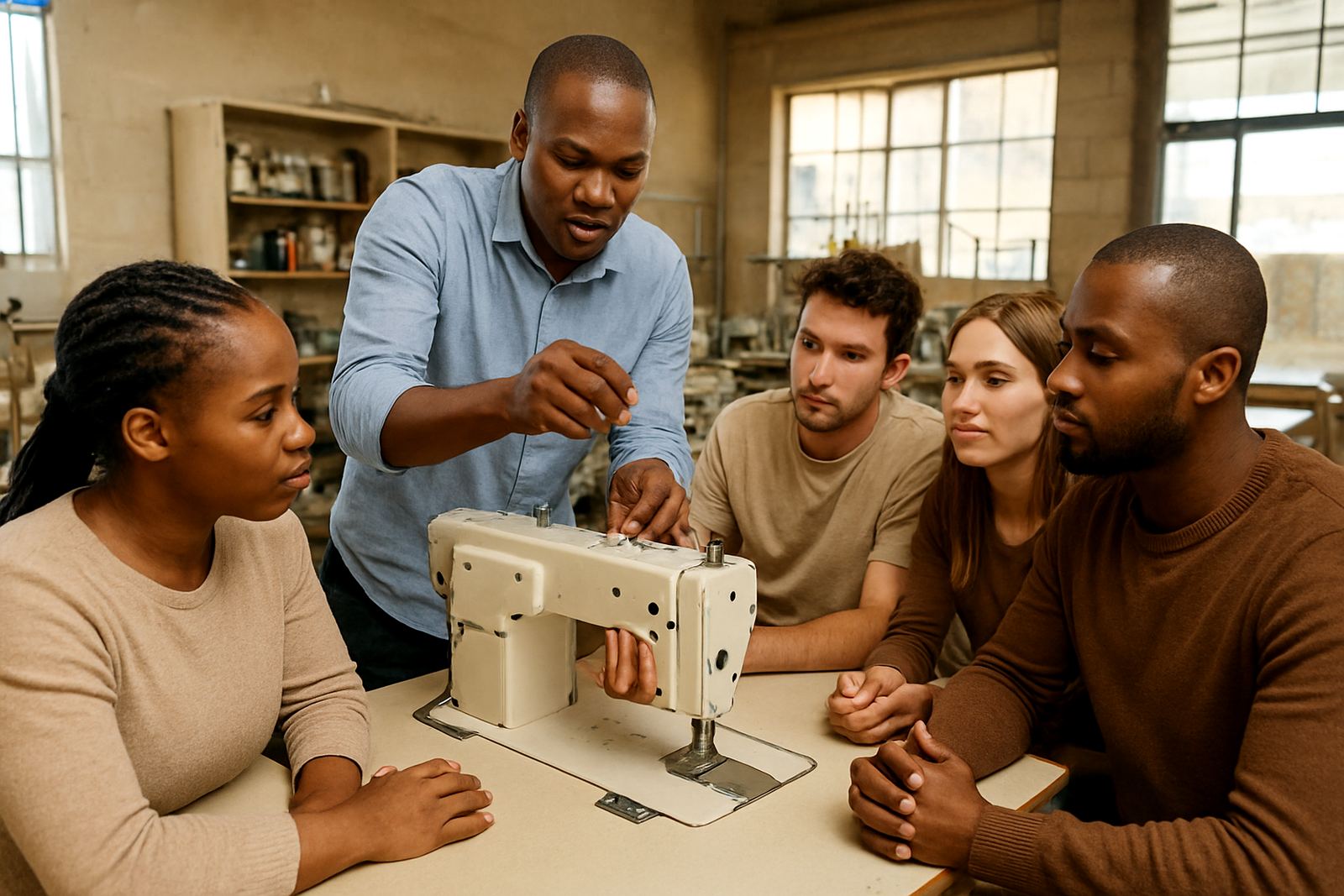
Our Johannesburg CBD base supports customers across Gauteng with machine installation, on site repairs, workshop repairs, routine servicing, motor conversions, timing adjustments, embroidery setup, fusing press service, pressing station service, parts sourcing, operator training and workroom planning. That support helps uniform suppliers keep production steady when orders increase or deadlines tighten.
We work with factories, tailors, schools and home sewers, and we understand the pressure of repeat contract work. If a school uniform order is due, the machine must be ready to run cleanly and the finishing must look consistent from the first item to the last. Lerato Mokoena, Yusuf Patel, Naledi Khumalo, Willem van Wyk, Anele Dlamini and Farah Ismail handle sales, workshop work, field service, parts and customer support with that in mind.
If you are setting up a new uniform line or want to improve an existing one, send an enquiry through our contact page and we will help match the equipment to the work you do.